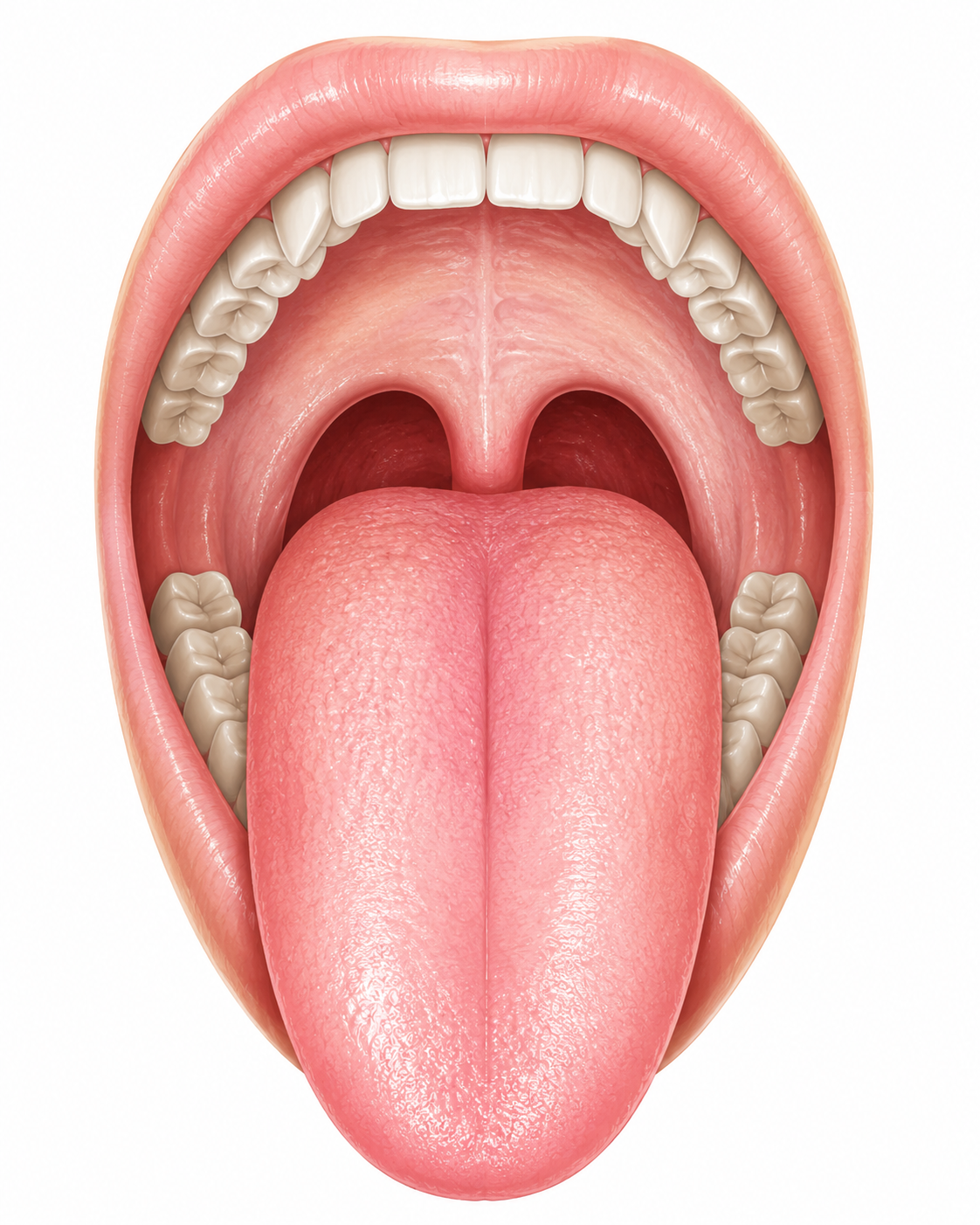
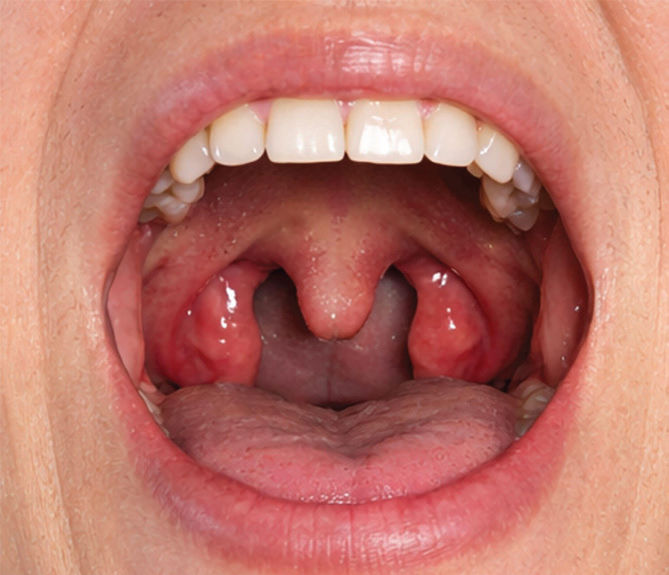
What is the Mallampati classification?
The Mallampati classification is a bedside test used in pre-anaesthetic assessment to predict a difficult laryngoscopy and tracheal intubation. It rests on a simple idea: if the base of the tongue is large relative to the oropharyngeal space, it will hide the pharyngeal structures on mouth opening — and it will also get in the way of the laryngoscope blade, hiding the glottis.
S. R. Mallampati first proposed the sign in 1983 and published a prospective study of 210 patients in the Canadian Anaesthetists' Society Journal in 1985, grading the visibility of the faucial pillars, soft palate and base of the uvula. In 1987, Samsoon and Young (Anaesthesia) added a fourth class — the version most anaesthetists and exams now call the modified Mallampati classification.
Why does the size of the tongue base predict a difficult intubation?
During direct laryngoscopy the blade has to displace the tongue so that the larynx comes into view. Mallampati's 1985 study started from the observation that the size of the base of the tongue is an important factor determining how difficult direct laryngoscopy will be. If the tongue base is large relative to the oral cavity, it hides the pillars, uvula and soft palate when the patient opens the mouth — and it is equally hard to move out of the way of the laryngoscope.
That is also why the other predictors make sense: a short thyromental distance or poor jaw protrusion means less room to displace the tongue; limited neck mobility limits head and neck positioning; a small mouth opening limits the blade itself. Mallampati tests one piece of this geometry; the others test the rest.
What structures are seen in each Mallampati class?
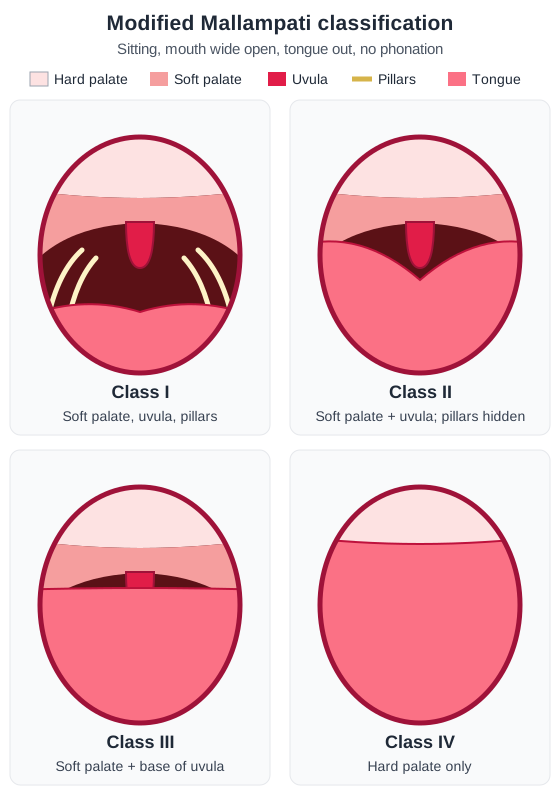
| Class | Original Mallampati (3 classes) | Modified — Samsoon & Young (4 classes) | Predicted intubation |
|---|---|---|---|
| 0 (added 1998) | — | Epiglottis partly or fully visible on mouth opening | Rare finding |
| I | Faucial pillars, soft palate and uvula all visible | Soft palate, fauces, entire uvula and tonsillar pillars visible | Easy |
| II | Faucial pillars and soft palate visible; uvula masked by tongue base | Soft palate, fauces and uvula visible; pillars hidden (some texts: tip of uvula may be masked) | Usually easy |
| III | Only the soft palate visible | Soft palate and base of the uvula only | Difficult |
| IV | — | Soft palate not visible — only the hard palate | Difficult / potentially very difficult |
How is the Mallampati test performed?
- Patient sits upright with the head in the neutral position.
- Ask the patient to open the mouth as wide as possible.
- Ask the patient to protrude the tongue maximally.
- No phonation — the patient should not say 'aah'. The standard test is performed without phonation.
- Look at which structures are visible (with a light source) and assign the class. Repeating the observation after a short rest improves reliability.
The class is not fixed for life. In a study of 242 pregnant women, the proportion with Mallampati class IV rose by 34% at 38 weeks compared with 12 weeks of gestation (StatPearls) — one reason airway reassessment matters in obstetric anaesthesia. A higher Mallampati class is also linked to obstructive sleep apnoea: the odds of OSA roughly double with each 1-point increase in class.
How does Mallampati correlate with the Cormack-Lehane grade?
The two scales are often confused. Mallampati is done before anaesthesia, by looking into the mouth of an awake patient. Cormack-Lehane (Cormack and Lehane, Anaesthesia, 1984) grades the laryngeal view actually obtained during direct laryngoscopy — after induction — and is regarded as the reference standard for difficult laryngoscopy.
| Grade | View at direct laryngoscopy | Difficulty |
|---|---|---|
| 1 | Entire glottis (vocal cords) visible | Easy |
| 2a | Part of the vocal cords visible | Usually easy |
| 2b | Only arytenoids / posterior commissure visible | Often difficult |
| 3 | Only the epiglottis visible | Difficult |
| 4 | No glottic structure — not even the epiglottis | Difficult |
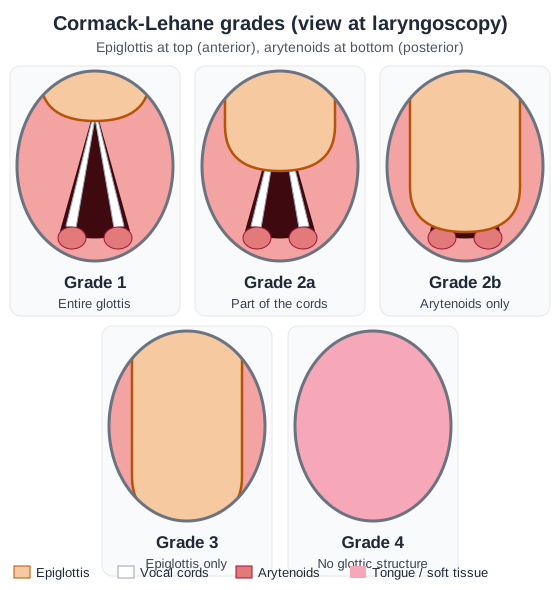
Higher Mallampati classes tend to go with higher Cormack-Lehane grades, but the match is loose. In an Ethiopian cross-sectional study of 141 elective surgical patients, the correlation between modified Mallampati class and Cormack-Lehane grade was weak (Spearman ρ = 0.33). Grade 2b is the grey zone: difficult intubation is reported in about two-thirds of grade 2b views versus roughly 4% of grade 2a views.
What other bedside tests predict a difficult airway?
Because Mallampati alone misses many difficult airways, it is combined with other measurements. Schwartz's Surgery lists short neck, limited neck mobility, a large overbite, a small mandible, inability to shift the lower incisors in front of the upper incisors, small inter-incisor distance, short thyromental distance and obesity/neck circumference as predictors.
| Test | How it is done | Suggests difficulty when |
|---|---|---|
| Mouth opening (inter-incisor gap) | Distance between upper and lower incisors on full opening | Less than about 4 cm / fewer than 3 fingerbreadths |
| Thyromental distance | Thyroid notch to tip of chin with the neck extended | < 6 cm |
| Upper lip bite test | Can the lower incisors bite the upper lip? | Class 3 — lower incisors cannot reach the upper lip |
| Mandibular protrusion | Can the patient move the lower incisors in front of the upper? | Unable to protrude |
| Neck mobility | Flexion/extension at the atlanto-occipital joint | Limited movement, cervical collar |
| Neck circumference | Tape measure around the neck | Thick neck (> 40 cm in StatPearls) |
| 3-3-2 rule | Patient's fingerbreadths: between the teeth / from chin tip to the start of the neck / from thyroid notch to the floor of the mandible | Fewer than 3 / 3 / 2 fingers respectively |
What is the upper lip bite test and how does it compare?
The upper lip bite test (ULBT) checks how far the mandible can be brought forward — a proxy for how easily the tongue can be displaced by the laryngoscope. It needs no equipment and is graded in three classes (StatPearls — Airway Assessment):
| Class | Finding | Meaning |
|---|---|---|
| 1 | Lower incisors can fully cover the upper lip | Good jaw protrusion |
| 2 | Lower incisors partially cover the upper lip | Limited protrusion |
| 3 | Lower incisors cannot reach the upper lip | Poor protrusion — predicts difficulty |
| System | When | What is graded | Scale |
|---|---|---|---|
| Modified Mallampati | Pre-op, awake, sitting | Oropharyngeal structures visible past the tongue | Class I–IV (0 added later) |
| Upper lip bite test | Pre-op, awake | Mandibular protrusion | Class 1–3 |
| Thyromental distance | Pre-op, neck extended | Space available to displace the tongue | < 6 cm = concern |
| LEMON | Pre-intubation, often emergency | Composite of five bedside features | Points; higher = harder |
| Cormack-Lehane | During direct laryngoscopy | Laryngeal view obtained | Grade 1–4 (2a/2b) |
No single bedside test is good enough alone. Studies that combined Mallampati with the 3-3-2 rule and other tests found the combination predicted difficult intubation better than any single test — which is why exam answers about 'best approach' favour a multi-parameter assessment.
How accurate is the Mallampati test and what are its limitations?
Mallampati is quick, free and non-invasive, but it is a poor stand-alone predictor. A 2016 meta-analysis cited in StatPearls reported a sensitivity of 0.51 and specificity of 0.87 for difficult tracheal intubation, and a positive predictive value as low as 33.3% has been reported. In other words, it can miss about half of difficult intubations, and many 'positive' tests intubate normally. Accuracy varies widely between studies — an Iranian study of 500 patients reported much higher sensitivity — and combining Mallampati with other tests performed best.
- Inter-observer variability — different examiners assign different classes.
- Patient cooperation is essential; unconscious, uncooperative or trauma patients cannot be assessed properly.
- Technique errors — phonation, supine position or incomplete tongue protrusion change the class.
- Dynamic — class can worsen in pregnancy and labour.
- Low sensitivity alone — combine it with thyromental distance, mouth opening, jaw protrusion and neck mobility.
How is the Mallampati classification asked in NEET PG and INI-CET?
- Image-based identification — a drawing of the open mouth; identify the class (NEET PG 2018 pattern). Look for pillars, uvula base and soft palate.
- Purpose of the test — 'used for the assessment of airway / difficulty in intubation' (UPSC CMS 2019 and 2025).
- Anatomical basis — relative size of the base of the tongue.
- Pre- vs intra-operative — Mallampati (before) vs Cormack-Lehane (during laryngoscopy).
- Class IV = only hard palate; Class III = soft palate + base of uvula.