What is arsenic poisoning and why is it called the king of poisons?
Arsenic is a metalloid that exists in valency states −III, 0, +III and +V. Its inorganic compounds — especially trivalent arsenite — are the most toxic; the organic arsenic in seafood (arsenobetaine) is relatively non-toxic. Exposure today comes mostly from contaminated groundwater, food (rice) and soil, from occupations such as mining, smelting, glass and semiconductor work, and occasionally from unregulated herbal medicines or deliberate poisoning (StatPearls).
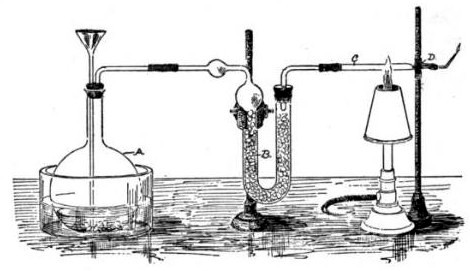
Historically arsenic was called the 'king of poisons' and the 'poison of kings' because of its potency and how discreetly it could be given — it is odourless and tasteless, so it went undetected in food and drink. The Marsh test (1836) ended that era of undetected arsenic murders.
How does arsenic damage cells?
| Species | Mechanism | Consequence |
|---|---|---|
| Arsenite (As3+) — more toxic | Binds thiol and dithiol (–SH) groups; inhibits the pyruvate dehydrogenase complex, which needs lipoic acid | Pyruvate cannot enter the TCA cycle → failure of aerobic respiration and ATP production; increased capillary permeability |
| Arsenate (As5+) | Structurally similar to phosphate; replaces phosphate in glycolysis and oxidative phosphorylation | Unstable arsenate intermediates hydrolyse → uncoupling of oxidative phosphorylation and ATP depletion |
| Arsine gas (AsH3) | Diffuses into red cells; oxidant injury to the membrane and haemoglobin | Massive intravascular haemolysis, acute renal failure |
Beyond enzyme inhibition, arsenic generates reactive oxygen species, damages mitochondria and endothelium, and alters DNA methylation and histone modification. These epigenetic changes, rather than direct point mutations, explain the long latency between exposure and cancer. In the liver, arsenic is methylated by AS3MT to monomethylarsonic and dimethylarsinic acid — but methylation is not pure detoxification, because the trivalent methylated intermediates are themselves toxic.
What are the features of acute arsenic poisoning?
The classic sequence is gastrointestinal first, cardiovascular next, neurological and skin last. StatPearls calls this temporal dissociation — neuropathy appearing weeks after the gut symptoms have settled — the hallmark that separates arsenic from infective gastroenteritis.
| System | Features | Timing |
|---|---|---|
| Gastrointestinal | Vomiting, abdominal pain, 'rice-water' (cholera-like) diarrhoea, which may be blood-stained; garlic odour of the breath (ATSDR) | Minutes to hours after ingestion |
| Cardiovascular | Hypotension and shock from fluid loss; QTc prolongation, wide QRS, T-wave flattening, torsades de pointes | ECG changes hours to days later |
| Renal / lung | Proteinuria, haematuria, acute kidney injury; non-cardiogenic pulmonary oedema | Hours to days |
| Nervous system | Headache, delirium, encephalopathy, seizures early; later symmetric stocking-glove sensorimotor polyneuropathy that may ascend | Neuropathy typically 1–3 weeks after ingestion |
| Blood | Anaemia, leukopenia, thrombocytopenia, basophilic stippling | Subacute |
| Nails | Mees' lines — 1–2 mm transverse white bands | About 4–6 weeks after exposure; seen in about 5% |

What are the features of chronic arsenic poisoning (arsenicosis)?
Chronic poisoning, mostly from drinking groundwater, shows itself first in the skin. WHO lists pigmentation changes, skin lesions and hard patches on the palms and soles (hyperkeratosis) as early signs, typically after a minimum of about five years of exposure through water. DermNet adds that signs may start weeks after heavy exposure, while skin cancers take years.
| Organ | Finding | Exam keyword |
|---|---|---|
| Skin pigmentation | Diffuse or spotted hyperpigmentation interspersed with small hypopigmented spots, on the trunk and neck; often in sun-protected areas | Raindrop pigmentation |
| Palms and soles | Small corn-like elevations and diffuse keratosis | Palmoplantar (arsenical) keratosis |
| Nails | Transverse white bands of arsenic deposit | Mees' lines |
| Skin cancer | Basal cell carcinoma, squamous cell carcinoma and Bowen disease (intraepidermal SCC), on non-sun-exposed sites such as palms, soles and abdomen | Multiple cancers on covered skin |
| Internal cancers | Lung, bladder (strongly associated), liver (including angiosarcoma), kidney | IARC: carcinogenic to humans |
| Vessels | Peripheral vascular disease with gangrene of the feet | Blackfoot disease (Taiwan) |
| Nerves | Peripheral neuropathy — may be the first sign of chronic toxicity | Stocking-glove sensory loss |

Why is groundwater arsenic a public-health problem in India and Bangladesh?
Arsenic dissolves naturally from aquifer sediments, so arsenicosis clusters in river deltas and floodplains of South and Southeast Asia, where tube wells draw on arsenic-rich groundwater. WHO names Bangladesh and India among countries with naturally high levels of inorganic arsenic in groundwater, and estimates that about 140 million people in at least 70 countries drink water above the WHO guideline value. Rice grown with contaminated irrigation water adds a dietary route.
| Standard | Limit | Note |
|---|---|---|
| WHO guideline value | 10 µg/L (0.01 mg/L) | Designated provisional because of practical difficulties in removing arsenic |
| BIS IS 10500 (India) | 0.01 mg/L total arsenic | No relaxation — there is no higher 'permissible' limit in the absence of an alternate source |
Under the Jal Jeevan Mission, India adopts IS 10500 for drinking water, and states have been advised to install community water purification plants in arsenic- and fluoride-affected habitations as an interim measure until safe piped water arrives. Read with purification of water for the wider framework of safe drinking water.

How does arsine gas poisoning differ?
Arsine is produced in industry — for example in making gallium arsenide for semiconductors and LEDs. It is considered the deadliest form of arsenic because it has little odour and does not irritate mucous membranes, so there is no warning. Inhaled arsine causes massive intravascular haemolysis.
- Headache, nausea, vomiting, abdominal or chest pain, and a garlic-like odour.
- Renal failure 1–12 hours after exposure.
- At 4–48 hours: 'slate-bronze' skin, 'port-wine' urine and reddened conjunctivae.
- Myocardial toxicity — conduction block and asystole.
- Treatment: no specific antidote — chelation is not effective. Support with haemodialysis for renal failure, urinary alkalinisation when haemolysis develops, and exchange transfusion in severe haemolysis after toxicology advice.
How is arsenic poisoning diagnosed, in the living and after death?
- Urine is the preferred sample. A 24-hour collection is preferred; poisoning is suspected when urine arsenic exceeds 100 µg/L or 100 µg per 24 hours. Use a metal-free polyethylene container.
- Avoid seafood for 2–3 days before a non-urgent sample — seafood arsenobetaine raises total urine arsenic. Speciation separates harmless arsenobetaine from toxic inorganic arsenic.
- Blood levels fall within hours, so a normal blood level days later is a common false negative.
- Abdominal X-ray may show radiopaque metallic flecks after ingestion; ECG shows QT prolongation; a blood film may show basophilic stippling.
- Hair and nails store arsenic because it binds keratin. If sampled, take about 200 mg of hair from as close to the scalp as possible at the posterior vertex; evidence for these tests is limited and external contamination confounds them.
- Do not delay treatment for results in acute poisoning — StatPearls advises starting therapy before confirmation.
Historic chemical tests. In the Marsh test (1836), the sample is mixed with zinc and acid; arsenic forms arsine gas which, on heating, deposits a silvery film of arsenic on glass — sensitive to about 0.02 mg. It was first used in the trial of Marie LaFarge (France, 1840). The Reinsch test (1843) boils the sample in hydrochloric acid with clean bright copper; arsenic coats the copper with a grey deposit.
Exhumation. Arsenic persists in keratinised and other tissues, so it can be measured in hair, nails, muscle and spinal cord of exhumed bodies. A classic forensic problem is external contamination (soil, burial materials): washing with water or dilute acid does not remove it, and analysts must show the arsenic was deposited metabolically. Arsenic also acts as a preservative — arsenic solutions were the first generally accepted embalming fluid in the 19th century — which is why an old embalmed body can contain arsenic that has nothing to do with the death.
How is arsenic poisoning treated?
- Stop the exposure — change the water source, remove contaminated clothing, wash skin with soap and water.
- Resuscitate — aggressive fluids for shock, ICU care, continuous cardiac monitoring.
- Correct potassium, calcium and magnesium; give IV magnesium for torsades and avoid QT-prolonging drugs such as amiodarone; defibrillate sustained polymorphic VT.
- Decontaminate selectively — activated charcoal is controversial (consider for co-ingestion); gastric lavage case by case for a large, very recent ingestion; whole-bowel irrigation if X-ray shows persistent radiopaque material.
- Chelate early under toxicology guidance, without waiting for levels when suspicion is strong.
| Chelator | Route and typical regimen | When used |
|---|---|---|
| Dimercaprol (BAL) | 3–5 mg/kg IM every 4 hours, tapering to every 12 hours | Severe acute poisoning, especially when oral therapy is not possible |
| DMPS (dimercaptopropanesulfonic acid) | About 5–15 mg/kg/day IV | Alternative parenteral chelator |
| Succimer (DMSA) | 10 mg/kg orally every 8 hours for 5 days, then every 12 hours for 14 days | Oral option once the patient is stable |
A reasonable end-point is a 24-hour urine arsenic below 50 µg/L. Chelation needs monitoring of renal function, liver enzymes, blood counts and electrolytes. Routine chelation of asymptomatic people with raised levels is not recommended. Dimercaprol is generally avoided in pregnancy except in life-threatening poisoning. Arsenical skin keratoses can be treated with cryotherapy, curettage or, if numerous, topical imiquimod or oral acitretin (DermNet).
How is arsenic poisoning asked in NEET PG and INI-CET?
- Picture or description of raindrop pigmentation and palmar keratoses → chronic arsenicosis.
- Transverse white nail bands → Mees' lines (arsenic).
- Rice-water stools after a meal, garlic breath → acute arsenic, not cholera.
- Enzyme inhibited → pyruvate dehydrogenase (lipoic acid, –SH binding).
- WHO limit in drinking water → 10 µg/L, provisional.
- Test for arsenic historically used in trials → Marsh test; copper-strip test → Reinsch.
- Antidote → BAL; arsine → no antidote, haemolysis.
- Cancers → skin (Bowen, BCC, SCC), lung, bladder, liver angiosarcoma.