What is surgical sterilisation and why is it high-yield?
Sterilisation is a permanent method of contraception in which the passage of gametes is blocked surgically — the fallopian tubes in women (tubectomy / tubal occlusion) and the vas deferens in men (vasectomy). The Ministry of Health & Family Welfare (MoHFW) calls it 'the most preferred method in India', and the national programme runs it under detailed standards: Standards & Quality Assurance in Sterilization Services (November 2014), backed by Reference Manuals for female and male sterilisation and a 2016 FAQ addendum.
Exams mix two kinds of facts: programme rules (eligibility ages, timing windows, when a certificate is issued, who may operate) and surgical/clinical facts (Pomeroy vs Falope ring, site of occlusion, failure rates, ectopic risk, semen analysis, reversal). This page keeps the Indian programme numbers exactly as the MoHFW manuals state them.
| Method | Approach | How the tube / vas is blocked | Who may perform (MoHFW 2014) |
|---|---|---|---|
| Minilap tubectomy | Small abdominal incision (interval, post-partum or post-abortion) | Modified Pomeroy — excision and ligation with 1-0 chromic catgut | MBBS and above, trained in minilap |
| Laparoscopic tubal occlusion | Laparoscope, pneumoperitoneum | Falope rings — no cautery | DGO / MD / MS ObGyn, other surgical specialists, or MBBS doing minilap — all trained in laparoscopy |
| Conventional vasectomy | One midline or two scrotal incisions (≤ 2 cm each) | ≤ 1 cm of vas excised, both ends ligated with 2-0 silk | MBBS and above, trained |
| No-scalpel vasectomy (NSV) | Single puncture in the scrotal skin | About 1 cm of bare vas excised and ligated with 2-0 black silk | MBBS and above, trained in NSV |
Who is eligible for sterilisation under India's standards?
Section 1.3 of the 2014 MoHFW standards lists the case-selection criteria. Information is based on the client's self-declaration, and 'no eligible client should be denied family planning services'.
- Client should be ever married (married at least once, whatever the current marital status).
- Women: above 22 and below 49 years.
- Men: above 22 and below 60 years.
- The couple should have at least one child whose age is above one year, unless sterilisation is medically indicated.
- Neither the client nor the spouse should have been sterilised before (not applicable after a failed sterilisation).
- The client must be of sound mind to understand the implications; a mentally challenged client needs certification by a psychiatrist and a statement from the legal guardian/spouse.
What are the A, C, D and S medical eligibility categories?
There are no absolute contraindications to tubectomy or vasectomy. Instead, the MoHFW manuals adopt the WHO Medical Eligibility Criteria for sterilisation, which sort conditions into four categories.
| Category | Meaning | Examples (female sterilisation) |
|---|---|---|
| A — Accept | No medical reason to deny sterilisation | Parous or nulliparous woman; post-partum < 7 days; ≥ 42 days post-partum; past ectopic pregnancy |
| C — Caution | Routine setting, but with extra preparation and precautions | Young age; obesity (BMI ≥ 30) |
| D — Delay | Delay until the condition is evaluated or corrected; give a temporary method meanwhile | Pregnancy; post-partum 7 to < 42 days; severe pre-eclampsia/eclampsia; puerperal sepsis; severe antepartum or post-partum haemorrhage |
| S — Special | Experienced surgeon, general anaesthesia capability and back-up support needed | Uterine rupture or perforation (if stable, repair and tubal sterilisation may be done together) |
When can a tubectomy be done — interval, post-partum or post-abortion?
| Woman's situation | When to perform |
|---|---|
| Having menstrual cycles (interval) | Any time within 7 days of the start of menstrual bleeding, or any time in the cycle if reasonably certain she is not pregnant |
| After childbirth (post-partum) | Within 7 days of delivery — only post-partum minilap can be done; otherwise 6 weeks or more after delivery (interval) |
| After surgical MTP (post-abortion) | Concurrently with surgical MTP or within 7 days; laparoscopic occlusion only with MTP up to 12 weeks |
| After medical abortion | After the next menstrual cycle |
| After miscarriage | Within 7 days, if no complications |
| Switching from IUCD / pill | IUCD: concurrently with removal; pill: any time (may finish the pack) |
| After emergency contraceptive pills | Within 7 days after the start of the next bleeding |
Why not between day 7 and 6 weeks post-partum? The 2016 FAQ explains that by the seventh day the uterus descends into the pelvis, making the tubes hard to reach, and the protective effect of endometrial shedding against bacterial colonisation wanes, so the risk of pelvic infection rises. It is safer to wait until 42 days, when the uterus has involuted and is less vascular.
How are minilap tubectomy and laparoscopic Falope ring occlusion done?
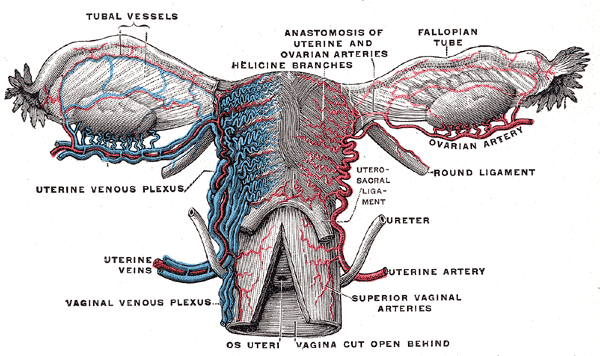
General rules (MoHFW 2014): empty the bladder; identify each tube right up to the fimbria (so the round ligament is not tied by mistake); occlude within 2–3 cm of the uterine cornu in the isthmic portion — this improves the chance of reversal later; excise or occlude 1 cm of tube; avoid cautery and crushing.
Minilap tubectomy uses a small transverse or longitudinal incision. A uterine elevator helps bring the tubes into view in interval cases. The tube is excised and ligated by the modified Pomeroy technique, using a square knot with 1-0 chromic catgut. In the classic Pomeroy method a loop of mid-tube is tied at its base with absorbable suture and the knuckle above the tie is excised; as the absorbable ligature dissolves, the cut ends separate and seal by fibrosis. The FAQ adds that only chromic catgut should be used for the stumps, because other suture materials can lead to recanalisation.
Laparoscopic tubal occlusion is performed under local anaesthesia with pneumoperitoneum created by a Veress needle (or direct trocar by an experienced surgeon), preferably with CO2. Key safety limits: Trendelenburg tilt not more than 20° (to avoid hypoventilation) and intra-abdominal pressure not above 15 mmHg. Occlusion must always use Falope (silastic) rings — one ring on each tube, and no cautery. Rings are not applied to thick, oedematous or fixed tubes; those cases need tubectomy by laparotomy under general anaesthesia.
| Feature | Minilap tubectomy | Laparoscopic (Falope ring) |
|---|---|---|
| Occlusion | Modified Pomeroy (excision + 1-0 chromic catgut) | Falope ring, one per tube |
| Post-partum within 7 days | Yes — the only option | No (avoid up to 42 days) |
| With MTP | Concurrent or within 7 days | Only with MTP up to 12 weeks |
| Operator | Trained MBBS and above | Trained gynaecologist / surgeon, or MBBS with 3 years of minilap |
| Special limits | Uterine elevator helps in interval cases | Tilt ≤ 20°, pressure ≤ 15 mmHg, no cautery |
How do conventional vasectomy and no-scalpel vasectomy differ?
In both techniques the mid-scrotal vas is occluded; the difference is the approach. In conventional vasectomy, one midline or two incisions (each ≤ 2 cm) are made, not more than 1 cm of vas is removed (removing more makes later recanalisation surgery harder), and the ends are ligated about 1.5 cm apart with 2-0 silk. The skin is closed with non-absorbable sutures.
No-scalpel vasectomy (NSV) reaches the vas through a single small puncture instead of a cut. MoHFW steps: bilateral perivasal block with 2% lignocaine without adrenaline; fix the vas in the midline at the junction of its upper one-third and lower two-thirds with the vas fixation (ring) forceps; puncture the skin and deliver the vas in one motion; excise about 1 cm and ligate with 2-0 black silk; deliver the opposite vas through the same puncture. Fascial interposition is optional and may reduce failure. The manual records that NSV is less invasive, causes fewer complications and takes less time than the conventional technique.
- Discharge after 30 minutes if alert, ambulatory and stable (female sterilisation: at least 4 hours).
- Scrotal support for one week; avoid heavy work for about a week.
- Sexual activity may resume when comfortable — but with condoms or another method until semen shows no sperm.

How often does sterilisation fail, and why is ectopic pregnancy a concern?
| Method | Failure | Source |
|---|---|---|
| Female sterilisation, first year | Less than 1 per 100 women — 5 per 1,000 | MoHFW 2014 |
| Female sterilisation, 10 years | About 2 per 100 women (18–19 per 1,000) | MoHFW 2014 |
| Tubal surgery, first year (typical use) | About 0.5 per 100 | CDC US SPR |
| Vasectomy, first year (typical use) | 0.15 per 100 | CDC US SPR |
Causes of failure: pregnancy already present at surgery, wrong structure occluded (e.g. round ligament), technical error, or spontaneous recanalisation. After vasectomy, the commonest reason for 'failure' is not true failure at all — the couple stopped back-up contraception before azoospermia. In a prospective study of no-scalpel vasectomy with ligation and excision, only 60% of men were azoospermic at 12 weeks and 27.9% at 20 ejaculations, which is why a semen test, not a calendar rule, confirms success.
Ectopic pregnancy: MoHFW instructs that ectopic pregnancy must be ruled out in any pregnancy after tubectomy because sterilisation predisposes to it. In the US CREST cohort of 10,685 women, the 10-year cumulative probability of ectopic pregnancy was 7.3 per 1,000 procedures; it varied by method and age — women sterilised by bipolar coagulation before 30 had 27 times the risk of those who had post-partum partial salpingectomy. The risk did not fall in later years, so a history of tubal sterilisation never rules out ectopic pregnancy.
What complications can follow tubectomy and vasectomy?
Female sterilisation is safe: complications occur in less than 2% of cases and serious ones are rare (MoHFW 2014).
| Procedure | Intra-operative | Post-operative / delayed |
|---|---|---|
| Tubectomy | Vasovagal attack, respiratory depression, cardio-respiratory arrest, local anaesthetic toxicity, gas/air embolism, uterine perforation by the elevator, mesosalpinx bleeding, bladder or bowel/vessel injury, subcutaneous emphysema | Wound sepsis, abdominal-wall haematoma, intestinal obstruction / ileus / peritonitis, tetanus, incisional hernia; failure and ectopic pregnancy |
| Vasectomy | Vasovagal hypotension, local anaesthetic reaction, testicular artery injury | Early: scrotal swelling, bruising, pain, haematoma, infection, stitch abscess, orchitis. Delayed: sperm granuloma, psychological problems, failure |
What must counselling, consent and the sterilisation certificate cover?
Method-specific counselling must make sure the client understands that sterilisation is permanent; that it is surgery with a possibility of complications including failure; that it does not affect sexual function or strength; that back-up contraception is needed after vasectomy until azoospermia (usually three months); that it does not protect against STIs/HIV; that reversal involves major surgery with no guarantee; and that an indemnity mechanism exists for complications, failure or death. Informed choice (choosing among all methods) comes before informed consent (agreeing to the specific procedure).
| Procedure | Certificate issued | Condition |
|---|---|---|
| Tubectomy | One month after surgery or after the first menstrual period, whichever is earlier | Rule out pregnancy if periods have not resumed |
| Vasectomy | After three months | Semen examination shows no sperm; may be delayed to 6 months; not issued if sperm persist at 6 months |
Can sterilisation be reversed?
Clients are told not to think of sterilisation as reversible. Female reversal (tuboplasty) is major surgery joining the ligated or occluded tube end to end; male reversal (vasovasostomy) is microsurgery requiring considerable skill. Neither success rate can be guaranteed, and after vasectomy reversal sperm counts and motility are usually much lower than before vasectomy. The 2016 FAQ notes that there is currently no NHM scheme under which a client can obtain recanalisation.
- Occluding the isthmus 2–3 cm from the cornu and removing only 1 cm of tube preserves length for reversal.
- Removing only ≤ 1 cm of vas keeps vasovasostomy feasible.
- If the fimbriae are cut, recanalisation is rare (2016 FAQ).
- Spontaneous recanalisation is a rare cause of late failure after both procedures.
How is sterilisation asked in NEET PG and INI-CET?
- Eligibility numbers — minimum age 22; women below 49, men below 60; one child older than 1 year; ever married.
- Timing — post-partum within 7 days (minilap only); interval at 6 weeks; with MTP concurrently or within 7 days.
- Technique — modified Pomeroy with 1-0 chromic catgut (minilap); Falope ring without cautery (laparoscopic); site = isthmus 2–3 cm from cornu.
- NSV — single puncture, perivasal block, vas fixed at junction of upper third and lower two-thirds.
- After vasectomy — use condoms until semen analysis at about 3 months confirms azoospermia.
- Complications — sperm granuloma after vasectomy; ectopic pregnancy after tubal failure.
- Certificates — one month after tubectomy; three months (azoospermia) after vasectomy. Practise recent stems in the NEET PG PYQ bank.