How are hypolipidaemic drugs classified?
Lipid-lowering drugs are easiest to remember by where they act. Some reduce cholesterol synthesis inside the liver, some block absorption from the gut, some increase the number of LDL receptors that clear particles from plasma, and some mainly act on triglyceride-rich lipoproteins. Almost every exam stem can be solved by asking which step of this pathway the drug touches.
| Class | Examples | Primary target | Main lipid effect |
|---|---|---|---|
| Statins | Atorvastatin, rosuvastatin, simvastatin, pravastatin | HMG-CoA reductase (liver) | Large fall in LDL-C |
| Cholesterol absorption inhibitor | Ezetimibe | NPC1L1 sterol transporter (intestinal brush border) | LDL-C falls by about 13–20% |
| PCSK9 inhibitors | Alirocumab, evolocumab (antibodies); inclisiran (siRNA) | PCSK9 protein or its synthesis | LDL-C falls by about 50–60% |
| Fibrates | Fenofibrate, gemfibrozil | PPAR-alpha; lipoprotein lipase | Triglycerides fall, HDL rises |
| Niacin (nicotinic acid) | Nicotinic acid | Hepatic triglyceride synthesis (DGAT2) | Most potent HDL-raising agent |
| Bile acid sequestrants | Cholestyramine, colestipol, colesevelam | Bile acids in the gut lumen | LDL-C falls; triglycerides may rise |
| ATP-citrate lyase inhibitor | Bempedoic acid | ATP-citrate lyase (upstream of HMG-CoA reductase) | LDL-C falls |

How do statins lower LDL cholesterol?
Statins competitively inhibit HMG-CoA reductase, the rate-limiting enzyme of cholesterol synthesis; their binding affinity for the enzyme is about 10,000 times that of the natural substrate. Most circulating cholesterol is made inside hepatocytes rather than absorbed from food, so blocking this step has a large effect.
- Intracellular cholesterol in the hepatocyte falls.
- Proteases cleave sterol regulatory element-binding proteins (SREBP), which move to the nucleus.
- Transcription of the LDL receptor increases and more receptors reach the liver cell membrane.
- LDL and VLDL particles are taken up from plasma, so plasma LDL-C falls.
The net result is a fall in total cholesterol, LDL-C, VLDL-C, triglycerides and apolipoprotein B, with a modest rise in HDL-C. The LDL-receptor upregulation step is the favourite mechanism question: statins lower plasma LDL mainly by increasing its clearance, not merely by stopping synthesis.
| Intensity | Expected LDL-C reduction |
|---|---|
| Low intensity | Less than 30% |
| Moderate intensity | 30 to 50% |
| High intensity | More than 50% |
Timing: cholesterol synthesis is highest at night, so short half-life statins (simvastatin, pravastatin, fluvastatin) are taken at bedtime. Long half-life statins (atorvastatin, rosuvastatin, pitavastatin) can be taken morning or evening at a consistent time. Lovastatin is taken with meals because food increases its absorption.
What are the adverse effects and monitoring rules for statins?
Myalgia is the most common adverse effect, reported in about 1 to 10% of users. Rhabdomyolysis is rare (about 0.1%) but is the most serious: creatine kinase rises markedly (around ten times the upper limit of normal), and myoglobinuria can cause acute kidney injury with electrolyte disturbance. Muscle toxicity is linked to reduced coenzyme Q10 and other mevalonate-pathway products needed for muscle energy production.
| Issue | What to remember |
|---|---|
| Myopathy / rhabdomyolysis | Stop the drug; CK usually normalises within days to weeks. Pravastatin or fluvastatin can be tried once symptoms settle |
| Transaminases | May rise; if above 3 times the upper limit of normal, reduce the dose, change statin or switch class |
| Liver function tests | Check at baseline; routine repeated monitoring is not recommended |
| Creatine kinase | Baseline optional; routine monitoring not recommended — test when muscle symptoms occur |
| Diabetes | High-intensity statins slightly increase the risk of new diabetes |
| Pregnancy and lactation | Stop if pregnancy occurs; contraindicated while breastfeeding |
| Liver disease | Contraindicated in acute liver failure or decompensated cirrhosis |
Drug interactions matter because they raise statin levels. Lovastatin, simvastatin and atorvastatin are metabolised by CYP3A4, so clarithromycin, azole antifungals (itraconazole, ketoconazole), protease inhibitors, cyclosporine and grapefruit juice increase myopathy risk. Pravastatin, fluvastatin, rosuvastatin and pitavastatin are preferred when a CYP3A4 inhibitor cannot be avoided.
How do ezetimibe and PCSK9 inhibitors add to statins?
Ezetimibe inhibits cholesterol absorption at the small-intestinal brush border by blocking the sterol transporter Niemann-Pick C1-Like 1 (NPC1L1). Alone it lowers LDL-C by about 13–20%. It is the most commonly used non-statin agent and is usually added when LDL-C remains above target on the maximally tolerated statin.
In the IMPROVE-IT trial, adding ezetimibe to a statin after acute coronary syndrome lowered LDL-C by a further 24% and significantly improved cardiovascular outcomes. Based on that trial, StatPearls cites an LDL-C target below 70 mg/dL after acute coronary syndrome; exact targets differ between guidelines, so read the stem's stated threshold.
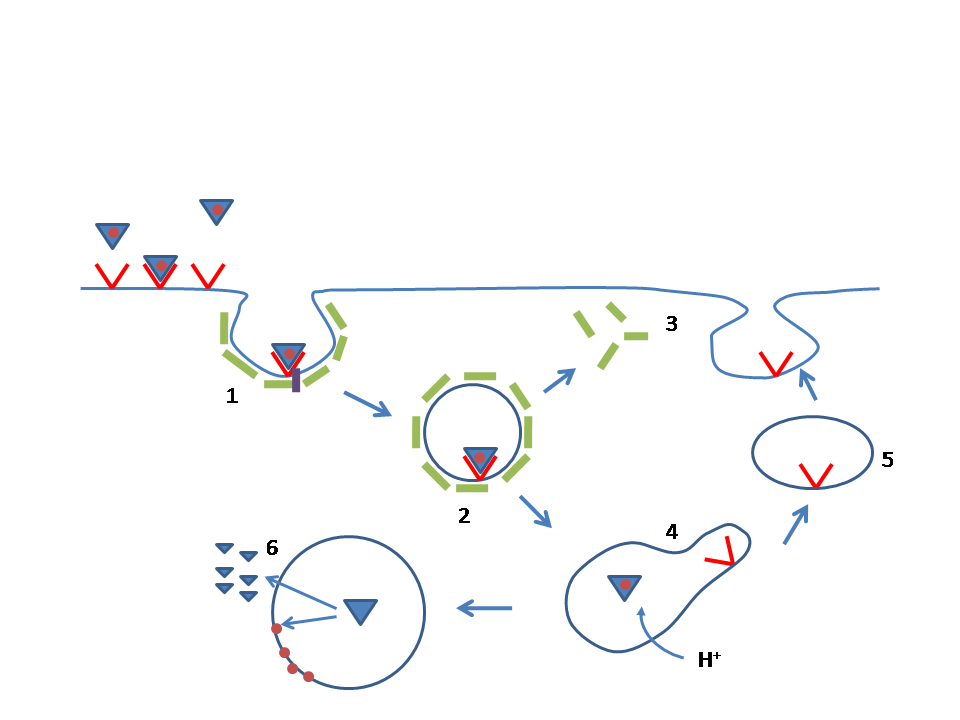
PCSK9 normally targets LDL receptors for degradation. Gain-of-function PCSK9 mutations cause autosomal dominant familial hypercholesterolaemia, whereas reduced PCSK9 activity lowers LDL-C and cardiovascular risk. Blocking PCSK9 therefore keeps more LDL receptors on the hepatocyte surface.
| Drug | Type | Usual dosing | Key point |
|---|---|---|---|
| Evolocumab | Fully human monoclonal antibody | 140 mg subcutaneously every 2 weeks or 420 mg monthly | Approved down to age 10 in familial hypercholesterolaemia |
| Alirocumab | Fully human monoclonal antibody | 75 mg subcutaneously every 2 weeks; up to 150 mg every 2 weeks | Injection-site reactions, nasopharyngitis, myalgia |
| Inclisiran | Small interfering RNA | 284 mg subcutaneously, again at 3 months, then every 6 months | Blocks intracellular PCSK9 synthesis; useful when adherence to injections is poor |
When are fibrates and niacin used, and what are their adverse effects?
Fibrates activate the nuclear receptor PPAR-alpha, which increases lipoprotein lipase-mediated breakdown of triglyceride-rich particles and reduces substrate for hepatic triglyceride synthesis. They lower triglycerides and raise HDL, and are used for severe hypertriglyceridaemia (Fredrickson types IV and V).
- Gallstones: PPAR-alpha downregulates bile acid production, so active gallbladder disease is a contraindication.
- Myopathy: small risk alone; higher with statins, especially gemfibrozil.
- Raised creatinine and homocysteine: reversible; check renal function, particularly before combining with a statin.
- Liver enzymes and CPK: may be deranged during therapy.
Niacin (nicotinic acid) is the most potent agent for raising HDL. It inhibits diacylglycerol acyltransferase-2 (DGAT2), decreasing hepatic triglyceride synthesis and speeding degradation of apoB-containing lipoproteins. Its effects on fasting glucose involve the niacin receptor GPR109A.
| Effect | Detail |
|---|---|
| Flushing | Burning and itching of the face and chest lasting about 20–30 minutes; caused by the nicotinic acid component, not nicotinamide |
| Prevention of flushing | Aspirin up to 325 mg given 30 minutes before the dose; laropiprant blocks the prostaglandin D2 receptor |
| Hyperuricaemia | Can precipitate gout and antagonise gout medicines |
| Hyperglycaemia | Raises fasting glucose; monitor diabetics closely |
| Hepatotoxicity | Rising AST and ALT; avoid in chronic alcohol misuse |
How do bile acid sequestrants work and when are they avoided?
Cholestyramine, colestipol and colesevelam bind bile acids in the intestine and prevent their reabsorption. The liver then converts more cholesterol into bile acids, increasing LDL receptor activity and lowering LDL-C. They are indicated for hypercholesterolaemia without hypertriglyceridaemia and are among the few drugs considered safe for children with heterozygous familial hypercholesterolaemia.
| Point | Detail |
|---|---|
| Triglycerides | May rise; inappropriate when triglycerides exceed 300 mg/dL or in type III hyperlipoproteinaemia (pancreatitis risk) |
| Gut effects | Constipation, bloating, abdominal pain and dyspepsia are the commonest complaints |
| Vitamins | Reduce absorption of fat-soluble vitamins A, D, E and K; high-dose use can cause bleeding from vitamin K deficiency |
| Drug binding | Bind thyroxine, digoxin, warfarin and others; give those drugs 1 hour before or 4 hours after the resin |
| Pruritus | Cholestyramine relieves itching from partial biliary obstruction; contraindicated in complete obstruction |
| Diabetes | Colesevelam also lowers HbA1c in type 2 diabetes |
What is bempedoic acid and how is it different from statins?
Bempedoic acid is an oral prodrug. In the liver it is activated by very-long-chain acyl-CoA synthetase-1 (ACSVL1) to bempedoyl-CoA, the first-in-class inhibitor of ATP-citrate lyase — an enzyme upstream of HMG-CoA reductase in the cholesterol synthesis pathway. Because ACSVL1 is absent from skeletal muscle, the drug is not activated in muscle, which is the rationale for fewer muscle effects than statins.
- Hyperuricaemia and gout: its glucuronide metabolite competes with uric acid for the renal OAT2 transporter; serum creatinine can also rise.
- Tendon rupture: reported, mainly with concomitant high-dose statins.
- Outcome evidence: the CLEAR Outcomes trial studied patients with, or at high risk of, cardiovascular disease.
Which hypolipidaemic drug facts are commonly confused in exams?
| Trap | Correct fact |
|---|---|
| Statins mainly work by blocking synthesis | They lower plasma LDL chiefly by upregulating hepatic LDL receptors |
| Routine CK and LFT checks are required on statins | Baseline testing; routine repeat monitoring is not recommended |
| Resins are good for mixed dyslipidaemia | They can raise triglycerides; avoid when triglycerides are high |
| Inclisiran is a monoclonal antibody | It is a small interfering RNA given every 6 months after loading |
| Niacin flushing is histamine-mediated | It is prostaglandin-mediated and reduced by aspirin pre-treatment |
| Fibrates are safe with any statin | Gemfibrozil plus a statin markedly increases myopathy risk |
For drug-of-choice style questions, pair this page with antihypertensive drugs and anti-diabetic drugs, because cardiovascular risk questions often combine all three classes.