How are mechanical injuries classified?
A mechanical injury is damage to the body caused by physical force. Forensic medicine classifies it by the type of force, because the pattern of the wound points to the weapon and to how the injury happened — questions a court will ask.
| Force | Injuries | Typical agent |
|---|---|---|
| Blunt force | Abrasion, contusion (bruise), laceration, fracture | Fist, kick, stick, rod, stone, fall, road traffic crash |
| Sharp force | Incised wound (cut), stab (penetrating) wound | Knife, razor blade, glass, dagger, screwdriver, scissors |
| Special types | Firearm, blast, thermal, electrical injuries | Dealt with as separate topics |
What is an abrasion and what are its types?
An abrasion is the removal of the superficial layer of skin (mainly the epidermis) by friction or pressure. It bleeds little, and if it stays in the epidermis it heals without a scar, usually within about 2 weeks. Despite being minor clinically, it is one of the most informative injuries in forensic medicine.
| Type | Mechanism | Example and significance |
|---|---|---|
| Scratch (linear) | Pointed object moving across the skin | Fingernail scratches: on the neck suggest throttling; on the inner thighs or genitalia suggest resistance in sexual assault |
| Graze (brush) | Broad rough surface sliding over the skin | Road traffic crashes and falls; extensive ones are called brush burns. The heap of scraped epidermis shows the direction of force |
| Pressure abrasion | Prolonged perpendicular pressure | Ligature mark in hanging or strangulation reproduces the rope's texture |
| Impact abrasion | Brief forceful perpendicular blow | Patterned marks from a tyre, grille or shoe sole |
- What an abrasion proves: an object touched the skin at an angle of less than 90°, with movement and friction between them.
- Patterned (imprint) abrasions reproduce the surface of the object and can be matched to a weapon.
- Trace evidence: soil, glass, fibres or paint in an abrasion are collected before cleaning.
- Antemortem vs postmortem: a postmortem abrasion is yellow-brown and parchment-like with no vital reaction; an antemortem one shows bleeding and inflammation. Histology of healing stages helps estimate age.
What is a contusion and how does its colour change?
A contusion (bruise) is bleeding into tissues from small vessels ruptured by blunt force, with the skin surface intact. It can occur in skin, mucosa and internal organs (for example a cerebral or pulmonary contusion).
- May appear late: deep bruises may not be visible for days, so a normal first examination does not exclude blunt force. Re-examine after a day if the history suggests injury.
- May appear away from the impact: blood tracks along tissue planes. Raccoon (periorbital) eyes after a base-of-skull fracture are the classic example — they are not from a blow to the eye.
- Patterned bruises reproduce the object — a shoe sole, fingertip pressure or a tramline bruise (parallel linear bruises with a pale strip between them) from a single elongated weapon.
- Bruise vs postmortem lividity: in a bruise, blood has escaped into the tissues; in lividity it stays inside vessels.
- Bruises are harder to see on dark skin, so absence of visible bruising proves little.
| Colour | Pigment responsible | Meaning |
|---|---|---|
| Red, blue, purple | Haemoglobin (oxy- and deoxy-) | Fresher bruise |
| Green | Biliverdin (first breakdown product of haem) | Older |
| Yellow | Bilirubin — the main pigment of old bruises | Older still |
| Brown | Haemosiderin | Late; haemosiderin in tissue sections marks an older injury |
| Fades | Pigments cleared by lymphatics | Usually gone in about 2 weeks |
What is a laceration and how is it recognised?
A laceration is a tear of skin and underlying tissue caused by blunt force — a direct blow, crushing, or stretching of tissue. It is a blunt-force injury even if the doctor is tempted to call it a 'cut'.
- Margins: ragged, irregular and usually bruised and abraded.
- Base: irregularly torn, with strands of subcutaneous tissue bridging the wound — the key feature that separates a laceration from an incised wound.
- Scalp trap: on the scalp, a laceration can look like an incised wound. A hand lens shows the ragged, bruised margins and tissue bridges.
- Trace evidence (soil, glass, paint) may be found in the wound.
How do incised wounds and stab wounds differ from lacerations?
Sharp-force injuries are caused by objects with a cutting edge or a sharp point. An incised wound (cut) is made by the edge drawn across the skin; a stab wound is made by a point driven in.
| Feature | Laceration | Incised wound | Stab wound |
|---|---|---|---|
| Force | Blunt | Sharp edge | Sharp point |
| Dimensions | Variable | Longer than deep | Deeper than long (wide) |
| Margins | Ragged, bruised, abraded | Clean-cut, no bruising | Clean-cut; hilt mark possible if driven fully in |
| Tissue bridges | Present | Absent — all tissue divided | Absent |
| Typical weapon | Stick, stone, rod, fall, crash | Knife, razor, glass | Knife, dagger, screwdriver, scissors |
| Main danger | Underlying fracture or organ injury | Superficial vessels and nerves (for example the neck) | Deep organ and vessel injury even with small skin wound |
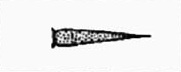
- Stab wound shape gives the blade: both ends sharp suggests a double-edged blade; one sharp and one blunt (square or split 'fishtail') end suggests a single-edged blade.
- Hilt (guard) mark: a bruise or abrasion around the wound (sometimes showing the hilt pattern) means the blade went in up to the hilt.
- V-shaped notch: twisting of the knife or movement of the victim during withdrawal.
- Clothing: compare cuts in clothing with wounds; their absence over a wound can point to self-infliction.
- Every stab wound is a surgical emergency until deep injury is ruled out — the neck, chest, abdomen and groin are highest risk.
What are defence wounds and hesitation cuts?
Defence wounds are injuries the victim gets while trying to ward off an attack. Their presence points to homicide and a conscious, resisting victim; their absence may mean a surprise attack, restraint or incapacitation.
- Site: hands, forearms and fingers. In one homicide series, defence injuries were on the hands in 80%, forearms in 65% and fingers in 40%.
- Sharp weapon: mostly incised wounds — classically on the fingers and palms and the back of the hand.
- Blunt weapon: contusions and fractures of the forearm and hand.
Hesitation (tentative, trial) cuts are the opposite clue — they point to suicide. They are found in about 70% of sharp-force suicides: multiple, superficial, parallel cuts near the main fatal wound, commonly on the forearms and the neck.
| Clue | Suggests suicide | Suggests homicide |
|---|---|---|
| Hesitation cuts | Present | Absent |
| Defence wounds | Absent | Present |
| Clothing over the wound | Usually undamaged | Usually cut through |
| Stab wound orientation | Usually horizontal | Usually vertical |
| Overall frequency | Less common (about 1 suicide to 5 homicides by sharp objects) | More common |
What is whiplash, and which injuries follow road traffic crashes?
Most serious blunt trauma comes from motor vehicle crashes and pedestrian injuries; falls are the other major cause, especially in the elderly. Severity depends on the mechanism of injury and the patient's comorbidities, so the medico-legal report should record the mechanism as well as the wounds.
| Feature | Point to remember |
|---|---|
| Definition | Whiplash-associated disorders (WAD): soft-tissue injury of the cervical spine from an acceleration-deceleration mechanism, typically a motor vehicle accident; the term was introduced by Crowe in 1928 |
| Mechanism | The spine takes a sigmoid shape; lower cervical segments rotate posteriorly, separating anterior elements and impacting the facet joints |
| Features | Neck pain, stiffness and headache; possible neurological or psychosocial symptoms |
| Imaging | Often normal; WAD is a diagnosis of exclusion; NEXUS and the Canadian C-spine rule decide who needs imaging |
| Treatment | Early mobilisation and activity rather than rest or a prolonged cervical collar; supervised exercise; analgesics or NSAIDs |
| Prognosis | About one-quarter develop chronic WAD with persistent pain and disability |
How should mechanical injuries be examined and documented?
- Number each injury separately — never write 'multiple injuries'.
- Type (abrasion, contusion, laceration, incised, stab) using exact terms.
- Site in relation to fixed anatomical landmarks.
- Size — length, breadth and depth (depth of stab wounds is often known only at surgery).
- Shape, margins, colour and pattern — patterned injuries can identify the weapon.
- Direction of force (for example the heap of epidermis in a graze).
- Trace evidence (glass, soil, fibres, hair) collected and sealed.
- Photographs with a scale before and after treatment.
- Age of injury stated only within honest limits; histology (vital reaction, inflammation, haemosiderin) is more reliable than colour.