Question 1 · NEET PG Aug 2026
For a short day-care procedure an anaesthetist wants an opioid whose offset is independent of how long it has been infused, because it is broken down by nonspecific plasma and tissue esterases rather than by the liver. Which opioid best fits this description?
- A.Sufentanil
- B.Alfentanil
- C.Fentanyl
- D.Remifentanil
Show answer and explanation
Answer: D. Remifentanil
Correct answer: D. Remifentanil.
Remifentanil is hydrolysed by nonspecific plasma and tissue esterases, so its clearance is independent of hepatic and renal function. Its context-sensitive half-time stays about 3-4 minutes whatever the infusion duration, giving rapid, predictable recovery that is ideal for day-care and titratable infusions.
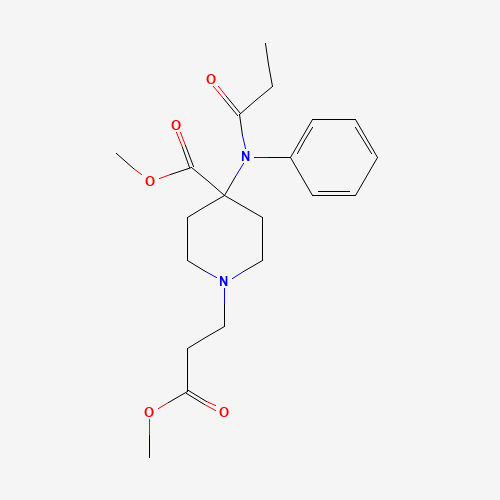
Remifentanil; its ester linkage is cleaved by plasma esterases.
Incorrect Options:
- A. Sufentanil: the most potent of these, but hepatically metabolised with an accumulating context-sensitive half-time.
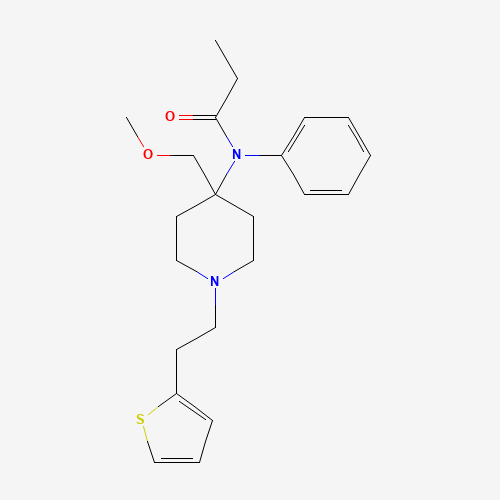
Sufentanil, a highly potent hepatically cleared opioid. - B. Alfentanil: rapid onset from high unionised fraction, but liver-metabolised, so it accumulates with prolonged infusion.
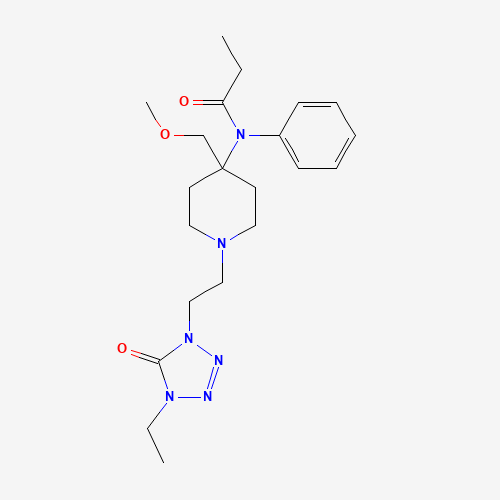
Alfentanil, fast in onset but hepatically metabolised. - C. Fentanyl: highly lipophilic and hepatically cleared; its context-sensitive half-time lengthens markedly with continuous infusion.
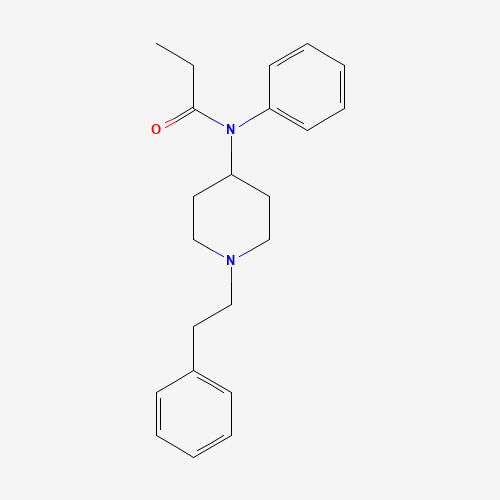
Fentanyl, which accumulates after prolonged infusion.
High-Yield Facts:
- Remifentanil is the only common opioid metabolised by nonspecific esterases (not plasma pseudocholinesterase).
- Its context-sensitive half-time is essentially flat at 3-4 minutes.
- Because offset is so fast, plan post-operative analgesia before stopping the infusion.
- Metabolism is unaffected by hepatic or renal impairment or by pseudocholinesterase deficiency.