INICET Anesthesia Previous Year Questions (2018–2026)

60 INICET Anesthesia PYQs from 2018 to 2026, tagged by topic, with an explanation for every question. Practise AIIMS-pattern Anesthesia questions before INICET November 2026.

Last verified: 24 September 2026 against AIIMS New Delhi notices and aiimsexams.ac.in.

Quick Answer

Kinase has 60 INICET Anesthesia PYQs from 2018 to 2026 — 1.8% of all INICET PYQs in the bank. The most-asked topic is Airway Assessment and Resuscitation (23 questions). INICET is marked +1 / −1/3, so a blind guess is worth nothing on average.

Anesthesia in INICET at a glance

INICET Anesthesia PYQs on Kinase60 (1.8% of all INICET PYQs)
Years covered2018–2026
Marking+1 correct, −1/3 wrong
NEET-PG Anesthesia PYQs on Kinase37

Most-asked Anesthesia topics in INICET PYQs

TopicINICET PYQsShare of subject
Airway Assessment and Resuscitation2338%
General Anaesthesia1017%
Local and Regional Anaesthesia915%
Preoperative Evaluation and Monitoring813%
Complications of Anaesthesia47%

Across NEET PG and INI-CET papers: Most repeated Anesthesia topics →

Sample INICET Anesthesia PYQs with answers

Question 1 · INICET May 2026

During a lumbar puncture, arrange the following structures in the order in which the needle pierces them:

1. Ligamentum flavum
2. Supraspinous ligament
3. Interspinous ligament
4. Dura mater
5. Arachnoid mater
6. Epidural space
7. Subdural space

  1. A.2-1-3-5-4-6-7
  2. B.2-3-1-6-4-7-5
  3. C.3-2-1-5-4-7-6
  4. D.2-3-5-1-4-6-7
Show answer and explanation

Answer: B. 2-3-1-6-4-7-5

The correct answer is 2-3-1-6-4-7-5.

In a midline lumbar puncture the needle travels from superficial to deep through the supraspinous ligament (2), then the interspinous ligament (3), then the ligamentum flavum (1), which gives the characteristic loss of resistance. It next enters the epidural space (6), pierces the dura mater (4), crosses the potential subdural space (7), and finally pierces the arachnoid mater (5) to reach the subarachnoid space, where CSF is collected. This gives the sequence 2-3-1-6-4-7-5.

Key discriminators: the supraspinous ligament is always crossed first, and the ligamentum flavum is the deepest of the three ligaments, lying just before the epidural space. The epidural space therefore precedes the dura, and the arachnoid is the last membrane crossed before CSF. Any option that places the ligamentum flavum before the interspinous ligament, or the dura before the epidural space, is wrong.

Incorrect Options:

  • 2-1-3-5-4-6-7: places ligamentum flavum before the interspinous ligament and the arachnoid before the dura, which is reversed.
  • 3-2-1-5-4-7-6: starts with the interspinous ligament and ends with the epidural space, both out of order.
  • 2-3-5-1-4-6-7: places the arachnoid third and the ligamentum flavum fourth, far too superficial.

High-Yield Facts:

  • The ligamentum flavum gives the loss of resistance felt during the procedure.
  • The epidural space lies between the ligamentum flavum and the dura.
  • Lumbar puncture is done at L3-L4 or L4-L5, below the conus medullaris.
  • CSF flows only after the arachnoid mater is pierced.
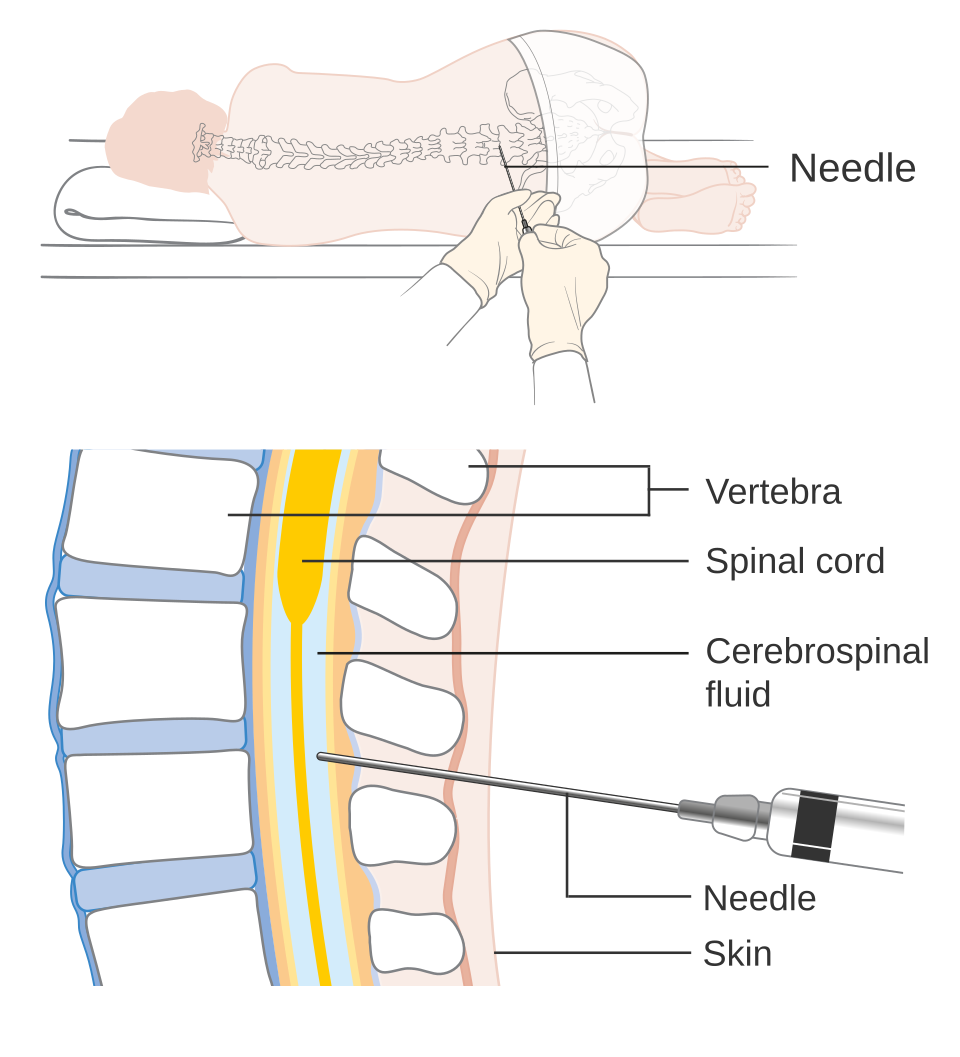
Diagram of a lumbar puncture showing the needle passing between lumbar vertebrae into the subarachnoid space to sample cerebrospinal fluid

Figure: Lumbar puncture - the needle is advanced between the vertebrae through the ligaments and meninges into the subarachnoid space to obtain CSF.
Question 2 · INICET May 2026

Regarding the fall in blood pressure produced by halothane, consider the following statements:

1. A decrease in BP of about 20-30 mmHg is common
2. The early fall in BP runs parallel to the depth of anaesthesia
3. Cardiac output decreases as anaesthesia deepens
4. Baroreceptors are triggered by the fall in BP

Which of the above statements are correct?

  1. A.1, 2
  2. B.1, 2, 3
  3. C.1, 2, 3, 4
  4. D.2, 3, 4
Show answer and explanation

Answer: B. 1, 2, 3

The correct answer is 1, 2, 3.

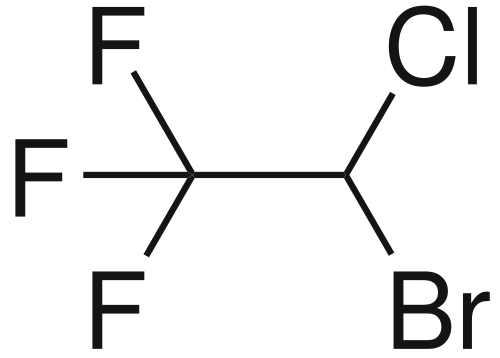
Halothane produces a dose-dependent fall in blood pressure, commonly around 20-30 mmHg (statement 1). Because the depression is graded with dose, the early fall in BP runs parallel to the depth of anaesthesia and can serve as a rough index of it (statement 2). The principal mechanism is direct myocardial depression, so cardiac output falls progressively as anaesthesia deepens (statement 3). Statement 4 is wrong because halothane blunts the baroreceptor reflex rather than triggering it, so the expected compensatory tachycardia does not occur and bradycardia (vagally mediated) is typical instead.

The trap is any option that includes statement 4. Although the BP genuinely falls, the baroreflex is depressed, not activated, which is why the heart rate drops rather than rising. Hence only statements 1, 2, and 3 are correct.

Incorrect Options:

  • 1, 2: omits statement 3, yet cardiac output does fall with deepening anaesthesia.
  • 1, 2, 3, 4: wrongly adds statement 4 - the baroreceptor reflex is depressed, not triggered.
  • 2, 3, 4: drops the true statement 1 and keeps the false statement 4.

High-Yield Facts:

  • Halothane is a direct myocardial depressant, lowering cardiac output and BP.
  • It depresses the baroreceptor reflex, so there is no reflex tachycardia.
  • It sensitizes the myocardium to catecholamines, causing arrhythmias.
  • Halothane hepatitis and malignant hyperthermia are key toxicities.
Skeletal chemical structure of halothane, 2-bromo-2-chloro-1,1,1-trifluoroethane

Figure: Halothane (2-bromo-2-chloro-1,1,1-trifluoroethane), a halogenated volatile anaesthetic that depresses the myocardium and the baroreceptor reflex.

Question 3 · INICET 2025

In the post-operative period, it is essential to ensure the full recovery of muscle strength before extubation. Which of the following pharmacological agents is the standard choice for reversing the competitive neuromuscular blockade induced by non-depolarizing relaxants like vecuronium?

  1. A.Atropine sulfate
  2. B.Dantrolene sodium
  3. C.Neostigmine methylsulfate
  4. D.Baclofen
Show answer and explanation

Answer: C. Neostigmine methylsulfate

Correct Answer: C. Neostigmine methylsulfate

Detailed Anesthesia Explanation:

Safe emergence from general anesthesia requires the pharmacologic reversal of residual neuromuscular blockade to prevent post-operative respiratory complications.

  • Neostigmine (The Reversal Agent):
    • Mechanism: It acts by reversibly inhibiting the enzyme acetylcholinesterase. This leads to an accumulation of endogenous acetylcholine at the motor endplate, which competes with and eventually displaces non-depolarizing agents like vecuronium or rocuronium from the nicotinic receptors.
    • Clinical Practice: Reversal should only be initiated once some degree of spontaneous recovery is evident (e.g., at least two twitches on a train-of-four monitor).
  • Analysis of Other Options:
    • Atropine: An anticholinergic drug used to counteract the muscarinic side effects of neostigmine (like bradycardia), but it does not reverse muscle relaxation itself.
    • Dantrolene: A direct-acting muscle relaxant used primarily in the treatment of Malignant Hyperthermia by preventing calcium release from the sarcoplasmic reticulum.
    • Baclofen: A GABA-B agonist used for the management of chronic spasticity; it has no role in the acute reversal of surgical neuromuscular blockade.

Anesthesia concept guides

Browse the full concept library and clinical image atlas.

Practise the rest: open the Kinase question bank, choose Anesthesia, set the exam to INICET and switch on PYQs only. Build 50-question custom tests to rehearse one 45-minute INICET section.

Frequently Asked Questions

How many INICET Anesthesia PYQs does Kinase have?▼
Kinase has 60 INICET Anesthesia previous year questions from 2018 to 2026, each with an explanation — 1.8% of all INICET PYQs in the bank. There are also 37 NEET-PG Anesthesia PYQs for extra practice.
What are the most-asked Anesthesia topics in INICET?▼
In Kinase's INICET Anesthesia PYQs, the most-asked topics are Airway Assessment and Resuscitation, General Anaesthesia, Local and Regional Anaesthesia. Airway Assessment and Resuscitation alone accounts for 23 of the 60 questions.
How is INICET Anesthesia marked?▼
Like every INICET subject, Anesthesia questions are +1 for a correct answer and −1/3 for a wrong one. INICET has 200 MCQs in four 45-minute sections of 50, for 200 marks.
Are INICET Anesthesia PYQs different from NEET-PG?▼
Both exams test the MBBS syllabus, so most Anesthesia concepts overlap. INICET is conducted by AIIMS New Delhi twice a year and marked +1 / −1/3; NEET-PG is conducted by NBEMS once a year and marked +4 / −1.
When is the next INICET?▼
INICET November 2026 is on 1 November 2026, with registration from 16 September to 13 October 2026 on aiimsexams.ac.in.
60 Anesthesia PYQs
2018–2026 papers
Topic + year tagged

Ready to Start Practicing?

INICET November 2026 is on 1 November — registration closes 13 October.

Start Free Practice

No credit card required