INICET Psychiatry Previous Year Questions (2018–2026)

70 INICET Psychiatry PYQs from 2018 to 2026, tagged by topic, with an explanation for every question. Practise AIIMS-pattern Psychiatry questions before INICET November 2026.

Last verified: 24 September 2026 against AIIMS New Delhi notices and aiimsexams.ac.in.

Quick Answer

Kinase has 70 INICET Psychiatry PYQs from 2018 to 2026 — 2.1% of all INICET PYQs in the bank. The most-asked topic is Mood Disorders (17 questions). INICET is marked +1 / −1/3, so a blind guess is worth nothing on average.

Psychiatry in INICET at a glance

INICET Psychiatry PYQs on Kinase70 (2.1% of all INICET PYQs)
Years covered2018–2026
Marking+1 correct, −1/3 wrong
NEET-PG Psychiatry PYQs on Kinase47

Most-asked Psychiatry topics in INICET PYQs

TopicINICET PYQsShare of subject
Mood Disorders1724%
Clinical Psychiatry1014%
Neurosis811%
Substance-Related Disorders811%
Child Psychiatry57%

Across NEET PG and INI-CET papers: Most repeated Psychiatry topics →

Sample INICET Psychiatry PYQs with answers

Question 1 · INICET May 2026

Which of the following is true about nicotine replacement therapy?

  1. A.Nicotine gums are better than lozenges
  2. B.Avoid tea or coffee just before and 15 minutes after the gum
  3. C.Varenicline (used in NRT) carries a black box warning for cardiovascular effects
  4. D.Nicotine is delivered by the gastrointestinal route
Show answer and explanation

Answer: B. Avoid tea or coffee just before and 15 minutes after the gum

The correct answer is Avoid tea or coffee just before and 15 minutes after the gum.

Nicotine from gum and lozenges is absorbed through the buccal (oral) mucosa, which needs an alkaline pH. The gum contains a buffer, but acidic drinks such as coffee, tea, juice and soft drinks lower the oral pH and sharply reduce nicotine absorption. Patients are therefore told not to eat or drink for about 15 minutes before and while using the gum, and to use the chew and park technique - chew until a peppery tingle appears, then park the gum against the cheek to absorb, over about 30 minutes (continuous chewing causes nausea and hiccups). So statement B is correct.

The other statements are false. Nicotine gums and lozenges have comparable efficacy (A is wrong). Varenicline is not an NRT - it is a partial nicotinic-receptor agonist, and its boxed warning was for neuropsychiatric effects (later removed), not cardiovascular ones (C is wrong). Swallowed nicotine is poorly absorbed and undergoes first-pass metabolism, so NRT does not work by the gastrointestinal route (D is wrong).

Incorrect Options:

  • Nicotine gums are better than lozenges: gums and lozenges have similar efficacy, and neither is clearly superior.
  • Varenicline carries a CVS black box warning: varenicline is not NRT, and its boxed warning was neuropsychiatric (now removed).
  • Nicotine is delivered by the gastrointestinal route: NRT nicotine is absorbed buccally, and swallowed nicotine is largely inactivated by first-pass metabolism.

High-Yield Facts:

  • Avoid acidic drinks (coffee, tea, juice) 15 minutes before and during nicotine gum use.
  • Nicotine gum and lozenge are absorbed via the buccal mucosa, needing an alkaline pH.
  • Varenicline is a partial nicotinic agonist, NOT an NRT.
  • Use the chew and park technique for nicotine gum.
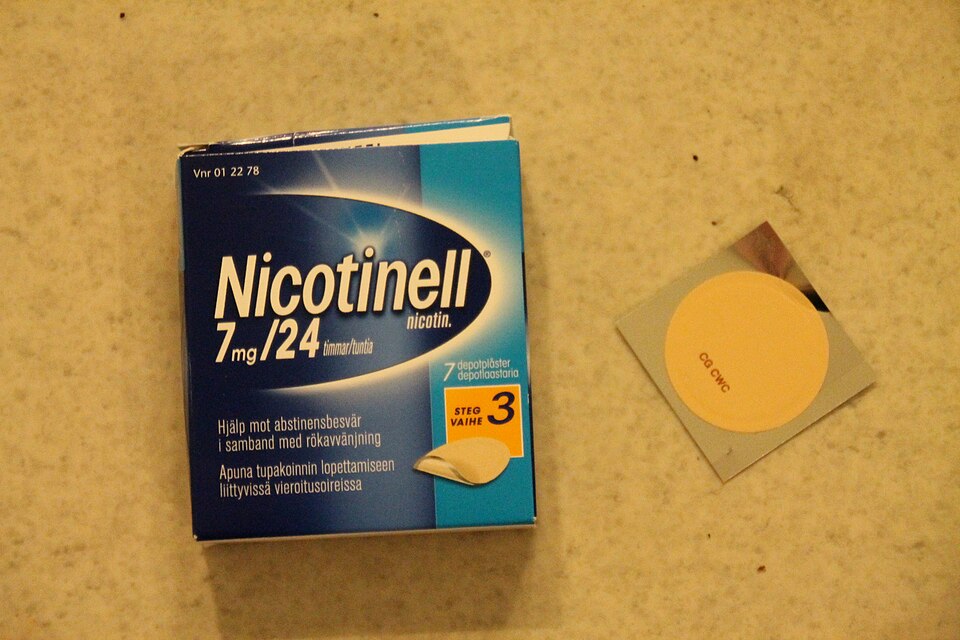
A transdermal nicotine patch applied to the skin, a form of nicotine replacement therapy

Figure 1: A nicotine patch - a transdermal form of NRT.
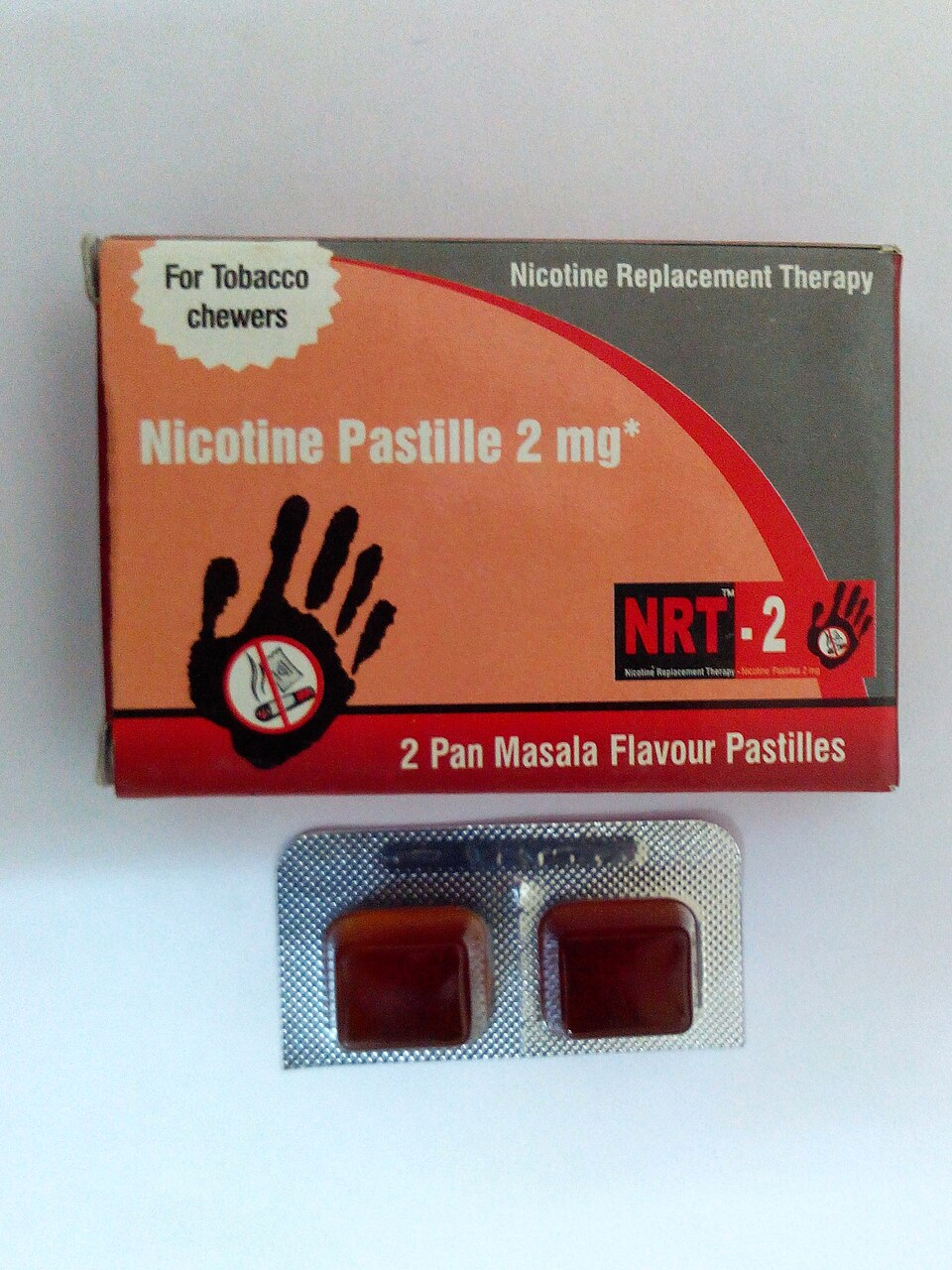
A box of nicotine pastilles (lozenges) labelled as nicotine replacement therapy

Figure 2: A nicotine lozenge/pastille - like the gum, it is absorbed through the buccal mucosa.
Question 2 · INICET May 2026

Which of the following is a novel antidepressant drug?

  1. A.Trazodone
  2. B.Vilazodone
  3. C.Blonanserin
  4. D.Etizolam
Show answer and explanation

Answer: B. Vilazodone

The correct answer is Vilazodone.

Vilazodone is a novel antidepressant approved in 2011. It is a serotonin partial agonist and reuptake inhibitor (SPARI) - it both blocks the serotonin transporter (like an SSRI) and is a partial agonist at the 5-HT1A receptor (like buspirone). This dual action raises synaptic serotonin and may give a faster onset with less sexual dysfunction. It is used for major depressive disorder, so it is the novel antidepressant here.

The other options do not fit. Trazodone is an OLDER atypical antidepressant (a serotonin antagonist and reuptake inhibitor, SARI), not novel. Blonanserin is an atypical antipsychotic (a dopamine D2 and 5-HT2A antagonist), not an antidepressant. Etizolam is a thienodiazepine - a benzodiazepine-like anxiolytic and hypnotic - not an antidepressant.

Incorrect Options:

  • Trazodone: an older atypical antidepressant (SARI), also used for insomnia, but not a novel agent.
  • Blonanserin: an atypical antipsychotic (D2 and 5-HT2A antagonist), not an antidepressant.
  • Etizolam: a thienodiazepine (benzodiazepine-like) anxiolytic and hypnotic, not an antidepressant.

High-Yield Facts:

  • Vilazodone is a novel antidepressant (SPARI: SSRI plus 5-HT1A partial agonist).
  • Vortioxetine is another novel serotonin-modulator antidepressant.
  • Trazodone is an OLDER atypical antidepressant (SARI), often used for insomnia.
  • Blonanserin is an antipsychotic, and etizolam is a benzodiazepine-like anxiolytic.
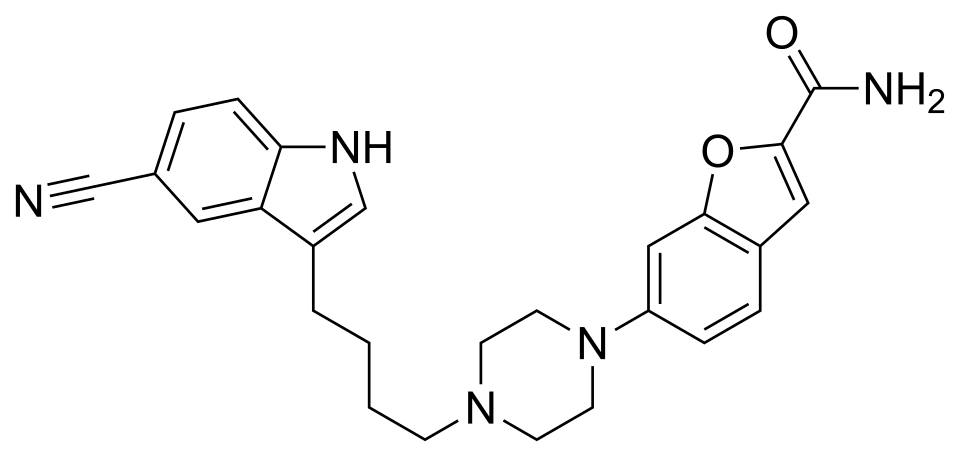
Skeletal chemical structure of vilazodone

Figure 1: Vilazodone - a novel serotonin partial agonist and reuptake inhibitor (SPARI) antidepressant.

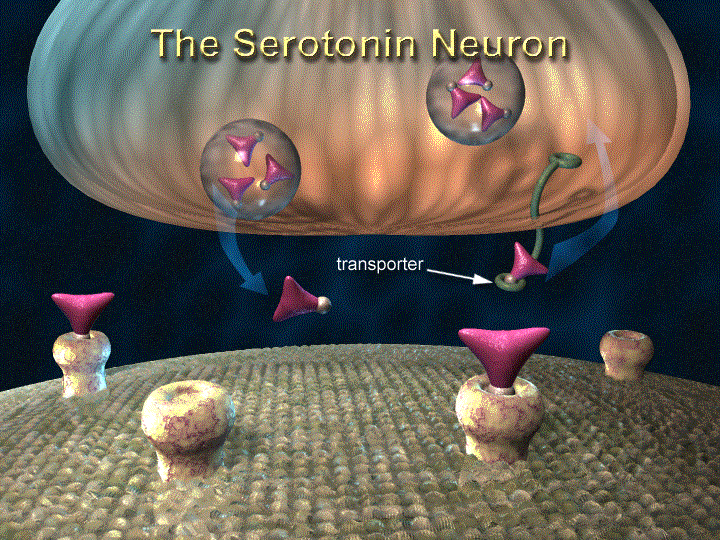
Diagram of a serotonin neuron showing serotonin release, receptors
  and the serotonin transporter

Figure 2: Vilazodone acts at the serotonin synapse - inhibiting the serotonin transporter and partially agonising the 5-HT1A receptor.

Question 3 · INICET May 2026

A 45-year-old man who was recently divorced, is depressed and alcohol-dependent, says "What is the point in living?" What is the next best step in treatment?

  1. A.Reassurance and tell that it is a transient phenomenon
  2. B.Hospitalisation and safety precautions
  3. C.CBT and weekly OPD visit
  4. D.Antidepressant and weekly OPD
Show answer and explanation

Answer: B. Hospitalisation and safety precautions

The correct answer is Hospitalisation and safety precautions.

This patient carries multiple high-risk factors for suicide - male, middle-aged, recently divorced (a major loss), depression and alcohol dependence - and is now voicing active suicidal ideation (what is the point in living?). With active suicidal thoughts in a high-risk patient who may not be able to keep himself safe, the safest next step is psychiatric hospitalisation with suicide precautions (close observation, removal of means, a safe environment) while the depression and alcohol use are treated. Safety always comes first.

Outpatient options are unsafe here. Reassuring him that it is transient dismisses a real risk, and CBT or an antidepressant with only weekly OPD follow-up leaves a high-risk patient unprotected between visits. Antidepressants and psychotherapy are important, but they are started alongside or after ensuring immediate safety, not instead of it.

Incorrect Options:

  • Reassurance and tell that it is a transient phenomenon: false reassurance dismisses a serious risk and can be dangerous.
  • CBT and weekly OPD visit: outpatient therapy leaves an actively suicidal high-risk patient unsafe between visits.
  • Antidepressant and weekly OPD: medication is needed but does not ensure immediate safety, and antidepressants take weeks to act.

High-Yield Facts:

  • Active suicidal ideation with high risk means admit for safety (hospitalisation plus suicide precautions).
  • High-risk factors: male, older age, depression, alcohol or substance use, recent loss, prior attempts.
  • Ensure safety FIRST, then treat the depression and substance use.
  • Never give false reassurance to a suicidal patient.

Psychiatry concept guides

Browse the full concept library and clinical image atlas.

Practise the rest: open the Kinase question bank, choose Psychiatry, set the exam to INICET and switch on PYQs only. Build 50-question custom tests to rehearse one 45-minute INICET section.

Frequently Asked Questions

How many INICET Psychiatry PYQs does Kinase have?▼
Kinase has 70 INICET Psychiatry previous year questions from 2018 to 2026, each with an explanation — 2.1% of all INICET PYQs in the bank. There are also 47 NEET-PG Psychiatry PYQs for extra practice.
What are the most-asked Psychiatry topics in INICET?▼
In Kinase's INICET Psychiatry PYQs, the most-asked topics are Mood Disorders, Clinical Psychiatry, Neurosis. Mood Disorders alone accounts for 17 of the 70 questions.
How is INICET Psychiatry marked?▼
Like every INICET subject, Psychiatry questions are +1 for a correct answer and −1/3 for a wrong one. INICET has 200 MCQs in four 45-minute sections of 50, for 200 marks.
Are INICET Psychiatry PYQs different from NEET-PG?▼
Both exams test the MBBS syllabus, so most Psychiatry concepts overlap. INICET is conducted by AIIMS New Delhi twice a year and marked +1 / −1/3; NEET-PG is conducted by NBEMS once a year and marked +4 / −1.
When is the next INICET?▼
INICET November 2026 is on 1 November 2026, with registration from 16 September to 13 October 2026 on aiimsexams.ac.in.
70 Psychiatry PYQs
2018–2026 papers
Topic + year tagged

Ready to Start Practicing?

INICET November 2026 is on 1 November — registration closes 13 October.

Start Free Practice

No credit card required