INICET Medicine Previous Year Questions (2018–2026)

319 INICET Medicine PYQs from 2018 to 2026, tagged by topic, with an explanation for every question. Practise AIIMS-pattern Medicine questions before INICET November 2026.

Last verified: 24 September 2026 against AIIMS New Delhi notices and aiimsexams.ac.in.

Quick Answer

Kinase has 319 INICET Medicine PYQs from 2018 to 2026 — 9.5% of all INICET PYQs in the bank. The most-asked topic is Nervous System (61 questions). INICET is marked +1 / −1/3, so a blind guess is worth nothing on average.

Medicine in INICET at a glance

INICET Medicine PYQs on Kinase319 (9.5% of all INICET PYQs)
Years covered2018–2026
Marking+1 correct, −1/3 wrong
NEET-PG Medicine PYQs on Kinase161

Most-asked Medicine topics in INICET PYQs

TopicINICET PYQsShare of subject
Nervous System6119%
Cardiovascular System5718%
Renal System4013%
Endocrine Disorders3210%
Infectious Diseases289%

Across NEET PG and INI-CET papers: Most repeated Medicine topics →

Sample INICET Medicine PYQs with answers

Question 1 · INICET May 2026

In acute inferior wall myocardial infarction, which ECG criterion is the MOST sensitive for identifying right coronary artery (RCA) occlusion?

  1. A.ST elevation III greater than II
  2. B.ST depression aVL greater than I
  3. C.ST elevation in V3R and V4R
  4. D.High S to R ratio aVL
Show answer and explanation

Answer: C. ST elevation in V3R and V4R

The correct answer is ST elevation in V3R and V4R.

In acute inferior MI, ST elevation in the right-sided chest leads V3R-V4R indicates right ventricular involvement and points to a proximal RCA occlusion. ST elevation greater than 1 mm in V4R is about 100 percent sensitive for RCA and RV involvement, the most sensitive of the listed criteria. Other features confirm RCA over left circumflex, namely ST elevation greater in lead III than II and reciprocal ST depression in aVL and lead I, each highly specific (about 94 percent) but less sensitive.

The closest distractor is ST elevation in III greater than II. It is a classic RCA pointer and highly SPECIFIC (about 94 percent), but its sensitivity (about 88 percent) is lower than the right-sided leads. Because the question asks for the MOST sensitive criterion, ST elevation in V3R-V4R (about 100 percent) wins over the more specific III over II.

Incorrect Options:

  • ST elevation III greater than II: An RCA pointer that is highly specific (about 94 percent) but less sensitive than the right-sided leads.
  • ST depression aVL greater than I: A specific reciprocal sign of RCA occlusion (about 94 percent), but with lower sensitivity.
  • High S to R ratio aVL: An RCA criterion with only about 76 percent sensitivity.

High-Yield Facts:

  • Inferior MI shows ST elevation in II, III, and aVF.
  • ST elevation in V4R indicates RV infarction (proximal RCA).
  • ST elevation III greater than II favours RCA over circumflex.
  • In RV infarct, give IV fluids and avoid nitrates.
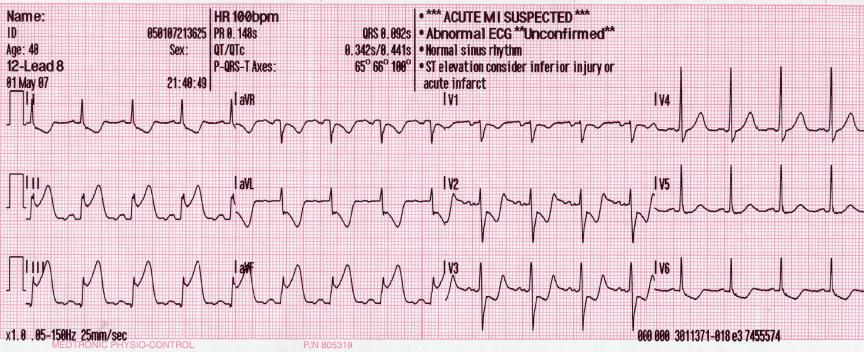
12-lead ECG with ST elevation in the inferior
  leads II, III, and aVF, machine-annotated as suspected acute inferior infarct

Figure: Acute inferior MI - ST elevation in II, III, and aVF. A right-sided lead V4R should be checked for RCA and right ventricular involvement.
Question 2 · INICET May 2026

A patient with malignancy develops humoral hypercalcemia of malignancy. Arrange the following management steps in the correct sequence.

1. IV saline hydration to promote calciuresis
2. Bisphosphonate therapy
3. Loop diuretics after hydration
4. Stop external calcium intake and drugs that aggravate hypercalcemia

  1. A.1, 4, 3, 2
  2. B.4, 1, 3, 2
  3. C.1, 2, 3, 4
  4. D.4, 3, 1, 2
Show answer and explanation

Answer: B. 4, 1, 3, 2

The correct answer is 4, 1, 3, 2.

Humoral hypercalcemia of malignancy is driven by tumour PTHrP, which mimics PTH. Management begins by removing aggravating factors - stop exogenous calcium, vitamin D, and thiazides (4). The cornerstone is aggressive IV normal saline (1) to correct hypovolemia and promote calciuresis. A loop diuretic is added only AFTER adequate rehydration (3), to enhance calcium excretion and avoid fluid overload, and it is no longer routine. Finally a bisphosphonate such as zoledronic acid (2) gives sustained control, with onset over 2 to 4 days. Calcitonin can be added for rapid temporary lowering.

The closest distractor is 1, 4, 3, 2 - starting saline before stopping the offending calcium and drugs. Saline is indeed the therapeutic cornerstone, but the first logical step is to remove what is worsening the hypercalcemia (step 4), so 4 precedes 1. Giving a bisphosphonate early (as in 1, 2, 3, 4) is wrong because it acts slowly and follows volume repletion.

Incorrect Options:

  • 1, 4, 3, 2: Saline before stopping offending calcium and drugs - the aggravating factors should be removed first.
  • 1, 2, 3, 4: Bisphosphonate is too early and the loop diuretic last; bisphosphonate is slow and follows hydration.
  • 4, 3, 1, 2: Gives the loop diuretic before saline hydration, which would worsen dehydration.

High-Yield Facts:

  • HHM is mediated by PTHrP, which mimics PTH.
  • IV normal saline is the cornerstone of acute treatment.
  • Give loop diuretics only after volume repletion.
  • Bisphosphonates act in 2 to 4 days; calcitonin works within hours.
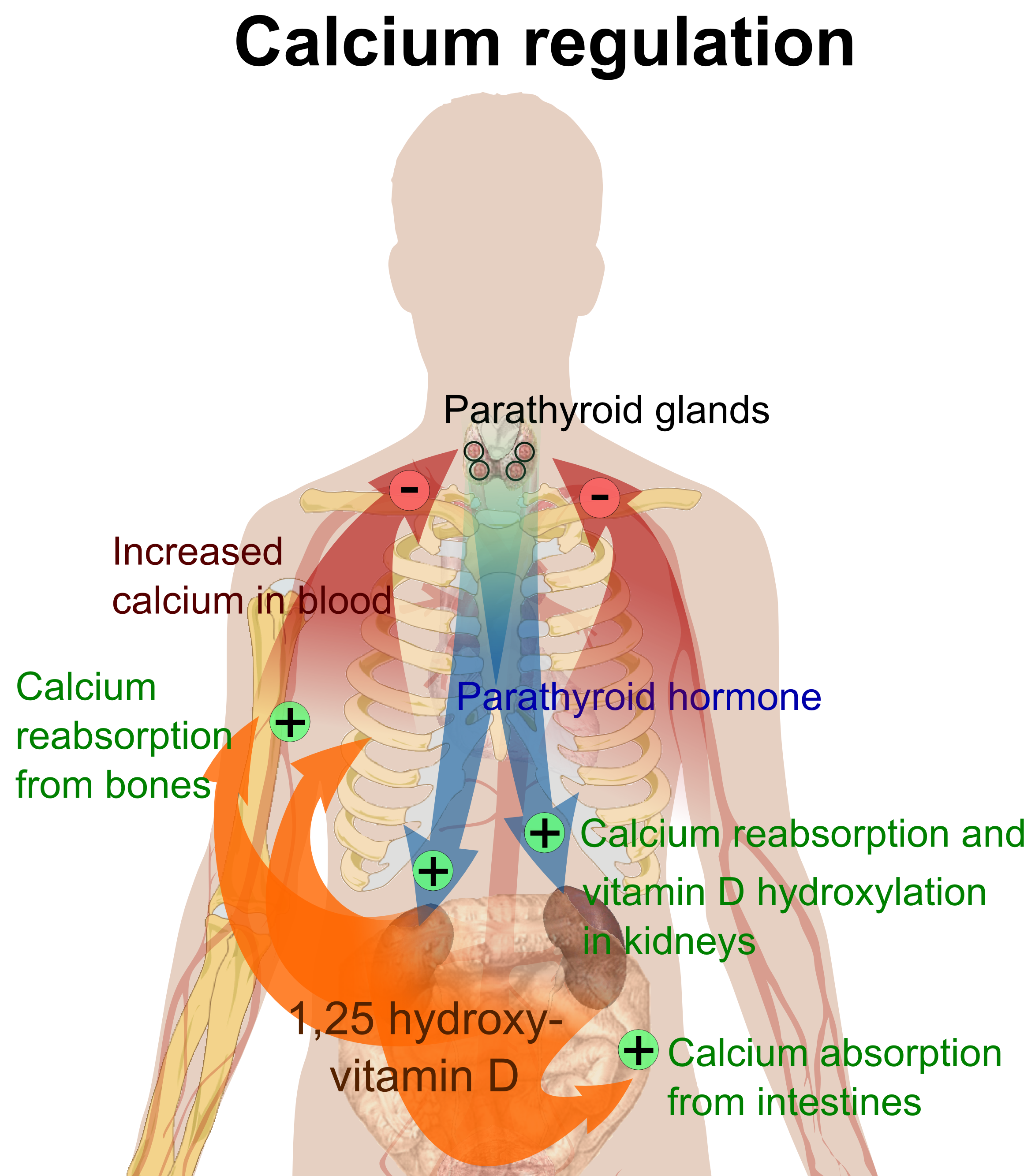
Diagram of calcium regulation showing parathyroid hormone
  raising blood calcium by mobilizing bone, increasing renal calcium reabsorption and vitamin D activation, and increasing intestinal absorption

Figure: Calcium regulation by PTH. In humoral hypercalcemia of malignancy, tumour PTHrP mimics PTH and raises serum calcium by the same pathways.

Question 3 · INICET May 2026

While taking a history, certain descriptors of breathlessness hint at the cause. Which of the following is more suggestive of congestive heart failure than of obstructive lung disease?

  1. A.Chest tightness
  2. B.Air hunger
  3. C.Cannot take a deep breath
  4. D.Intermittent wheezing
Show answer and explanation

Answer: B. Air hunger

The correct answer is Air hunger.

The qualitative language of dyspnea helps localize the cause. Air hunger, a suffocating sensation or urge to breathe (cannot get enough air), reflects chemoreceptor stimulation and is characteristic of congestive heart failure and pulmonary edema, and also pulmonary embolism. By contrast, chest tightness points to bronchoconstriction (asthma), wheezing to obstructive airway disease, and an unsatisfying or cannot-take-a-deep-breath sensation to restrictive disease or hyperinflation. So air hunger best fits CHF rather than obstructive lung pathology.

The closest distractor is cannot take a deep breath. It can occur in CHF too, from restrictive physiology due to pulmonary congestion or effusion, but it is the classic descriptor of restrictive disease and COPD hyperinflation. The descriptor most specific to the cardiac and pulmonary-edema mechanism is air hunger, so that is the better answer.

Incorrect Options:

  • Chest tightness: The dominant early sensation of asthma (bronchoconstriction), an obstructive airway process.
  • Intermittent wheezing: Suggests obstructive airway disease such as asthma or COPD, not heart failure.
  • Cannot take a deep breath: An unsatisfied-inspiration sensation typical of restrictive disease or COPD hyperinflation.

High-Yield Facts:

  • Air hunger or suffocation suggests CHF, pulmonary edema, or PE.
  • Chest tightness suggests asthma (bronchoconstriction).
  • Work of breathing is common to COPD, asthma, and neuromuscular disease.
  • The descriptor guides but does not replace objective testing.
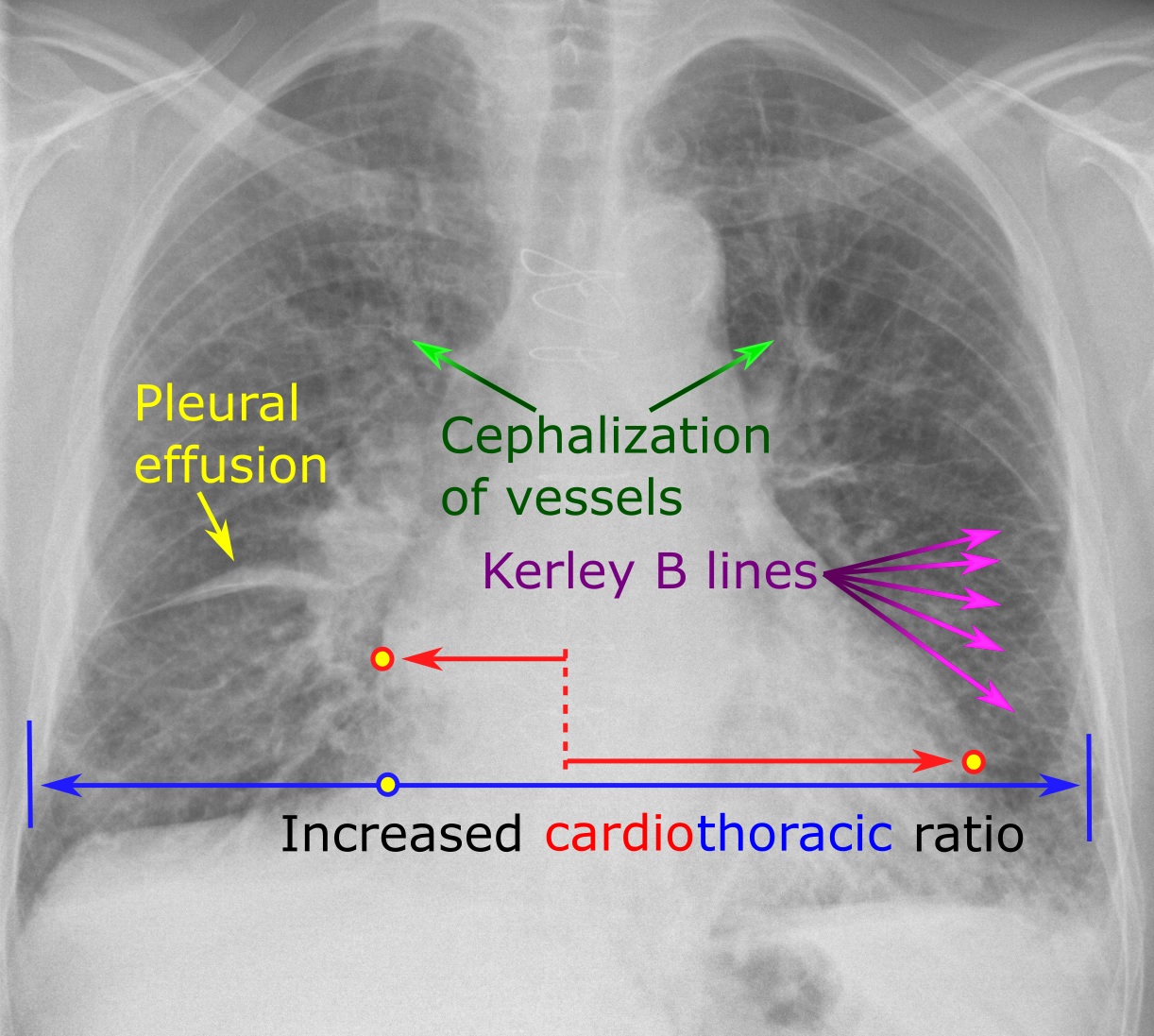
Annotated chest X-ray of congestive heart failure showing increased cardiothoracic ratio, cephalization of vessels, Kerley B lines, and a
  pleural effusion

Figure: Congestive heart failure on chest X-ray - cardiomegaly, vascular cephalization, Kerley B lines, and pleural effusion. Such pulmonary congestion produces air hunger.

Medicine concept guides

Medicine images to recognise

Browse the full concept library and clinical image atlas.

Practise the rest: open the Kinase question bank, choose Medicine, set the exam to INICET and switch on PYQs only. Build 50-question custom tests to rehearse one 45-minute INICET section.

Frequently Asked Questions

How many INICET Medicine PYQs does Kinase have?▼
Kinase has 319 INICET Medicine previous year questions from 2018 to 2026, each with an explanation — 9.5% of all INICET PYQs in the bank. There are also 161 NEET-PG Medicine PYQs for extra practice.
What are the most-asked Medicine topics in INICET?▼
In Kinase's INICET Medicine PYQs, the most-asked topics are Nervous System, Cardiovascular System, Renal System. Nervous System alone accounts for 61 of the 319 questions.
How is INICET Medicine marked?▼
Like every INICET subject, Medicine questions are +1 for a correct answer and −1/3 for a wrong one. INICET has 200 MCQs in four 45-minute sections of 50, for 200 marks.
Are INICET Medicine PYQs different from NEET-PG?▼
Both exams test the MBBS syllabus, so most Medicine concepts overlap. INICET is conducted by AIIMS New Delhi twice a year and marked +1 / −1/3; NEET-PG is conducted by NBEMS once a year and marked +4 / −1.
When is the next INICET?▼
INICET November 2026 is on 1 November 2026, with registration from 16 September to 13 October 2026 on aiimsexams.ac.in.
319 Medicine PYQs
2018–2026 papers
Topic + year tagged

Ready to Start Practicing?

INICET November 2026 is on 1 November — registration closes 13 October.

Start Free Practice

No credit card required