INICET Obstetrics & Gynecology Previous Year Questions (2018–2026)

231 INICET Obstetrics & Gynecology PYQs from 2018 to 2026, tagged by topic, with an explanation for every question. Practise AIIMS-pattern Obstetrics & Gynecology questions before INICET November 2026.

Last verified: 24 September 2026 against AIIMS New Delhi notices and aiimsexams.ac.in.

Quick Answer

Kinase has 231 INICET Obstetrics & Gynecology PYQs from 2018 to 2026 — 6.9% of all INICET PYQs in the bank. The most-asked topic is High-Risk Pregnancy and Medical Disorders in Pregnancy (47 questions). INICET is marked +1 / −1/3, so a blind guess is worth nothing on average.

Obstetrics & Gynecology in INICET at a glance

INICET Obstetrics & Gynecology PYQs on Kinase231 (6.9% of all INICET PYQs)
Years covered2018–2026
Marking+1 correct, −1/3 wrong
NEET-PG Obstetrics & Gynecology PYQs on Kinase148

Most-asked Obstetrics & Gynecology topics in INICET PYQs

TopicINICET PYQsShare of subject
High-Risk Pregnancy and Medical Disorders in Pregnancy4720%
General Gynaecology3616%
Gynaecologic Oncology3515%
Obstetric Emergencies2712%
Labor and Puerperium2611%

Across NEET PG and INI-CET papers: Most repeated Obstetrics & Gynecology topics →

Sample INICET Obstetrics & Gynecology PYQs with answers

Question 1 · INICET May 2026

A woman with symptoms of obstructed defecation is evaluated. During defecography, how much bulge of the anterior rectal wall into the vagina is considered diagnostic of a rectocele?

  1. A.3 cm
  2. B.0.5 cm
  3. C.2 cm
  4. D.1 cm
Show answer and explanation

Answer: C. 2 cm

The correct answer is 2 cm.

A rectocele is herniation of the anterior rectal wall through a weak rectovaginal septum into the posterior vaginal wall. On defecography, the depth of the bulge beyond the expected anterior rectal line is measured, and a rectocele larger than 2 cm is considered abnormal/diagnostic. By grade: grade I is up to 2 cm (often an incidental finding in parous women), grade II is 2 to 4 cm, and grade III is more than 4 cm. A rectocele that is large (often >3 cm) and retains contrast/stool after evacuation is the one most likely to be clinically significant and to cause obstructed defecation. So the diagnostic cutoff asked here is 2 cm.

Incorrect Options:

  • 0.5 cm: well within normal; tiny bulges are common and not a rectocele.
  • 1 cm: grade I (up to 2 cm) is frequently seen in normal parous women and is not considered diagnostic/abnormal.
  • 3 cm: this is already abnormal and typically clinically significant, but the threshold that DEFINES an abnormal rectocele is 2 cm, not 3 cm.

High-Yield Facts:

  • Defecography: rectocele >2 cm = abnormal/diagnostic.
  • Grades: I (<2 cm), II (2-4 cm), III (>4 cm).
  • A rectocele is herniation through the rectovaginal septum.
  • Clinically significant rectoceles (often >3 cm) retain stool and cause obstructed defecation.
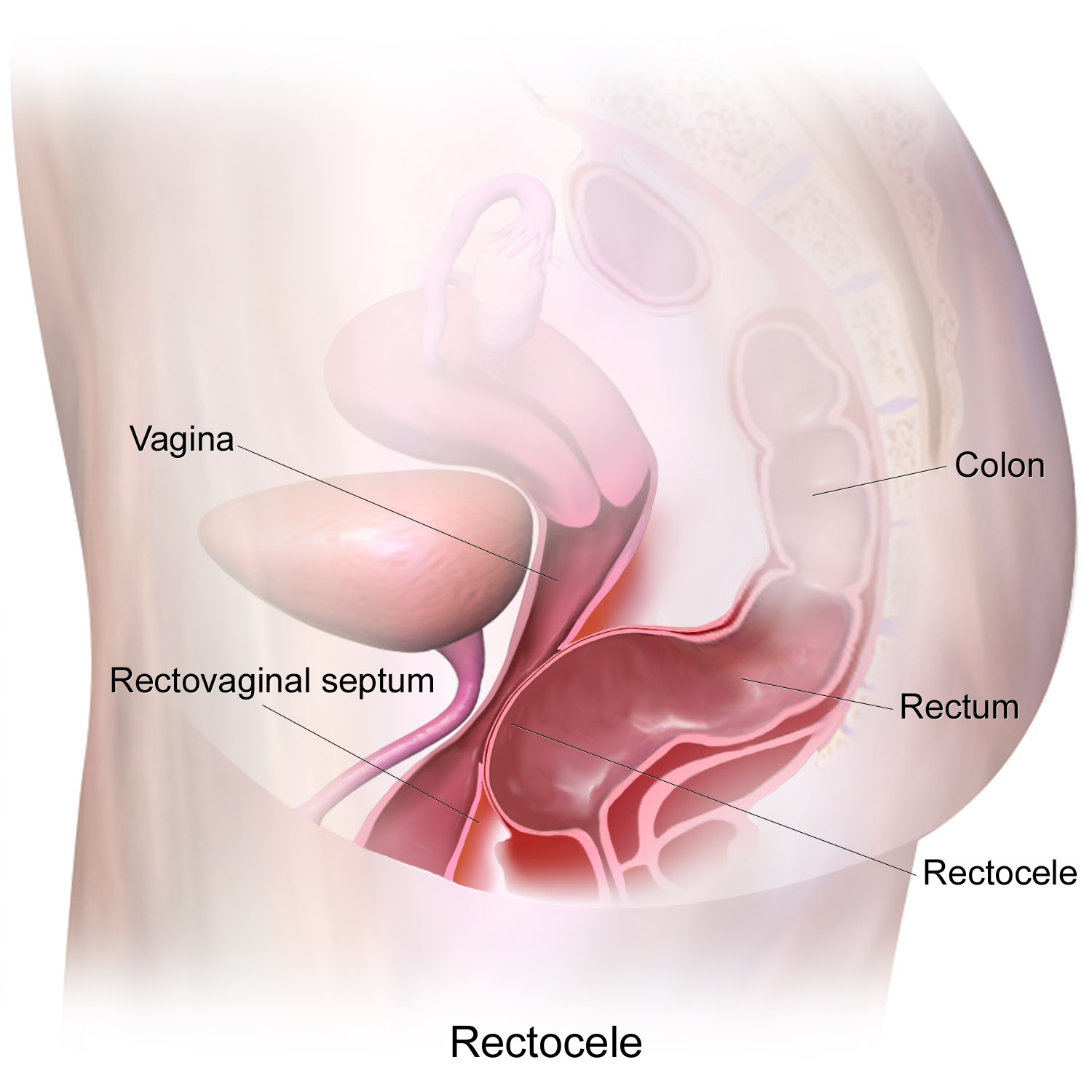
Sagittal diagram of a rectocele showing the rectum bulging anteriorly through the
  rectovaginal septum into the vagina

Figure: Rectocele - the anterior rectal wall herniates through the rectovaginal septum into the posterior vaginal wall; a bulge >2 cm on defecography is diagnostic.
Question 2 · INICET May 2026

Consider the following signs: (1) Hegar's sign, (2) Braxton Hicks sign, (3) Sehrt's sign, (4) Goodell's sign. Which of these are probable signs of pregnancy?

  1. A.1 and 2
  2. B.1, 2, 3 and 4
  3. C.1 and 4
  4. D.1, 3 and 4
Show answer and explanation

Answer: B. 1, 2, 3 and 4

The correct answer is 1, 2, 3 and 4.

Probable signs of pregnancy are objective findings the examiner can elicit but that are not absolutely confirmatory. Hegar's sign (softening and compressibility of the lower uterine segment, ~6 weeks), Braxton Hicks contractions (painless irregular uterine contractions), and Goodell's sign (softening of the cervix) are all classic probable signs - and they are grouped here with the listed Sehrt's sign. Since Hegar's, Braxton Hicks, and Goodell's are unquestionably probable signs, the only option that includes all three is "1, 2, 3 and 4." Other probable signs include Chadwick's, Piskacek's, Osiander's signs, ballottement, and a positive pregnancy test.

Why the other options are wrong:

  • 1 and 2: omits Goodell's sign, which is a definite probable sign.
  • 1 and 4: omits Braxton Hicks contractions, also a probable sign.
  • 1, 3 and 4: drops Braxton Hicks (a probable sign), so it is incomplete.

High-Yield Facts:

  • Hegar's sign = soft, compressible lower uterine segment.
  • Goodell's sign = softening of the cervix.
  • Chadwick's sign = bluish discoloration of cervix/vagina.
  • Positive signs (fetal heart sounds, fetal movements felt by examiner, USG fetus) are confirmatory, unlike probable signs.
Question 3 · INICET May 2026

Match each condition with its characteristic hormonal profile:

Column A:
1. Premature ovarian insufficiency
2. Sheehan syndrome
3. Asherman syndrome
4. PCOS

Column B:
a. Decreased FSH, LH, estradiol
b. Normal FSH, high LH, high estradiol
c. Markedly increased FSH, high LH, low estradiol
d. Normal FSH, LH, estradiol

  1. A.1-a, 2-c, 3-b, 4-d
  2. B.1-c, 2-a, 3-d, 4-b
  3. C.1-c, 2-d, 3-a, 4-b
  4. D.1-b, 2-a, 3-d, 4-c
Show answer and explanation

Answer: B. 1-c, 2-a, 3-d, 4-b

The correct answer is 1-c, 2-a, 3-d, 4-b.

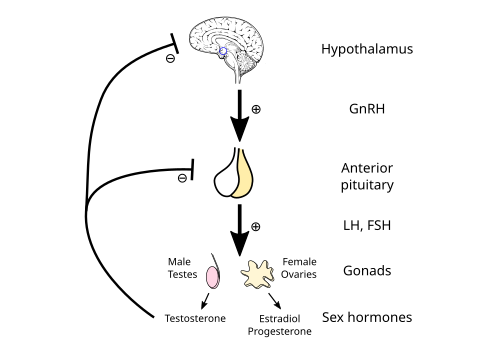
Premature ovarian insufficiency is primary ovarian (gonadal) failure: the ovary stops responding, so estradiol falls and feedback is lost, giving markedly raised FSH and LH with low estradiol (hypergonadotropic hypogonadism) - matching (c). Sheehan syndrome is postpartum pituitary necrosis, so gonadotropin output drops, giving low FSH, LH, and estradiol (hypogonadotropic hypogonadism) - (a). Asherman syndrome is an outflow/ uterine problem (intrauterine adhesions) with an intact HPO axis, so FSH, LH, and estradiol are normal - (d). PCOS shows a high LH with normal FSH (raised LH:FSH ratio) and normal-to-high estrogen - (b). Hence 1-c, 2-a, 3-d, 4-b.

Why the other options are wrong:

  • 1-a, 2-c, 3-b, 4-d: swaps POI and Sheehan - POI has HIGH (not low) gonadotropins.
  • 1-c, 2-d, 3-a, 4-b: gives Sheehan normal hormones and Asherman low gonadotropins, which is reversed.
  • 1-b, 2-a, 3-d, 4-c: assigns PCOS the POI profile (high FSH, low estradiol) - wrong.

High-Yield Facts:

  • POI: high FSH/LH, low estradiol (hypergonadotropic hypogonadism).
  • Sheehan: low FSH/LH/estradiol (hypogonadotropic - pituitary failure).
  • Asherman: normal hormones (uterine outflow problem).
  • PCOS: raised LH:FSH ratio (high LH, normal FSH).
Diagram of the hypothalamic-pituitary-gonadal axis: hypothalamus releases GnRH, pituitary releases LH and FSH, gonads produce sex hormones with negative feedback

Figure: The hypothalamic-pituitary-ovarian axis - pituitary failure (Sheehan) lowers gonadotropins, while ovarian failure (POI) removes feedback and raises FSH/LH.

Obstetrics & Gynecology concept guides

Browse the full concept library and clinical image atlas.

Practise the rest: open the Kinase question bank, choose Obstetrics & Gynecology, set the exam to INICET and switch on PYQs only. Build 50-question custom tests to rehearse one 45-minute INICET section.

Frequently Asked Questions

How many INICET Obstetrics & Gynecology PYQs does Kinase have?▼
Kinase has 231 INICET Obstetrics & Gynecology previous year questions from 2018 to 2026, each with an explanation — 6.9% of all INICET PYQs in the bank. There are also 148 NEET-PG Obstetrics & Gynecology PYQs for extra practice.
What are the most-asked Obstetrics & Gynecology topics in INICET?▼
In Kinase's INICET Obstetrics & Gynecology PYQs, the most-asked topics are High-Risk Pregnancy and Medical Disorders in Pregnancy, General Gynaecology, Gynaecologic Oncology. High-Risk Pregnancy and Medical Disorders in Pregnancy alone accounts for 47 of the 231 questions.
How is INICET Obstetrics & Gynecology marked?▼
Like every INICET subject, Obstetrics & Gynecology questions are +1 for a correct answer and −1/3 for a wrong one. INICET has 200 MCQs in four 45-minute sections of 50, for 200 marks.
Are INICET Obstetrics & Gynecology PYQs different from NEET-PG?▼
Both exams test the MBBS syllabus, so most Obstetrics & Gynecology concepts overlap. INICET is conducted by AIIMS New Delhi twice a year and marked +1 / −1/3; NEET-PG is conducted by NBEMS once a year and marked +4 / −1.
When is the next INICET?▼
INICET November 2026 is on 1 November 2026, with registration from 16 September to 13 October 2026 on aiimsexams.ac.in.
231 Obstetrics & Gynecology PYQs
2018–2026 papers
Topic + year tagged

Ready to Start Practicing?

INICET November 2026 is on 1 November — registration closes 13 October.

Start Free Practice

No credit card required