Digestion and concentration of a sputum sample is done using?
- A.HNO3 NALC
- B.NaOH NALC
- C.HCL NALC
- D.H2SO4 NALC
Show answer and explanation
Answer: B. NaOH NALC
The correct answer is NaOH NALC (the NALC-NaOH method).
For mycobacterial (TB) sputum processing, the standard method is the NALC-NaOH method. N-acetyl-L-cysteine (NALC) is a mucolytic that digests and liquefies the mucus, and sodium hydroxide (NaOH) acts as the decontaminant, killing faster-growing commensal bacteria while the acid-fast mycobacteria survive. The specimen is then concentrated by centrifugation and the deposit used for smear and culture. So NaOH (with NALC) is correct.
The acids in the other options are not used for routine sputum digestion-decontamination. Strong acids (such as oxalic acid) are used only in special situations (for example to suppress Pseudomonas in cystic fibrosis samples), not as the standard mucolytic-decontamination step. NALC must be paired with NaOH, not with HNO3, HCl or H2SO4.
Incorrect Options:
- HNO3 NALC: nitric acid is not paired with NALC, and NaOH is the standard decontaminant.
- HCL NALC: HCl is used only to neutralise the NaOH after decontamination, not as the digesting/decontaminating agent.
- H2SO4 NALC: sulfuric acid is not used with NALC for routine sputum processing.
High-Yield Facts:
- Sputum for TB: NALC-NaOH method (digestion plus decontamination plus concentration).
- NALC = mucolytic (liquefies mucus), NaOH = decontaminant (kills commensals).
- After decontamination, concentrate by centrifugation, and HCl/buffer neutralises the NaOH.
- Mycobacteria survive because they are acid- and alkali-resistant.
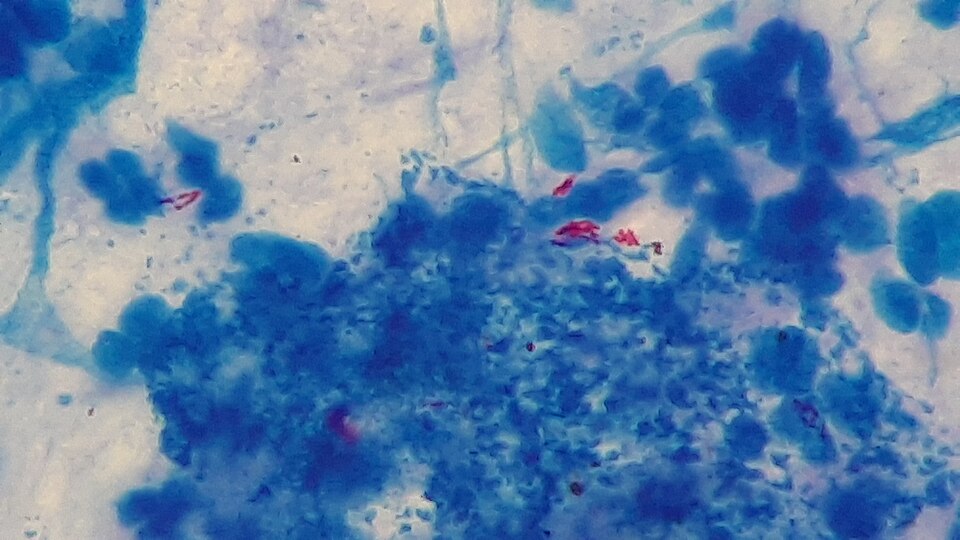
Figure 1: Acid-fast bacilli in a Ziehl-Neelsen sputum smear - the smear made after NALC-NaOH digestion and concentration.
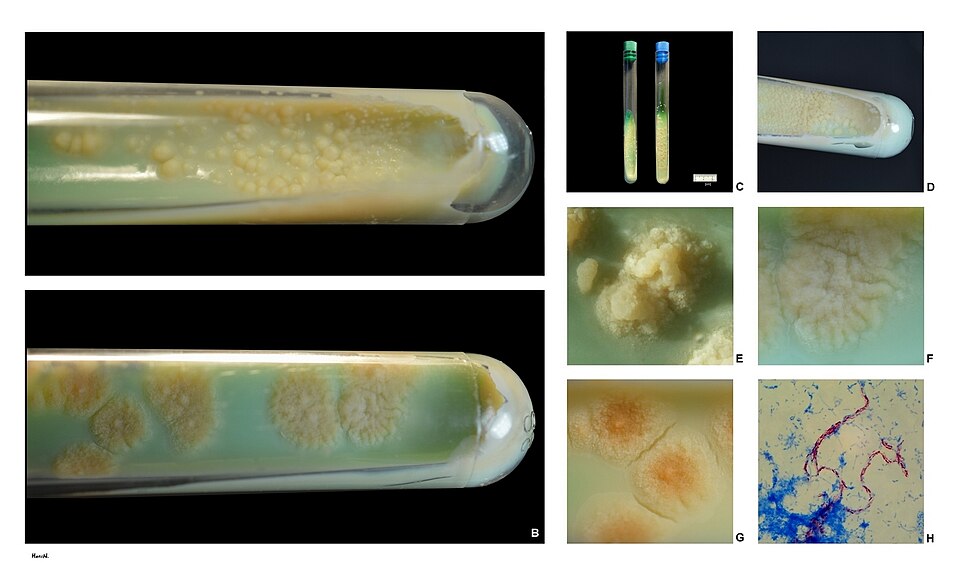
Figure 2: M. tuberculosis on Lowenstein-Jensen media - the concentrated deposit is cultured after decontamination.