A 38-year-old patient presents with a few well-defined, hypopigmented nodular lesions on the arm associated with a distinct loss of thermal and tactile sensation. Clinical palpation reveals a thickened and tender ulnar nerve. A skin biopsy demonstrates the presence of non-caseating epithelioid cell granulomas with a paucity of acid-fast bacilli. An intradermal lepromin test is performed. Which of the following statements most accurately describes this clinical scenario?
- A.Tuberculoid leprosy with a positive lepromin test
- B.Lepromatous leprosy with a positive lepromin test
- C.Erythema nodosum leprosum with a negative lepromin test
- D.Lepromatous leprosy with a negative lepromin test
Show answer and explanation
Answer: A. Tuberculoid leprosy with a positive lepromin test
Correct Answer: A. Tuberculoid leprosy with a positive lepromin test
Few hypopigmented anesthetic patches, a thickened tender nerve, and epithelioid granulomas with scant bacilli (paucibacillary) define tuberculoid leprosy. Strong cell-mediated immunity contains the bacilli but drives granulomatous damage, giving a positive lepromin test.
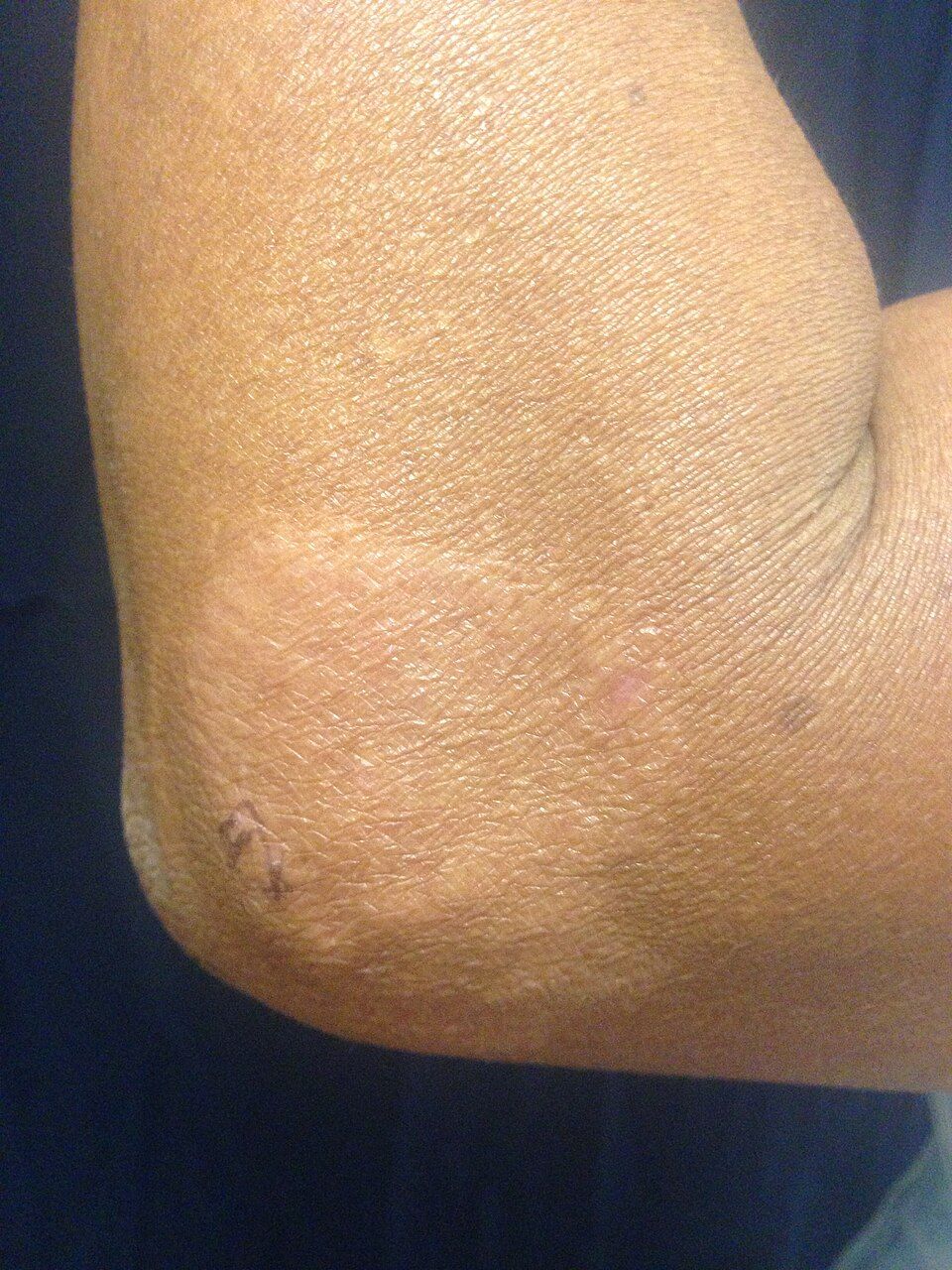
Solitary hypopigmented, anesthetic patch typical of paucibacillary (tuberculoid) leprosy.
Why the other options fail
- B and D. Lepromatous leprosy: shows multiple symmetric lesions, foamy macrophages loaded with bacilli (multibacillary), and defective CMI giving a negative lepromin test, not this picture.
- C. Erythema nodosum leprosum: is a Type III (immune complex) reaction seen in lepromatous/borderline lepromatous disease, presenting with tender red nodules and systemic symptoms, not this clinical picture.
Pearl: few lesions, thickened nerve, granulomas, positive lepromin -- tuberculoid leprosy, the high-immunity pole of the disease spectrum.
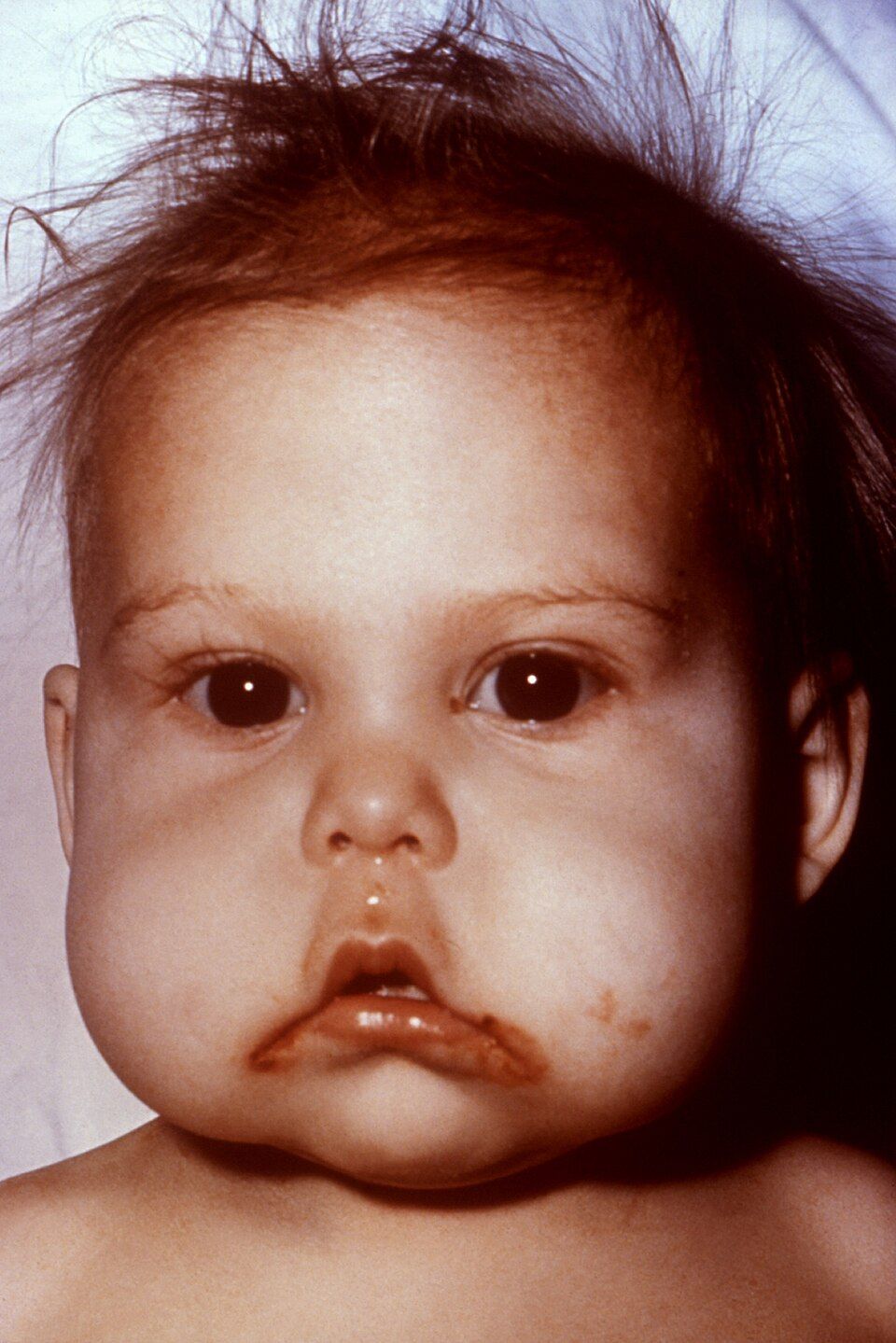 Sparse, discolored hair and cheilosis in a child with kwashiorkor.