INICET Biochemistry Previous Year Questions (2017–2026)

187 INICET Biochemistry PYQs from 2017 to 2026, tagged by topic, with an explanation for every question. Practise AIIMS-pattern Biochemistry questions before INICET November 2026.

Last verified: 24 September 2026 against AIIMS New Delhi notices and aiimsexams.ac.in.

Quick Answer

Kinase has 187 INICET Biochemistry PYQs from 2017 to 2026 — 5.6% of all INICET PYQs in the bank. The most-asked topic is Molecular Biology & Genetics (60 questions). INICET is marked +1 / −1/3, so a blind guess is worth nothing on average.

Biochemistry in INICET at a glance

INICET Biochemistry PYQs on Kinase187 (5.6% of all INICET PYQs)
Years covered2017–2026
Marking+1 correct, −1/3 wrong
NEET-PG Biochemistry PYQs on Kinase93

Most-asked Biochemistry topics in INICET PYQs

TopicINICET PYQsShare of subject
Molecular Biology & Genetics6032%
Clinical Biochemistry and Nutrition3519%
Carbohydrates3217%
Proteins2111%
Lipids2011%

Across NEET PG and INI-CET papers: Most repeated Biochemistry topics →

Sample INICET Biochemistry PYQs with answers

Question 1 · INICET May 2026

Which of the following amino acid classifications are correctly matched?

1. Uncharged amino acid - Cysteine
2. Nonpolar amino acid - Proline
3. Basic amino acid - Histidine
4. Basic amino acid - Lysine

Choose the correct combination:

  1. A.1 and 2 only
  2. B.1, 2, 3, and 4
  3. C.3 and 4 only
  4. D.2 and 3 only
Show answer and explanation

Answer: B. 1, 2, 3, and 4

The correct answer is 1, 2, 3, and 4 - all four pairings are correctly matched.

Cysteine is an UNCHARGED amino acid (its thiol side chain carries no charge at physiological pH). Proline is NONPOLAR (its cyclic side chain is hydrophobic). Histidine and Lysine are both BASIC amino acids (along with arginine), carrying a positive charge. Since every statement is correct, the answer is all of them.

A student may hesitate over cysteine, since some texts call it weakly polar. But the claim here is only that it is UNCHARGED, which is true regardless of the polar versus nonpolar debate. Histidine is sometimes overlooked as basic, yet it is one of the three basic amino acids. So no pairing is wrong, and the correct option is 1, 2, 3, and 4.

Incorrect Options (each omits a correct pairing):

  • 1 and 2 only: Omits the correct basic pairings (Histidine and Lysine).
  • 3 and 4 only: Omits the correct uncharged (Cysteine) and nonpolar (Proline) pairings.
  • 2 and 3 only: Omits the correct Cysteine and Lysine pairings.

High-Yield Facts:

  • Basic amino acids: Histidine, Arginine, Lysine (mnemonic HAL).
  • Acidic amino acids: Aspartate and Glutamate.
  • Polar uncharged: Cysteine, Serine, Threonine, Asparagine, Glutamine, Tyrosine.
  • Nonpolar: Proline, Glycine, Alanine, Valine, Leucine, Isoleucine, Methionine.
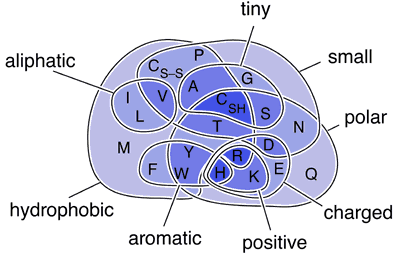
Venn diagram classifying amino acids by side-chain properties: aliphatic, aromatic, hydrophobic, polar, charged, positive, and small

Figure: Amino acid properties Venn diagram. Charged and positive amino acids (H, K, R) are basic. Cysteine (C) is polar uncharged, and proline (P) lies in the hydrophobic group.
Question 2 · INICET May 2026

A patient is exposed to an oxidative phosphorylation uncoupler. Which of the following changes is most likely to be observed?

  1. A.Increased ATP, decreased oxygen consumption, increased heat
  2. B.Decreased ATP, increased oxygen consumption, increased heat
  3. C.Decreased ATP, decreased oxygen consumption, decreased heat
  4. D.Increased ATP, increased oxygen consumption, decreased heat
Show answer and explanation

Answer: B. Decreased ATP, increased oxygen consumption, increased heat

The correct answer is Decreased ATP, increased oxygen consumption, increased heat.

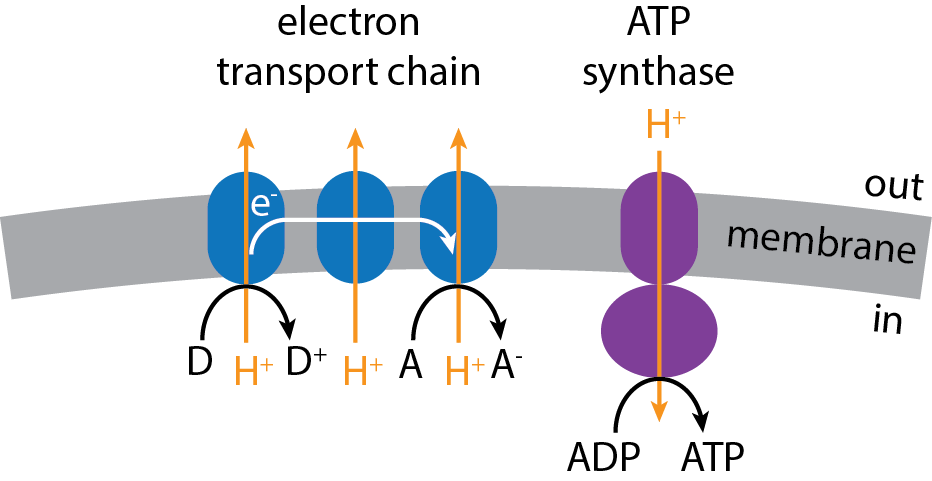
An uncoupler (such as 2,4-dinitrophenol, salicylates, or thermogenin) makes the inner mitochondrial membrane leaky to protons, dissipating the proton gradient. ATP synthase can no longer use the gradient, so ATP production falls. Freed from the back-pressure of the gradient, the electron transport chain runs FASTER, so oxygen consumption rises, and the energy that would have made ATP is released as heat (hyperthermia).

The closest distractor is the option with DECREASED oxygen consumption, which is the pattern of an ETC INHIBITOR (such as cyanide or rotenone), where the chain stops and oxygen use falls. An uncoupler is the opposite for oxygen: the chain speeds up, so oxygen consumption INCREASES while ATP still falls. Options that keep ATP high are wrong because uncoupling always stops net ATP synthesis.

Incorrect Options:

  • Increased ATP, decreased oxygen consumption, increased heat: ATP cannot rise during uncoupling, and oxygen consumption increases, not decreases.
  • Decreased ATP, decreased oxygen consumption, decreased heat: This is the ETC-inhibitor pattern (cyanide). An uncoupler increases oxygen consumption and heat.
  • Increased ATP, increased oxygen consumption, decreased heat: ATP falls (not rises) and heat increases (not decreases) with uncoupling.

High-Yield Facts:

  • Uncouplers: 2,4-DNP, salicylates (overdose), and thermogenin (UCP1) in brown fat.
  • Uncoupler effect: ATP DOWN, oxygen consumption UP, heat UP.
  • ETC inhibitors (cyanide, rotenone): oxygen consumption DOWN, ATP stops.
  • Brown fat thermogenin drives non-shivering thermogenesis.
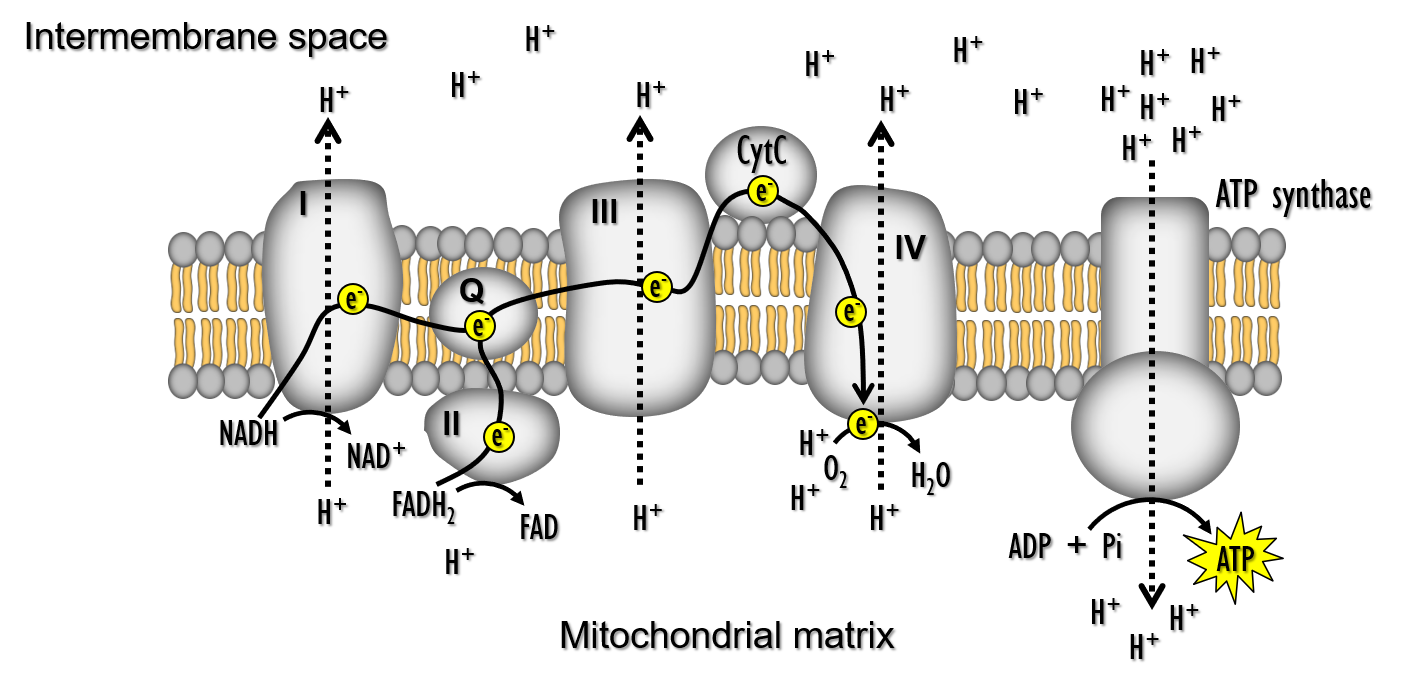
Diagram of the mitochondrial electron transport chain pumping protons into the intermembrane space, with ATP synthase using the gradient to make ATP

Figure 1: Normal oxidative phosphorylation. The ETC pumps protons and ATP synthase uses the gradient to make ATP. An uncoupler dissipates this gradient.

Simplified schematic of the electron transport chain pumping protons across the membrane and ATP synthase using the proton gradient to make ATP from ADP

Figure 2: Coupling of the proton gradient to ATP synthesis. Uncouplers let protons leak back, so the chain runs on but ATP is not made and heat is released.

Question 3 · INICET May 2026

A child presents with coarse facies, hypotonia, and seizures. Lab investigations reveal elevated very long-chain fatty acids. A defect in which of the following may be responsible for this condition?

  1. A.Lysosomal hydrolase deficiency
  2. B.Peroxisomal biogenesis defect
  3. C.Mitochondrial beta oxidation defect
  4. D.Endoplasmic reticulum defect
Show answer and explanation

Answer: B. Peroxisomal biogenesis defect

The correct answer is Peroxisomal biogenesis defect.

Coarse facies, hypotonia, and seizures in an infant with elevated very long-chain fatty acids (VLCFA) is the classic picture of Zellweger syndrome (cerebrohepatorenal syndrome). VLCFA are beta-oxidized in peroxisomes, not mitochondria. Mutations in PEX genes impair peroxisome biogenesis, so functional peroxisomes are absent and VLCFA accumulate. This is the most severe peroxisome biogenesis disorder.

The closest distractor is lysosomal hydrolase deficiency, because lysosomal storage diseases (such as Hurler) also cause COARSE FACIES. However, lysosomal disorders do NOT elevate VLCFA. The raised VLCFA specifically points to a PEROXISOMAL defect, since peroxisomes carry out VLCFA beta-oxidation. Mitochondrial beta-oxidation handles shorter chains and does not raise VLCFA.

Incorrect Options:

  • Mitochondrial beta oxidation defect: Handles medium and long chains (causing hypoketotic hypoglycemia), not VLCFA, which are peroxisomal.
  • Lysosomal hydrolase deficiency: Causes storage diseases with coarse facies, but not elevated VLCFA.
  • Endoplasmic reticulum defect: Not associated with VLCFA accumulation or this clinical picture.

High-Yield Facts:

  • Elevated VLCFA = peroxisomal disorder (Zellweger spectrum, X-linked ALD).
  • Zellweger = PEX gene mutation, peroxisome biogenesis failure.
  • Peroxisomes beta-oxidize VLCFA and branched-chain (phytanic) fatty acids.
  • Features: coarse facies, hypotonia, seizures, hepatomegaly.
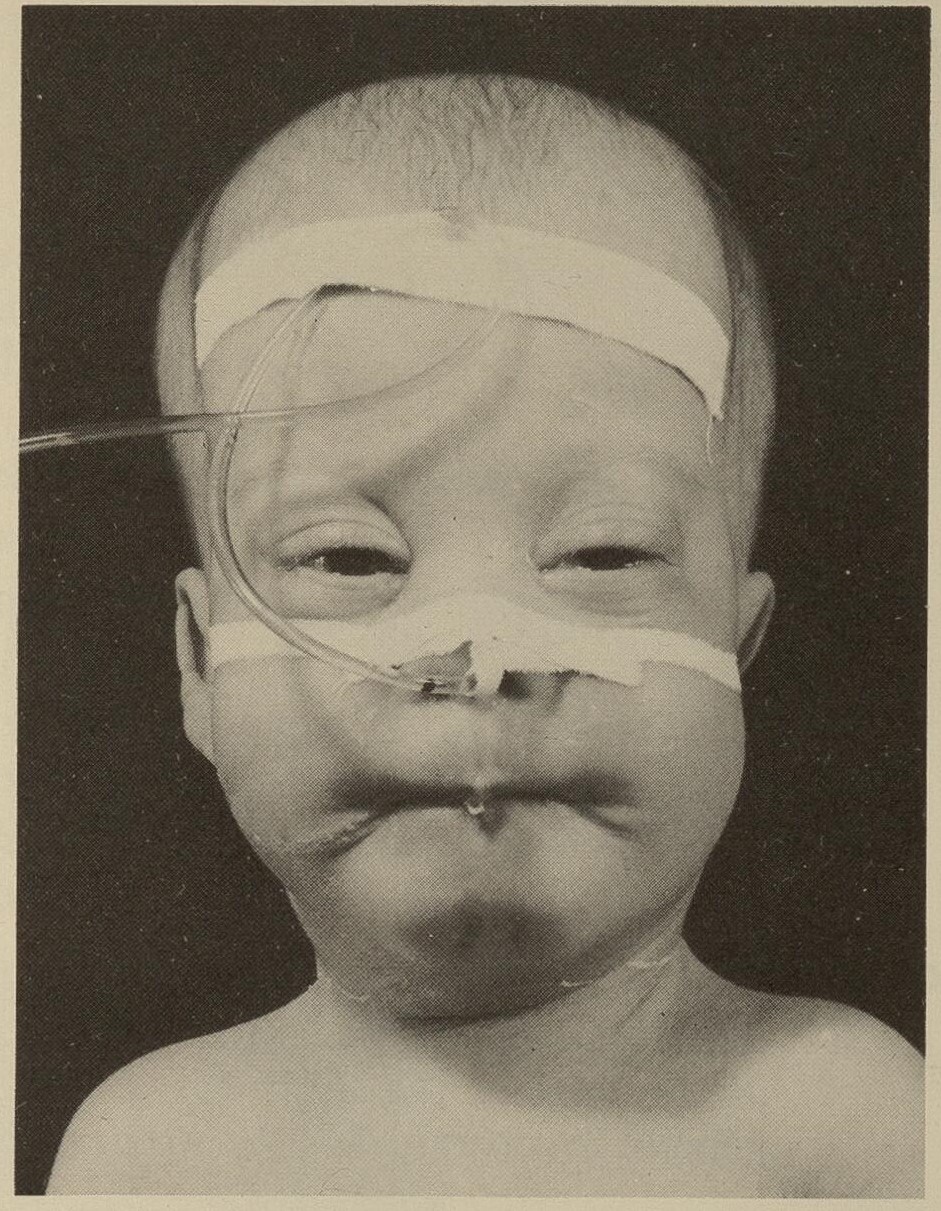
Infant with cerebro-hepato-renal Zellweger syndrome showing craniofacial dysmorphism with a high forehead and flat facial profile

Figure 1: Zellweger (cerebrohepatorenal) syndrome - craniofacial dysmorphism with hypotonia, from a peroxisome biogenesis defect.

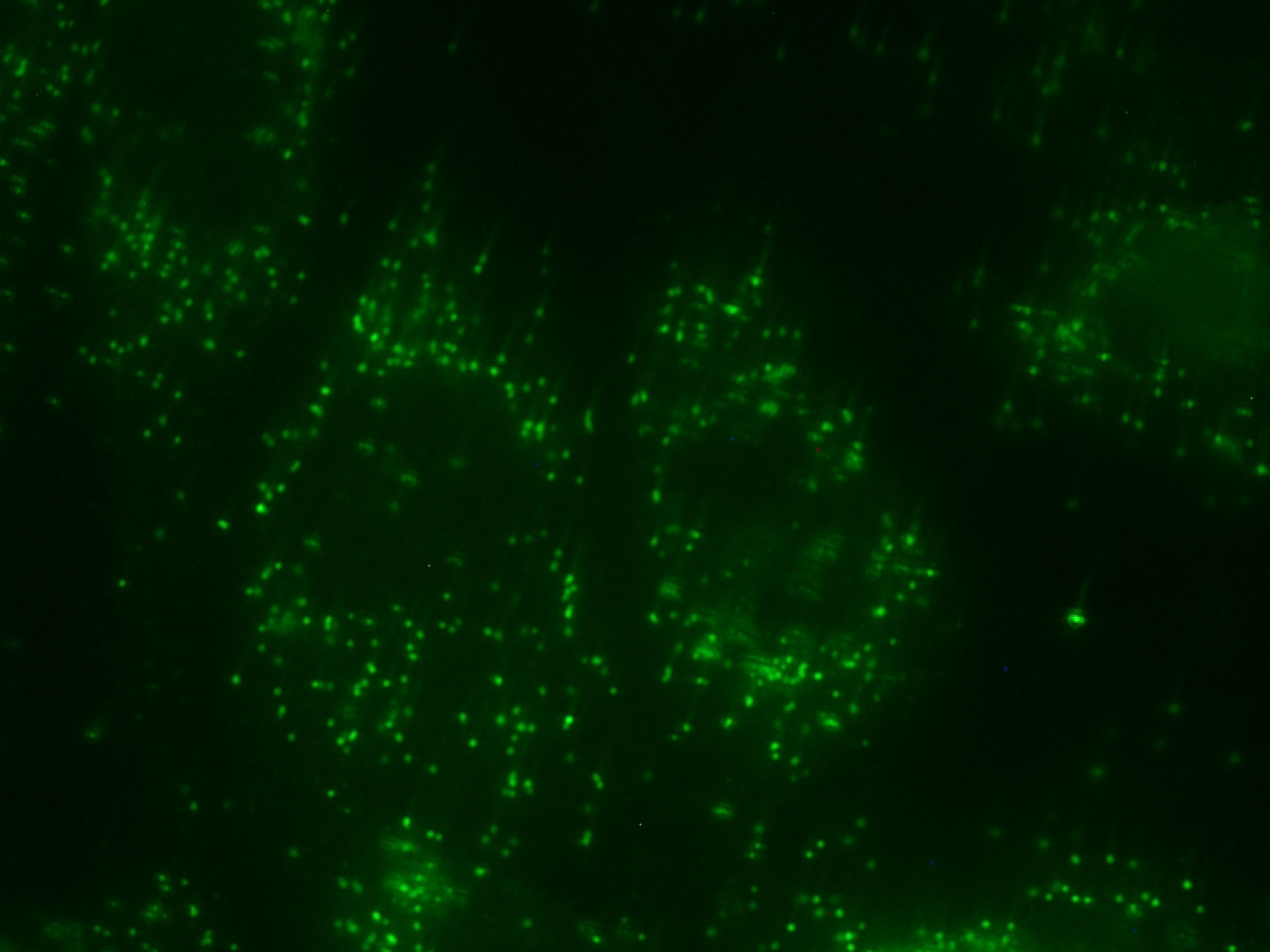
Immunofluorescence image showing peroxisomes as punctate green dots within cells

Figure 2: Peroxisomes (green puncta). In Zellweger syndrome, PEX mutations prevent functional peroxisome assembly, so VLCFA are not beta-oxidized.

Biochemistry concept guides

Browse the full concept library and clinical image atlas.

Practise the rest: open the Kinase question bank, choose Biochemistry, set the exam to INICET and switch on PYQs only. Build 50-question custom tests to rehearse one 45-minute INICET section.

Frequently Asked Questions

How many INICET Biochemistry PYQs does Kinase have?▼
Kinase has 187 INICET Biochemistry previous year questions from 2017 to 2026, each with an explanation — 5.6% of all INICET PYQs in the bank. There are also 93 NEET-PG Biochemistry PYQs for extra practice.
What are the most-asked Biochemistry topics in INICET?▼
In Kinase's INICET Biochemistry PYQs, the most-asked topics are Molecular Biology & Genetics, Clinical Biochemistry and Nutrition, Carbohydrates. Molecular Biology & Genetics alone accounts for 60 of the 187 questions.
How is INICET Biochemistry marked?▼
Like every INICET subject, Biochemistry questions are +1 for a correct answer and −1/3 for a wrong one. INICET has 200 MCQs in four 45-minute sections of 50, for 200 marks.
Are INICET Biochemistry PYQs different from NEET-PG?▼
Both exams test the MBBS syllabus, so most Biochemistry concepts overlap. INICET is conducted by AIIMS New Delhi twice a year and marked +1 / −1/3; NEET-PG is conducted by NBEMS once a year and marked +4 / −1.
When is the next INICET?▼
INICET November 2026 is on 1 November 2026, with registration from 16 September to 13 October 2026 on aiimsexams.ac.in.
187 Biochemistry PYQs
2017–2026 papers
Topic + year tagged

Ready to Start Practicing?

INICET November 2026 is on 1 November — registration closes 13 October.

Start Free Practice

No credit card required