INICET FMT (Forensic Medicine) Previous Year Questions (2018–2026)

140 INICET FMT (Forensic Medicine) PYQs from 2018 to 2026, tagged by topic, with an explanation for every question. Practise AIIMS-pattern FMT (Forensic Medicine) questions before INICET November 2026.

Last verified: 24 September 2026 against AIIMS New Delhi notices and aiimsexams.ac.in.

Quick Answer

Kinase has 140 INICET FMT (Forensic Medicine) PYQs from 2018 to 2026 — 4.2% of all INICET PYQs in the bank. The most-asked topic is Medical Jurisprudence, Death and Postmortem Changes (42 questions). INICET is marked +1 / −1/3, so a blind guess is worth nothing on average.

FMT (Forensic Medicine) in INICET at a glance

INICET FMT (Forensic Medicine) PYQs on Kinase140 (4.2% of all INICET PYQs)
Years covered2018–2026
Marking+1 correct, −1/3 wrong
NEET-PG FMT (Forensic Medicine) PYQs on Kinase53

Most-asked FMT (Forensic Medicine) topics in INICET PYQs

TopicINICET PYQsShare of subject
Medical Jurisprudence, Death and Postmortem Changes4230%
Injuries3726%
Forensic Medicine Identification2518%
Sexual Offences and Abortion1712%
Asphyxia139%

Across NEET PG and INI-CET papers: Most repeated FMT (Forensic Medicine) topics →

Sample INICET FMT (Forensic Medicine) PYQs with answers

Question 1 · INICET May 2026

In which of the following conditions are sparrow-foot marks characteristically observed?

  1. A.Electrocution
  2. B.Lightning injury
  3. C.Custodial torture
  4. D.Motor vehicle accident
Show answer and explanation

Answer: D. Motor vehicle accident

The correct answer is D. Motor vehicle accident.

Sparrow-foot marks (also called sparrow-foot lacerations) are multiple, small, bizarre punctate or L-shaped lacerations of the face seen in front-seat occupants of a vehicle. They are produced when shattered toughened windscreen glass strikes the face during a road traffic accident, and are a form of dicing injury. Classic trap: the look-alike is lightning, which produces Lichtenberg figures (arborescent, filigree, feathering or keraunographic marks). Those fern-like marks are pathognomonic of lightning but are NOT called sparrow-foot marks, so lightning is not the answer here.

Why the other options are incorrect:

  • A. Electrocution: Produces Joule (endogenous) burns and electric marks at the contact points, not facial glass lacerations.
  • B. Lightning injury: Produces Lichtenberg figures (arborescent, feathering marks), a fern-like pattern, not punctate facial lacerations. This is the intended trap.
  • C. Custodial torture: Produces patterned inflicted injuries such as tramline contusions, not windscreen lacerations.

High-Yield Facts:

  • Sparrow-foot marks are multiple punctate facial lacerations from shattered windscreen glass.
  • They are a type of dicing injury and indicate a front-seat occupant in a road traffic accident.
  • Lightning instead produces Lichtenberg figures (arborescent or filigree marks).
  • Electrocution produces Joule burns at the contact points.
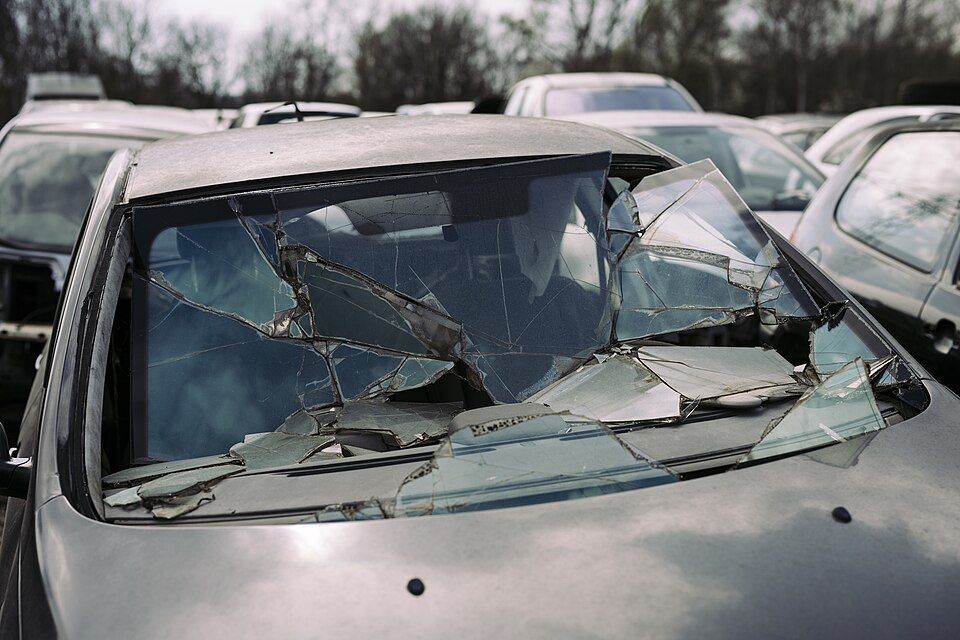
Shattered toughened windscreen glass on a car after a collision

Option D (answer): shattered windscreen glass. When it strikes a front-seat occupant's face it produces the punctate sparrow-foot lacerations.
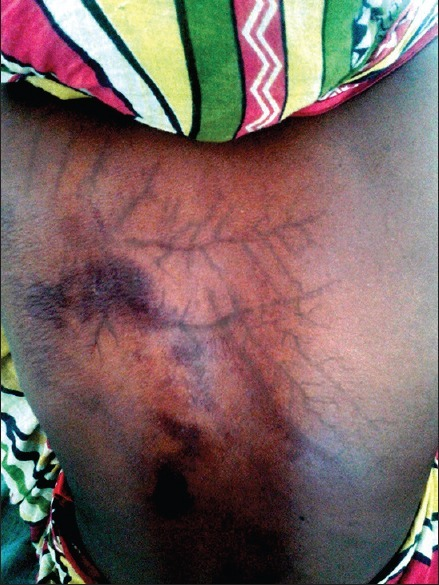
Fern-like branching Lichtenberg figure on the skin of a lightning strike victim

Option B (trap): a Lichtenberg figure, the arborescent feathering mark of lightning. This is NOT a sparrow-foot mark.
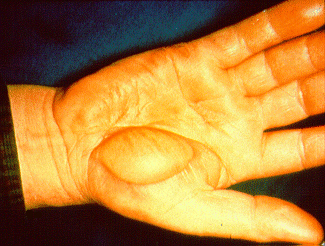
Electrical contact burn on the palm

Option A: an electrical contact (Joule) burn, the typical mark of electrocution.
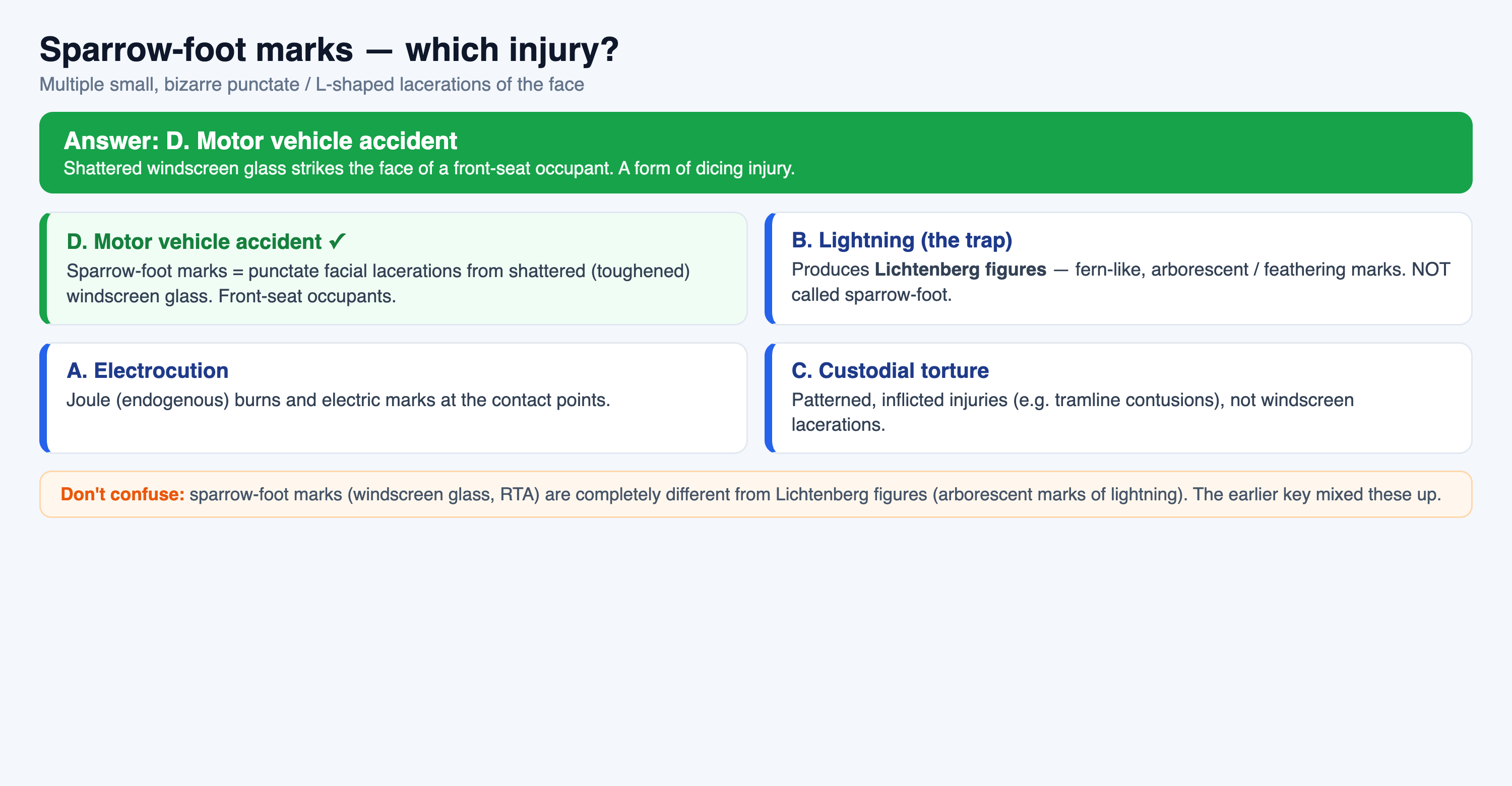
Comparison of sparrow-foot marks versus Lichtenberg figures,
  electrocution and torture injuries

Summary: sparrow-foot marks (windscreen glass, RTA) versus the distractors, with the sparrow-foot vs Lichtenberg distinction highlighted.
Question 2 · INICET May 2026

Burns of the face and chest represent which category of blast injury?

  1. A.Secondary
  2. B.Quaternary
  3. C.Primary
  4. D.Tertiary
Show answer and explanation

Answer: B. Quaternary

The correct answer is Quaternary.

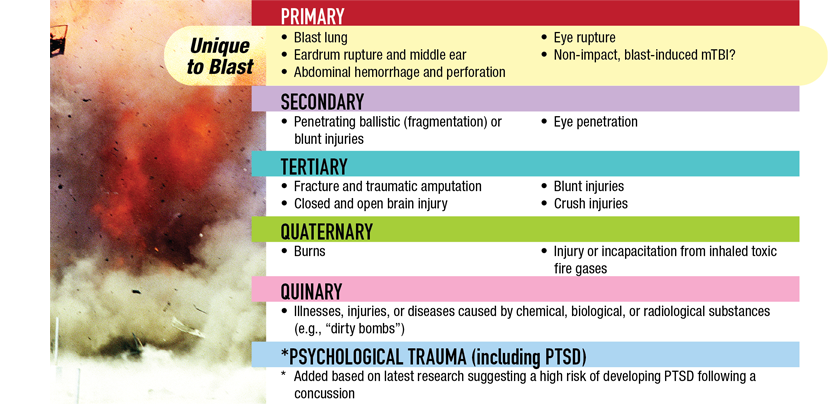
Blast injuries are classified into four main categories. Primary injuries are barotrauma from the blast overpressure wave, affecting air-filled organs (blast lung, tympanic rupture). Secondary injuries are penetrating wounds from flying debris and shrapnel. Tertiary injuries occur when the blast wind throws the victim, causing blunt trauma and fractures. Quaternary injuries are all other explosion-related effects, including burns, inhalational injury, crush injury and toxic exposure. Burns of the face and chest therefore fall under the quaternary category.

A fifth (quinary) category covers systemic effects of chemical, biological or radiological additives. But for thermal burns the answer is quaternary.

Incorrect Options:

  • Primary: barotrauma to air-filled organs from the pressure wave, not burns.
  • Secondary: penetrating injury from flying debris and shrapnel.
  • Tertiary: blunt trauma from the body being thrown by the blast wind.

High-Yield Facts:

  • Quaternary blast injury = burns, inhalation, crush and toxic exposure.
  • Primary = barotrauma (blast lung, eardrum rupture).
  • Secondary = penetrating debris, and tertiary = blunt trauma from being thrown.
  • Quinary = systemic effects of chemical, biological or radiological additives.
Department of Defense chart classifying blast injuries into primary, secondary,
  tertiary, quaternary and quinary categories

Figure: Blast injury categories. Burns fall under the quaternary category, alongside inhalational and toxic injuries.

Question 3 · INICET May 2026

A 16-year-old girl is brought to the emergency department by her mother with abdominal pain. Ultrasound shows a 16-week fetus, and she discloses a forceful sexual assault by a 22-year-old neighbour. As the medical officer, all of the following are medicolegally appropriate EXCEPT:

  1. A.Inform the police
  2. B.Taking consent for medicolegal examination from parents
  3. C.Preserving fetal tissues for DNA-FP
  4. D.MTP can be done by opinion of 1 doctor
Show answer and explanation

Answer: B. Taking consent for medicolegal examination from parents

The correct answer is Taking consent for medicolegal examination from parents.

This is a child sexual assault (POCSO applies, as the survivor is under 18) with pregnancy. The correct medicolegal steps are: informing the police (mandatory reporting under POCSO), preserving the fetal tissue or products of conception for DNA fingerprinting to identify the assailant, and offering MTP, which at 16 weeks needs the opinion of only ONE registered medical practitioner under the MTP Amendment Act 2021 (one RMP up to 20 weeks). The exception is taking consent for the medicolegal EXAMINATION from the parents: a girl of 12 years or older who is competent gives her OWN informed consent for the examination, so it is taken from the survivor herself.

Note the distinction: for the MTP procedure in a minor under 18 the guardian's written consent is required, but for the medicolegal examination the competent survivor (12 years or older) consents herself.

Incorrect Options:

  • Preserving fetal tissues for DNA-FP: correct - it helps establish the assailant by DNA fingerprinting.
  • MTP can be done by opinion of 1 doctor: correct - at 16 weeks (up to 20) one RMP suffices under the 2021 amendment.
  • Inform the police: correct and mandatory in child sexual assault under POCSO.

High-Yield Facts:

  • A survivor 12 years or older gives her own consent for the medicolegal examination.
  • MTP up to 20 weeks needs one RMP (2021 amendment), 20 to 24 weeks needs two.
  • Child sexual assault must be reported to the police under POCSO.
  • Preserve products of conception for DNA fingerprinting.

FMT (Forensic Medicine) concept guides

Browse the full concept library and clinical image atlas.

Practise the rest: open the Kinase question bank, choose FMT (Forensic Medicine), set the exam to INICET and switch on PYQs only. Build 50-question custom tests to rehearse one 45-minute INICET section.

Frequently Asked Questions

How many INICET FMT (Forensic Medicine) PYQs does Kinase have?▼
Kinase has 140 INICET FMT (Forensic Medicine) previous year questions from 2018 to 2026, each with an explanation — 4.2% of all INICET PYQs in the bank. There are also 53 NEET-PG FMT (Forensic Medicine) PYQs for extra practice.
What are the most-asked FMT (Forensic Medicine) topics in INICET?▼
In Kinase's INICET FMT (Forensic Medicine) PYQs, the most-asked topics are Medical Jurisprudence, Death and Postmortem Changes, Injuries, Forensic Medicine Identification. Medical Jurisprudence, Death and Postmortem Changes alone accounts for 42 of the 140 questions.
How is INICET FMT (Forensic Medicine) marked?▼
Like every INICET subject, FMT (Forensic Medicine) questions are +1 for a correct answer and −1/3 for a wrong one. INICET has 200 MCQs in four 45-minute sections of 50, for 200 marks.
Are INICET FMT (Forensic Medicine) PYQs different from NEET-PG?▼
Both exams test the MBBS syllabus, so most FMT (Forensic Medicine) concepts overlap. INICET is conducted by AIIMS New Delhi twice a year and marked +1 / −1/3; NEET-PG is conducted by NBEMS once a year and marked +4 / −1.
When is the next INICET?▼
INICET November 2026 is on 1 November 2026, with registration from 16 September to 13 October 2026 on aiimsexams.ac.in.
140 FMT (Forensic Medicine) PYQs
2018–2026 papers
Topic + year tagged

Ready to Start Practicing?

INICET November 2026 is on 1 November — registration closes 13 October.

Start Free Practice

No credit card required