INICET Orthopedics Previous Year Questions (2018–2026)

109 INICET Orthopedics PYQs from 2018 to 2026, tagged by topic, with an explanation for every question. Practise AIIMS-pattern Orthopedics questions before INICET November 2026.

Last verified: 24 September 2026 against AIIMS New Delhi notices and aiimsexams.ac.in.

Quick Answer

Kinase has 109 INICET Orthopedics PYQs from 2018 to 2026 — 3.3% of all INICET PYQs in the bank. The most-asked topic is Orthopedic Fractures and Their Complications (22 questions). INICET is marked +1 / −1/3, so a blind guess is worth nothing on average.

Orthopedics in INICET at a glance

INICET Orthopedics PYQs on Kinase109 (3.3% of all INICET PYQs)
Years covered2018–2026
Marking+1 correct, −1/3 wrong
NEET-PG Orthopedics PYQs on Kinase50

Most-asked Orthopedics topics in INICET PYQs

TopicINICET PYQsShare of subject
Orthopedic Fractures and Their Complications2220%
Metabolic Bone Diseases1211%
Upper Limb Disorders1211%
Bone Tumors1110%
Lower Limb Disorders109%

Across NEET PG and INI-CET papers: Most repeated Orthopedics topics →

Sample INICET Orthopedics PYQs with answers

Question 1 · INICET May 2026

In the Seddon classification of nerve injury, neurapraxia represents which type of injury?

  1. A.Axonal discontinuity
  2. B.Physiological conduction block
  3. C.Nerve trunk damage
  4. D.Endoneurium disruption
Show answer and explanation

Answer: B. Physiological conduction block

The correct answer is Physiological conduction block.

Neurapraxia is the mildest peripheral nerve injury in Seddon's classification. It is a temporary physiological conduction block, usually from focal demyelination or ischemia, with the axon and all connective-tissue sheaths intact. Because there is no axonal disruption, there is no Wallerian degeneration and recovery is complete (days to weeks). In contrast, axonotmesis involves axonal discontinuity with intact sheaths, and neurotmesis is complete nerve-trunk transection.

Incorrect Options:

  • Axonal discontinuity: defines axonotmesis (axon disrupted, sheaths preserved), with Wallerian degeneration and slower recovery - not neurapraxia.
  • Nerve trunk damage: describes neurotmesis (complete transection of the nerve), the most severe injury needing surgery.
  • Endoneurium disruption: corresponds to higher-grade injury (Sunderland grade 3+), not the conduction block of neurapraxia.

High-Yield Facts:

  • Neurapraxia = conduction block, axon intact, full recovery (best prognosis).
  • Axonotmesis = axon disrupted, sheaths intact, Wallerian degeneration occurs.
  • Neurotmesis = complete transection, worst prognosis, needs surgical repair.
  • Seddon's 3 grades map to Sunderland's 5 grades.
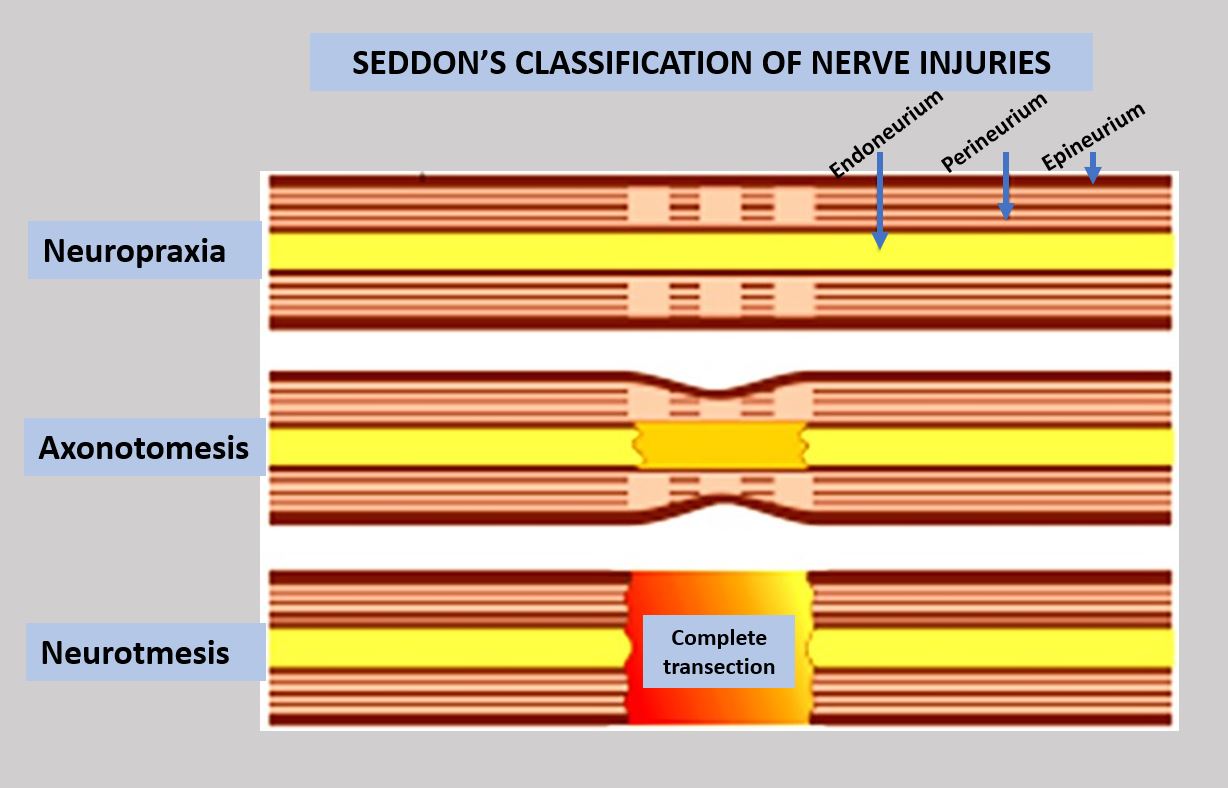
Diagram of Seddon's classification: neurapraxia (focal
  demyelination, axon intact), axonotmesis (axon disrupted, sheaths intact), neurotmesis (complete transection)

Figure: Seddon's classification - neurapraxia (conduction block, axon intact), axonotmesis (axon disrupted, sheaths intact), and neurotmesis (complete transection).
Question 2 · INICET May 2026

A patient has swelling and severe pain in the right leg unrelieved by analgesics, with a feeble right-leg pulse. The orthopaedic resident diagnoses acute compartment syndrome and measures a compartment pressure of 90 mmHg. On repeat examination the right-leg pulse is now absent. What is the most appropriate next step?

  1. A.Hot fomentation of the leg
  2. B.Cold fomentation of the leg
  3. C.Fasciotomy
  4. D.Reassurance and send home
Show answer and explanation

Answer: C. Fasciotomy

The correct answer is Fasciotomy.

Acute compartment syndrome is a surgical emergency. Rising intracompartmental pressure exceeds capillary perfusion pressure, causing ischemia; a measured pressure of 90 mmHg (far above the ~30 mmHg threshold / delta pressure under 30 mmHg) plus pain out of proportion to analgesia mandates immediate decompression by emergency fasciotomy. The newly absent pulse is a late, ominous sign of advanced ischemia - it should never be awaited and makes urgent fasciotomy even more critical to salvage the limb and prevent Volkmann ischemic contracture and rhabdomyolysis. Conservative measures or discharge would risk irreversible muscle/nerve necrosis.

Incorrect Options:

  • Hot fomentation: increases vasodilation/edema and does nothing to relieve the raised compartment pressure; it wastes critical time.
  • Cold fomentation: causes vasoconstriction that can worsen ischemia and does not decompress the compartment.
  • Reassurance and send home: dangerous - delay leads to irreversible muscle necrosis, contracture, and limb loss.

High-Yield Facts:

  • ACS is a surgical emergency treated by urgent fasciotomy.
  • Fasciotomy if compartment pressure >30 mmHg or delta pressure under 30 mmHg.
  • Earliest/most reliable sign is pain on passive stretch.
  • Pulselessness is a LATE sign - never wait for it.
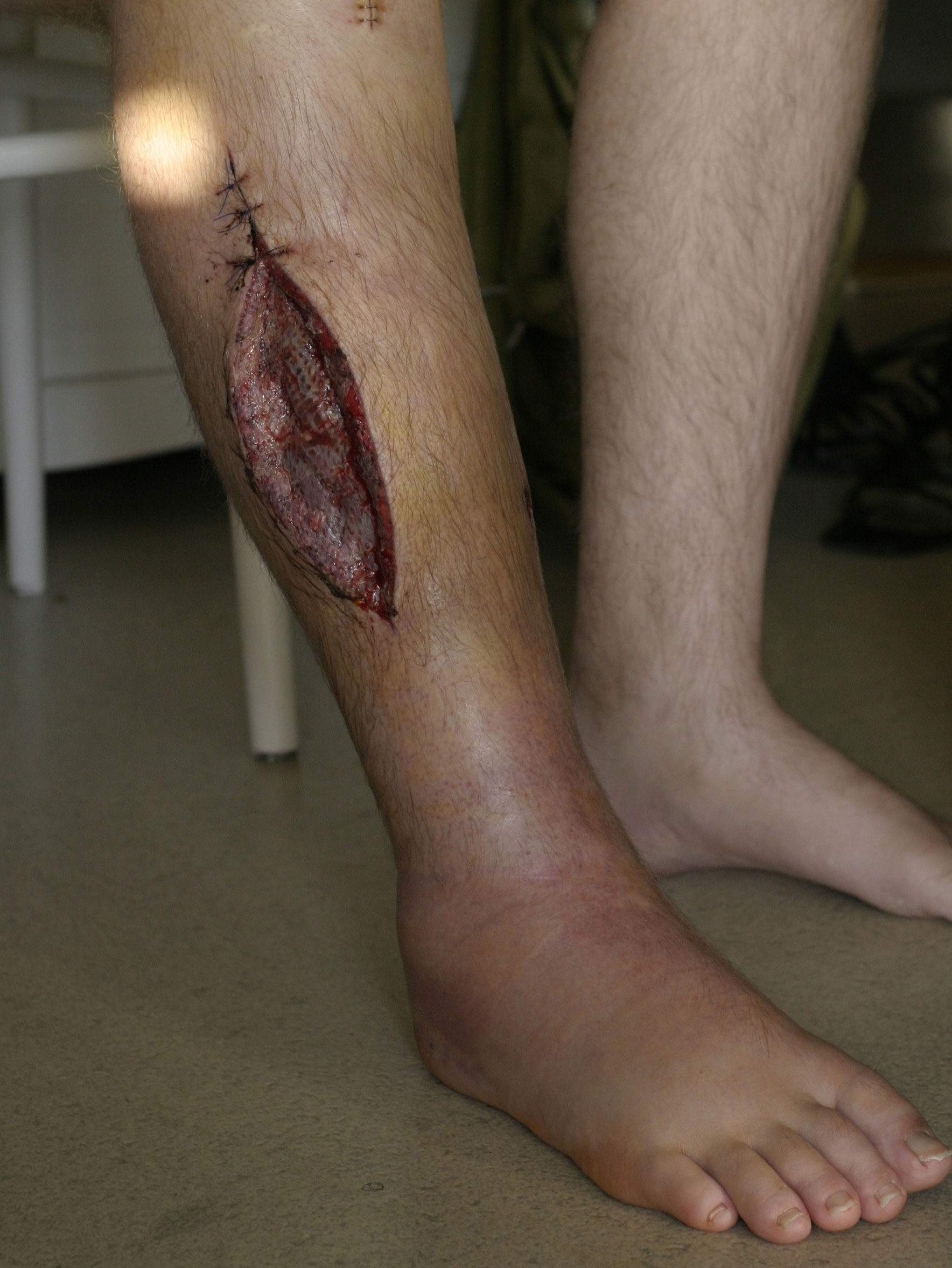
Lower leg after fasciotomy showing a long open decompression incision with a skin graft over
  the muscle

Figure: Leg fasciotomy - a long longitudinal incision releases the fascial compartment to relieve pressure, later covered by a skin graft.

Question 3 · INICET May 2026

A woman presents with body pain and proximal muscle weakness. Investigations show: calcium normal, phosphate low, alkaline phosphatase (ALP) high, and PTH high. What is the most likely diagnosis?

  1. A.Primary hyperparathyroidism
  2. B.Paget disease
  3. C.Hyperparathyroidism secondary to vitamin D deficiency
  4. D.Osteomalacia
Show answer and explanation

Answer: D. Osteomalacia

The correct answer is Osteomalacia.

Bone pain with proximal muscle weakness (proximal myopathy) plus the biochemical panel of normal calcium, low phosphate, high ALP, and high PTH is the classic picture of osteomalacia, usually from vitamin D deficiency. Vitamin D deficiency reduces calcium absorption, which drives a secondary rise in PTH that keeps serum calcium normal but causes phosphaturia (low phosphate); defective osteoid mineralization raises ALP. The secondary hyperparathyroidism is the mechanism, but the disease producing this patient's bone pain and myopathy is osteomalacia. X-rays may show Looser zones (pseudofractures).

Incorrect Options:

  • Primary hyperparathyroidism: calcium would be HIGH (with low phosphate, high PTH); here calcium is normal, so it is excluded.
  • Paget disease: shows very high ALP but NORMAL calcium, phosphate, and PTH - not low phosphate with high PTH.
  • Hyperparathyroidism secondary to vitamin D deficiency: this is the underlying mechanism, not the clinical diagnosis; the syndrome of bone pain + proximal myopathy with this panel is termed osteomalacia.

High-Yield Facts:

  • Osteomalacia panel: Ca normal/low, PO4 low, ALP high, PTH high.
  • Proximal myopathy + bone pain are hallmark clinical features.
  • X-ray shows Looser zones (pseudofractures).
  • Primary hyperPTH has HIGH calcium; normal calcium here rules it out.
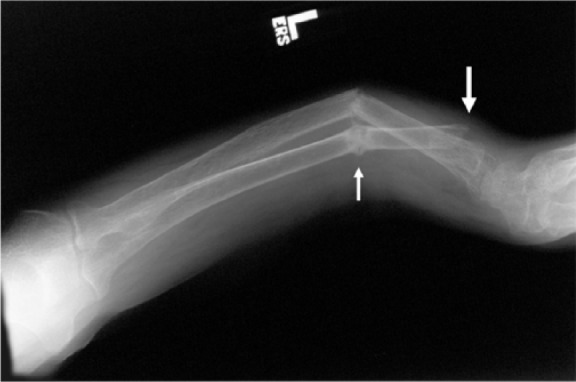
Forearm radiograph in severe osteomalacia showing bone softening with bowing and a pseudofracture (Looser zone)

Figure: Osteomalacia - softened, demineralized bone with bowing deformity and a pseudofracture (Looser zone, arrows).

Orthopedics concept guides

Browse the full concept library and clinical image atlas.

Practise the rest: open the Kinase question bank, choose Orthopedics, set the exam to INICET and switch on PYQs only. Build 50-question custom tests to rehearse one 45-minute INICET section.

Frequently Asked Questions

How many INICET Orthopedics PYQs does Kinase have?▼
Kinase has 109 INICET Orthopedics previous year questions from 2018 to 2026, each with an explanation — 3.3% of all INICET PYQs in the bank. There are also 50 NEET-PG Orthopedics PYQs for extra practice.
What are the most-asked Orthopedics topics in INICET?▼
In Kinase's INICET Orthopedics PYQs, the most-asked topics are Orthopedic Fractures and Their Complications, Metabolic Bone Diseases, Upper Limb Disorders. Orthopedic Fractures and Their Complications alone accounts for 22 of the 109 questions.
How is INICET Orthopedics marked?▼
Like every INICET subject, Orthopedics questions are +1 for a correct answer and −1/3 for a wrong one. INICET has 200 MCQs in four 45-minute sections of 50, for 200 marks.
Are INICET Orthopedics PYQs different from NEET-PG?▼
Both exams test the MBBS syllabus, so most Orthopedics concepts overlap. INICET is conducted by AIIMS New Delhi twice a year and marked +1 / −1/3; NEET-PG is conducted by NBEMS once a year and marked +4 / −1.
When is the next INICET?▼
INICET November 2026 is on 1 November 2026, with registration from 16 September to 13 October 2026 on aiimsexams.ac.in.
109 Orthopedics PYQs
2018–2026 papers
Topic + year tagged

Ready to Start Practicing?

INICET November 2026 is on 1 November — registration closes 13 October.

Start Free Practice

No credit card required