INICET Pediatrics Previous Year Questions (2018–2026)

139 INICET Pediatrics PYQs from 2018 to 2026, tagged by topic, with an explanation for every question. Practise AIIMS-pattern Pediatrics questions before INICET November 2026.

Last verified: 24 September 2026 against AIIMS New Delhi notices and aiimsexams.ac.in.

Quick Answer

Kinase has 139 INICET Pediatrics PYQs from 2018 to 2026 — 4.2% of all INICET PYQs in the bank. The most-asked topic is Neonatology (39 questions). INICET is marked +1 / −1/3, so a blind guess is worth nothing on average.

Pediatrics in INICET at a glance

INICET Pediatrics PYQs on Kinase139 (4.2% of all INICET PYQs)
Years covered2018–2026
Marking+1 correct, −1/3 wrong
NEET-PG Pediatrics PYQs on Kinase87

Most-asked Pediatrics topics in INICET PYQs

TopicINICET PYQsShare of subject
Neonatology3928%
Growth and Development139%
Neurology139%
Cardiovascular System118%
Childhood Infections107%

Across NEET PG and INI-CET papers: Most repeated Pediatrics topics →

Sample INICET Pediatrics PYQs with answers

Question 1 · INICET May 2026

A 12-year-old boy is brought with respiratory symptoms. You suspect an upper respiratory tract infection, with no other complication present. Which radiological investigation is required?

  1. A.Plain chest radiograph
  2. B.No radiological investigation required
  3. C.CT scan of neck and chest
  4. D.HRCT
Show answer and explanation

Answer: B. No radiological investigation required

The correct answer is No radiological investigation required.

An uncomplicated upper respiratory tract infection (common cold, pharyngitis, rhinitis) is a clinical diagnosis based on history and examination - sneezing, nasal congestion, sore throat, cough and low-grade fever. No imaging is needed when there are no complications. In fact, imaging is misleading: CT shows incidental sinus mucosal changes in over 80 percent of ordinary viral colds, which do not change management.

Imaging is reserved for suspected complications. A chest radiograph is used only if lower respiratory involvement or pneumonia is suspected; CT of the neck/chest or HRCT is for specific complications (abscess, mass, interstitial lung disease), not for a simple URTI. So this child needs no radiology.

Incorrect Options:

  • Plain chest radiograph: only needed if a lower respiratory infection or pneumonia is suspected, not for an uncomplicated URTI.
  • CT scan of neck and chest: reserved for suspected complications (abscess, deep-space infection, mass), not a simple URTI.
  • HRCT: used for interstitial or chronic lung disease, not for an uncomplicated upper respiratory infection.

High-Yield Facts:

  • Uncomplicated URTI is a clinical diagnosis - no imaging required.
  • Imaging is only for suspected complications (pneumonia, abscess).
  • CT shows incidental sinus changes in most ordinary colds - do not over-image.
  • A child has on average 4 to 8 (up to 10) URTIs per year.
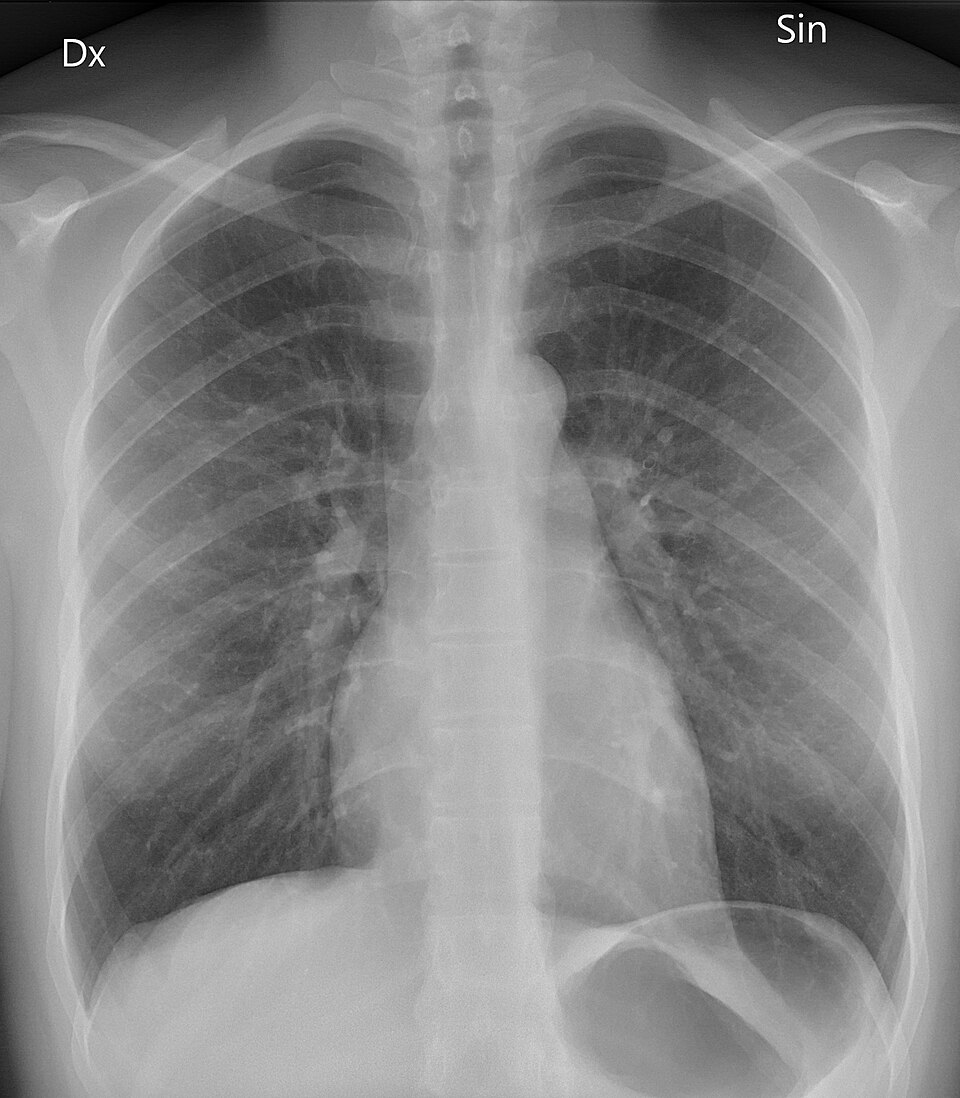
Normal posteroanterior chest radiograph with clear lung fields

Figure 1: A normal chest radiograph - even if performed, imaging is normal in uncomplicated URTI, so it is not indicated.
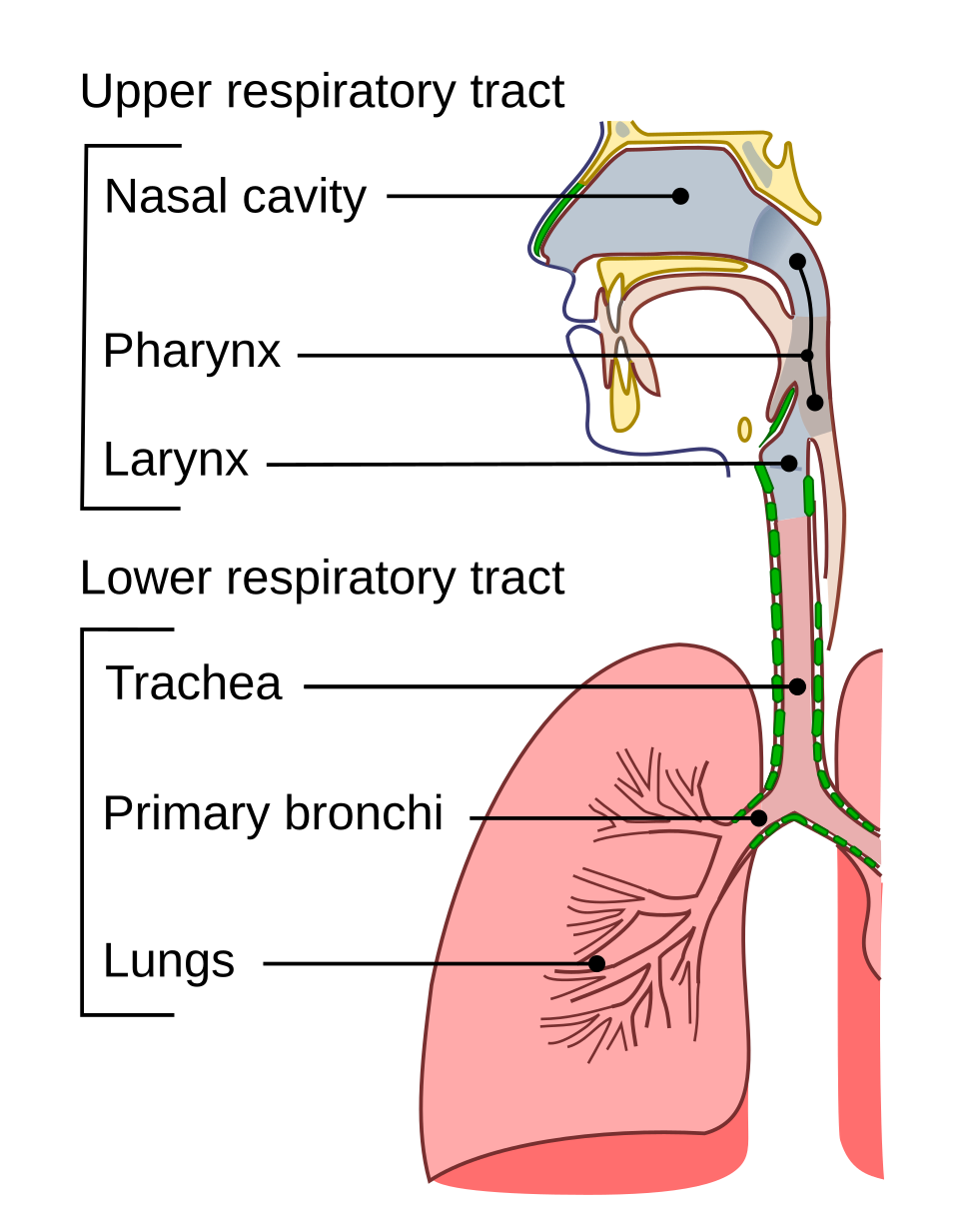
Diagram of the respiratory conducting
  passages including the upper respiratory tract

Figure 2: The upper respiratory tract (nose, pharynx, larynx) - the site of URTI, diagnosed clinically.
Question 2 · INICET May 2026

A term neonate is found to have a blood glucose level of 38 mg/dL at 3 hours of life. The baby is asymptomatic. What is the next appropriate step in management?

  1. A.IV dextrose bolus
  2. B.Breastfeeding and reassessment
  3. C.IV dextrose infusion over 2 hours
  4. D.Observe
Show answer and explanation

Answer: B. Breastfeeding and reassessment

The correct answer is Breastfeeding and reassessment.

This is mild, asymptomatic neonatal hypoglycaemia in a term baby (38 mg/dL at 3 hours). The standard first step is a trial of feeding (preferably breastfeeding) and a recheck of blood glucose in 30 to 60 minutes (oral dextrose gel may be added). Feeding provides substrate, keeps mother and baby together, and usually corrects transitional hypoglycaemia.

IV dextrose (a 2 mL/kg bolus of 10 percent dextrose then an infusion) is reserved for symptomatic hypoglycaemia, very low glucose (roughly under 25 mg/dL in the first hours), or failure to respond to feeding. Simply observing without feeding or rechecking is unsafe at this level. So breastfeeding with reassessment is correct.

Incorrect Options:

  • IV dextrose bolus: reserved for symptomatic or very low glucose (about under 25 mg/dL early), or when feeding fails - not for mild asymptomatic hypoglycaemia.
  • IV dextrose infusion over 2 hours: an IV approach for persistent or symptomatic hypoglycaemia, not the first step here.
  • Observe: observation alone, without feeding and a glucose recheck, is inadequate at 38 mg/dL.

High-Yield Facts:

  • Asymptomatic mild neonatal hypoglycaemia: feed (breastfeed) and recheck glucose.
  • IV dextrose (bolus 2 mL/kg of 10 percent, then infusion) is for symptomatic or very low/persistent hypoglycaemia.
  • Oral dextrose gel plus feeding is an effective first-line option that reduces NICU admission.
  • At-risk: infants of diabetic mothers, preterm/late-preterm, SGA, LGA.
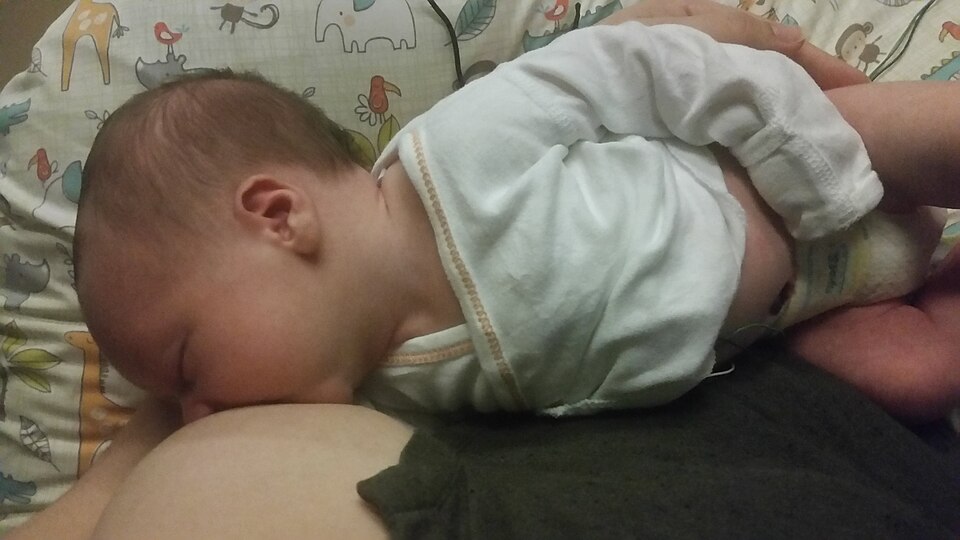
A newborn
  breastfeeding

Figure 1: Breastfeeding - the first-line step for mild asymptomatic neonatal hypoglycaemia.

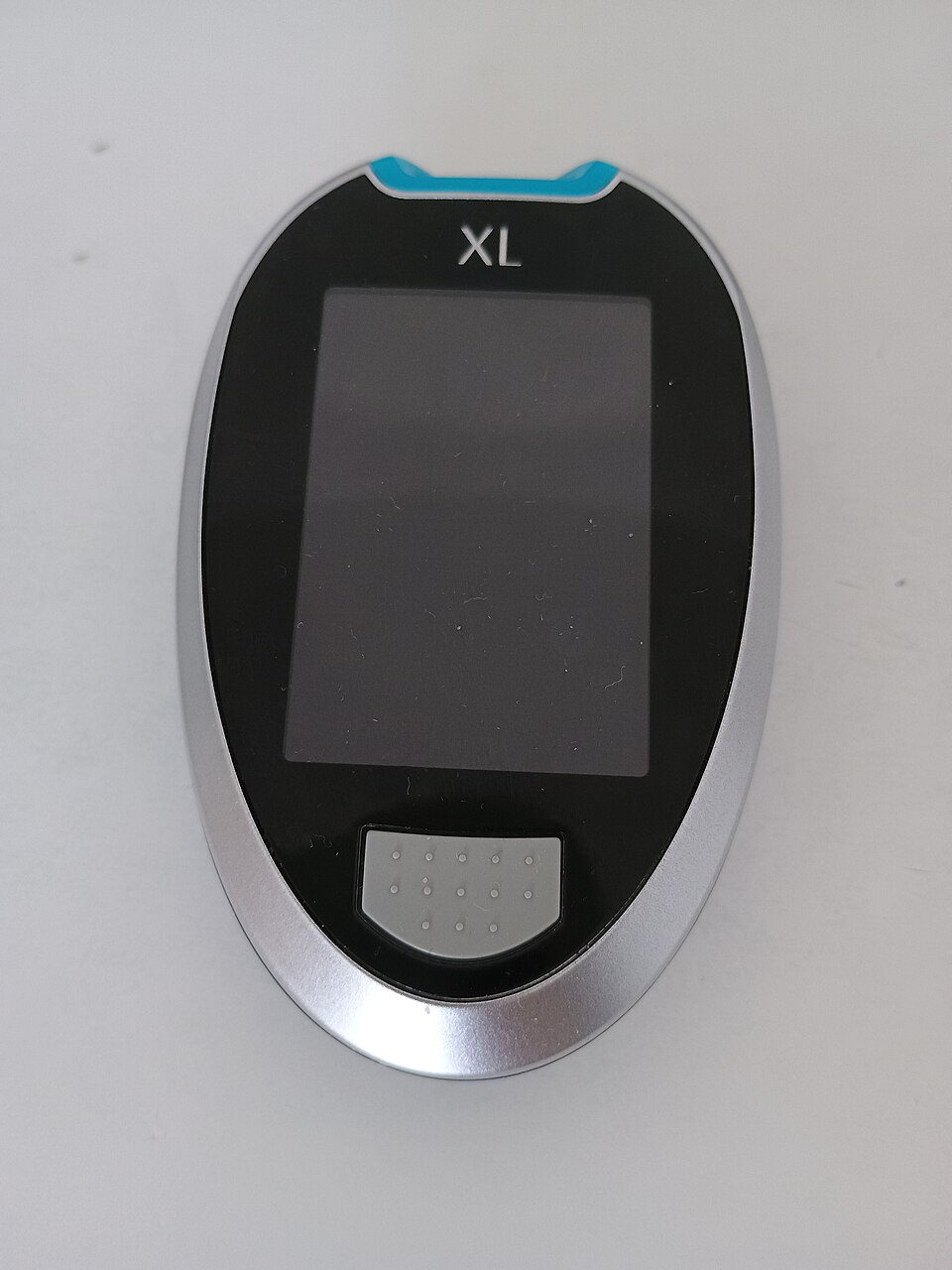
A handheld
  blood glucose meter

Figure 2: Recheck blood glucose after feeding - reassessment confirms the level has risen.

Question 3 · INICET May 2026

A 20-month-old child walks without support, scribbles, and obeys one-step commands, but speaks only one meaningful word. What is the most appropriate next step in management?

  1. A.Reassurance and follow up at 5 years
  2. B.Detailed speech and hearing evaluation
  3. C.Diagnose as autism immediately
  4. D.Start antiepileptics
Show answer and explanation

Answer: B. Detailed speech and hearing evaluation

The correct answer is Detailed speech and hearing evaluation.

This child's gross motor (walking), fine motor (scribbling) and receptive language/cognition (obeys one-step commands) are normal, but expressive speech is delayed - by 18 to 24 months a toddler should have many words (10 to 20 or more), not just one. This is an isolated expressive speech/language delay. The most important first step is a hearing assessment together with a speech and language evaluation, because hearing impairment (often otitis media with effusion) is the commonest treatable cause of isolated speech delay.

The other options are wrong. Reassurance and waiting until 5 years would dangerously delay treatment. Autism cannot be diagnosed from speech delay alone when social and receptive skills are intact - and it is a clinical diagnosis after proper assessment, not made immediately. There are no seizures, so antiepileptics are not indicated.

Incorrect Options:

  • Reassurance and follow up at 5 years: a single word at 20 months is delayed, and waiting that long would miss treatable causes.
  • Diagnose as autism immediately: social and receptive skills are intact, and autism is a clinical diagnosis after assessment, not made from speech delay alone.
  • Start antiepileptics: there is no seizure disorder here, so antiepileptics have no role.

High-Yield Facts:

  • Isolated speech delay: first assess hearing (and do a speech/language evaluation).
  • Hearing loss (often otitis media with effusion) is the commonest treatable cause.
  • By 24 months expect about 50 words and 2-word phrases; concern if under 50 words or no phrases.
  • Speech delay alone is not autism - assess social and receptive skills.
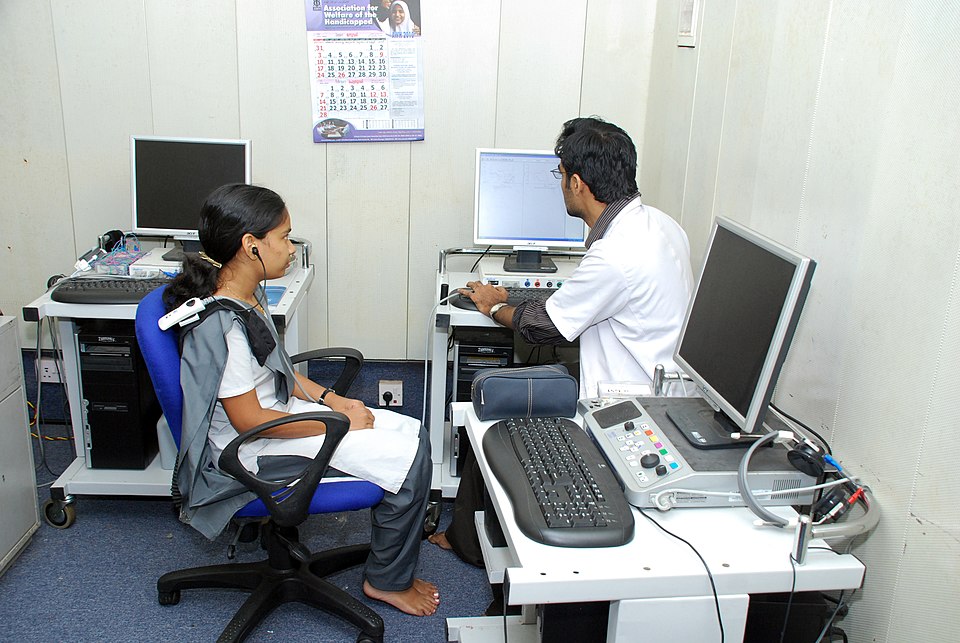
A hearing assessment (audiometry) being
  performed by an audiologist

Figure 1: Hearing assessment - the key first evaluation in a child with isolated speech delay.

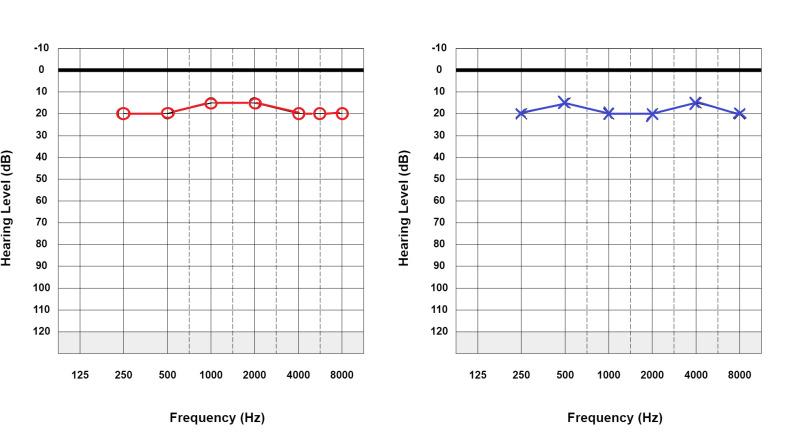
A normal audiogram showing hearing thresholds across frequencies

Figure 2: An audiogram - used to exclude hearing loss, the commonest treatable cause of speech delay.

Pediatrics concept guides

Browse the full concept library and clinical image atlas.

Practise the rest: open the Kinase question bank, choose Pediatrics, set the exam to INICET and switch on PYQs only. Build 50-question custom tests to rehearse one 45-minute INICET section.

Frequently Asked Questions

How many INICET Pediatrics PYQs does Kinase have?▼
Kinase has 139 INICET Pediatrics previous year questions from 2018 to 2026, each with an explanation — 4.2% of all INICET PYQs in the bank. There are also 87 NEET-PG Pediatrics PYQs for extra practice.
What are the most-asked Pediatrics topics in INICET?▼
In Kinase's INICET Pediatrics PYQs, the most-asked topics are Neonatology, Growth and Development, Neurology. Neonatology alone accounts for 39 of the 139 questions.
How is INICET Pediatrics marked?▼
Like every INICET subject, Pediatrics questions are +1 for a correct answer and −1/3 for a wrong one. INICET has 200 MCQs in four 45-minute sections of 50, for 200 marks.
Are INICET Pediatrics PYQs different from NEET-PG?▼
Both exams test the MBBS syllabus, so most Pediatrics concepts overlap. INICET is conducted by AIIMS New Delhi twice a year and marked +1 / −1/3; NEET-PG is conducted by NBEMS once a year and marked +4 / −1.
When is the next INICET?▼
INICET November 2026 is on 1 November 2026, with registration from 16 September to 13 October 2026 on aiimsexams.ac.in.
139 Pediatrics PYQs
2018–2026 papers
Topic + year tagged

Ready to Start Practicing?

INICET November 2026 is on 1 November — registration closes 13 October.

Start Free Practice

No credit card required